Hanami
/HAH-nah-mee/
Meaning
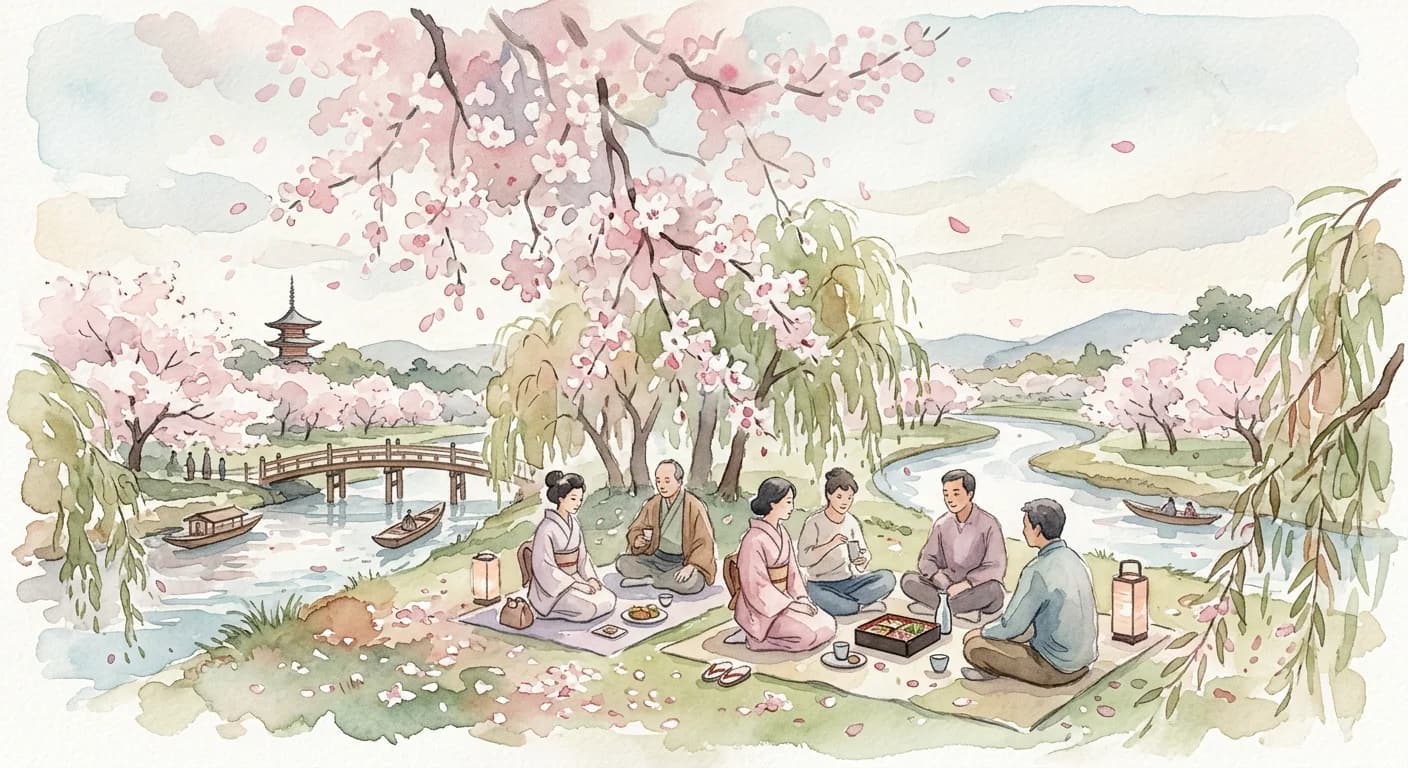
Hanami, or 'flower viewing,' is a quintessential Japanese tradition celebrating the transient yet breathtaking beauty of cherry blossoms. It's a communal ritual where friends, families, and colleagues gather under the ethereal pink and white canopies, sharing picnics, sake, and laughter. This vibrant outdoor festivity serves as a poignant reminder of life's fleeting nature and the importance of appreciating beauty in the present moment, embodying both joy and a gentle melancholy.
Literal Translation
flower viewing
The Story Behind the Word
The roots of Hanami stretch back over a thousand years, originally observed by the imperial court in the Heian period. Initially, plum blossoms were admired, but by the Edo period, cherry blossoms (sakura) had become the predominant focus, symbolizing the samurai's brief, glorious life. This tradition is deeply intertwined with 'mono no aware,' the pathos of things, a profound sensitivity to the transient nature of beauty and life. Hanami reveals a core Japanese aesthetic that finds profound beauty in ephemerality, encouraging a contemplative appreciation for the present and an acceptance of impermanence.
Experience It
Family Picnic Under Sakura
The Tanaka family spread their blue tarp under a weeping cherry tree, laden with homemade bento boxes and thermos flasks of tea. Laughter echoed as the children chased fallen petals, while the adults savored the fleeting beauty, discussing plans for the coming year amidst the gentle breeze.
Colleagues' Evening Hanami
After work, a group of office colleagues gathered in Ueno Park, lanterns casting a soft glow on the illuminated sakura. They shared beer and grilled skewers, the relaxed atmosphere fostering camaraderie and a welcome escape from daily stresses, celebrating the season together.
The Deeper Meaning
Hanami profoundly illustrates the Japanese concept of 'wabi-sabi' – finding beauty in imperfection and impermanence. It encourages living in the present, appreciating the temporary nature of joy and beauty, and accepting the natural cycle of growth and decay. This practice fosters a deep connection to nature and a reflective perspective on life's inevitable changes.
Did You Know?
During the Edo period, some feudal lords encouraged the planting of cherry trees to unify the populace and promote a shared cultural experience, cementing Hanami as a widespread tradition.
How It's Used
Used to describe the act of viewing and celebrating cherry blossoms, typically involving picnics and social gatherings under the blooming trees.