Korba
/KOR-bah/
Meaning
Korba in Persian transcends its literal translations of 'womb' or 'belly' to encapsulate a profound, almost primal sense of belonging and origin. It describes an intrinsic, spiritual connection to one's homeland, ancestry, or the fundamental source of one's identity. This isn't merely a physical attachment to a place but an emotional and spiritual rootedness, a deep resonance with the very essence from which one originates, fostering an unwavering sense of home and self.
Literal Translation
womb, belly
The Story Behind the Word
The concept of 'Korba' is deeply embedded in Persian culture, which places immense value on lineage, heritage, and the interconnectedness of individual identity with family and land. Iran's long history, marked by empires, migrations, and a rich poetic tradition, has fostered a profound appreciation for one's roots. The word reflects a worldview where identity is not solely individualistic but is intrinsically tied to a collective past and the ancestral land. This emphasis is evident in classical Persian poetry, where land and lineage are often personified as nurturing entities, akin to a mother's embrace. 'Korba' thus articulates a spiritual geography, a sense of belonging to something much larger and older than oneself, which provides stability and meaning.
Experience It
Echoes of Homeland
An elderly Iranian immigrant, living abroad for decades, listens to traditional Persian music. A tear rolls down his cheek as he murmurs, 'Ah, my Korba,' feeling an overwhelming, visceral connection to the land and memories of his youth, despite the physical distance.
Ancestral Roots
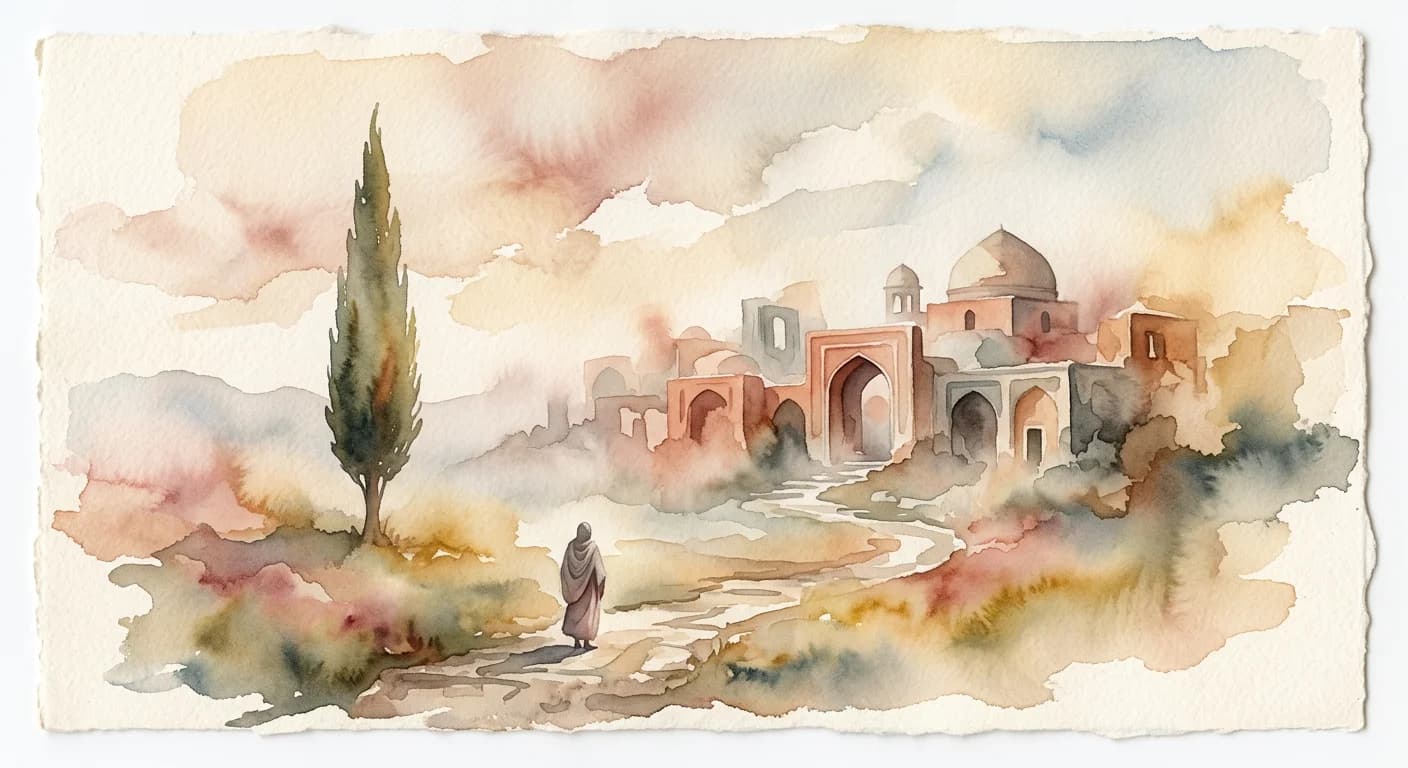
A young artist, struggling with her identity, visits her ancestral village in Iran. Walking among ancient ruins and listening to family stories, she feels a powerful surge of recognition, a sense of her 'Korba' awakening within her, solidifying her place in a long lineage.
What Gets Lost in Translation
English speakers might mistake 'Korba' for mere patriotism or homesickness. However, it's far deeper than either. It's not just about loving one's country or missing a place; it's a fundamental recognition of where one *comes from* on a spiritual and ancestral level, a foundational element of self that transcends simple affection or memory.
Across Cultures
Similar concepts exist in other cultures. The Japanese 'furusato' evokes a nostalgic longing for one's hometown, embodying a sense of spiritual home. The German 'Heimat' signifies a deep, almost mystical connection to one's homeland and cultural identity. Indigenous cultures globally often have words that express an inherent, sacred bond with ancestral lands, reflecting a similar profound rootedness.
The Deeper Meaning
The word 'Korba' reveals a worldview where identity is not a solitary construct but is profoundly interwoven with one's origins, ancestry, and the land itself. It suggests that true self-knowledge and belonging are found not just internally, but in recognizing and honoring the deep, nurturing source from which one emerges, emphasizing interconnectedness over individualism.
Did You Know?
While 'Korba' is deeply spiritual, its literal root in 'womb' or 'belly' highlights a fascinating linguistic connection between physical origin and the profound emotional depth of belonging, suggesting life itself springs from this deep-seated connection.
How It's Used
Used to describe a deep sense of connection to one's homeland, ancestry, or a fundamental source of belonging. It can be used in poetry, literature, or philosophical discussions about identity and roots.