Paseo
/PAH-seh-oh/
Meaning
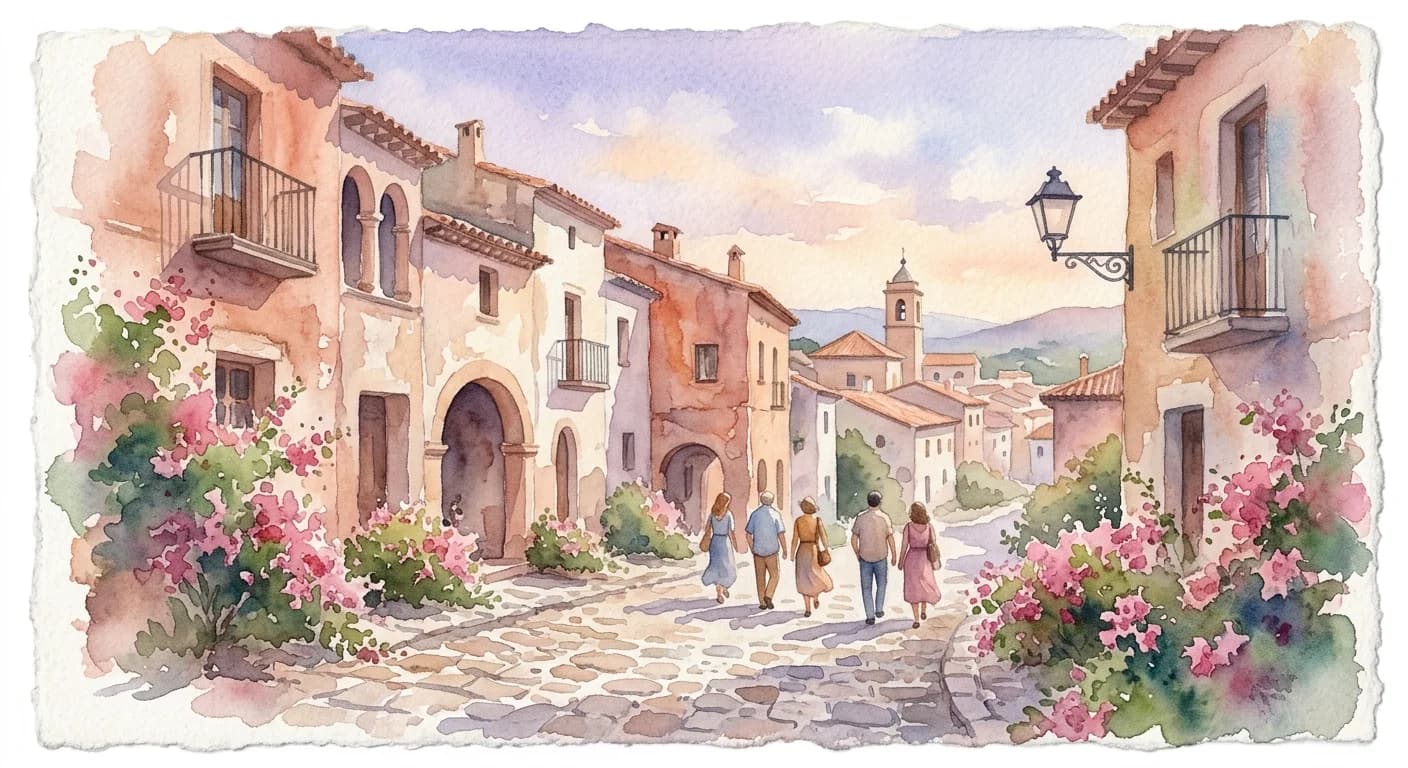
A "paseo" transcends a mere walk; it is a cherished Spanish ritual, a leisurely, unhurried promenade typically enjoyed in the late afternoon or early evening. It's an intentional slowing down, an act of mindful observation, and a cornerstone of social connection. This traditional stroll fosters community as people greet neighbors, engage in lighthearted conversation, and collectively absorb the vibrant ambiance of their surroundings, transforming a simple act of walking into a rich, shared cultural experience.
Literal Translation
Walk, stroll
The Story Behind the Word
The concept of "paseo" is deeply woven into the fabric of Spanish culture, reflecting a profound appreciation for communal life, leisure, and the public sphere. Its origins can be traced back to the importance of town squares (plazas) as social hubs, where people gathered not just for commerce but for interaction, courtship, and to see and be seen. The "paseo" embodies a philosophy of valuing presence over productivity, celebrating the joy of simple existence and human connection. It's a deliberate antidote to hurried modern life, emphasizing the quality of time spent rather than its utility, and reinforcing the strong family and community bonds characteristic of Spanish society.
Experience It
Evening Plaza Paseo
As the sun dipped, casting long shadows across the Plaza Mayor, families began their evening paseo. Grandparents walked hand-in-hand with grandchildren, stopping to chat with friends on benches while teenagers flirted discreetly, all partaking in the gentle rhythm of the evening, a collective breath taken by the town.
Coastal Promenade
Along the Barcelona beachfront, friends met for their Sunday paseo, the sea breeze a welcome companion. They ambled along, discussing their week, occasionally pausing to watch street performers or simply gaze at the horizon, the unhurried pace allowing for genuine connection and relaxation.
What Gets Lost in Translation
English speakers might mistake a "paseo" for a casual walk or exercise. However, it's far more intentional and social. It's rarely about reaching a destination quickly or burning calories; rather, it's about the journey itself, the interactions along the way, and the shared experience of being present in a public space.
Across Cultures
While not a perfect equivalent, concepts like the Italian "passeggiata" or the French "flânerie" share a similar spirit of leisurely, social walking. The "korzo" in some Balkan cultures also describes a main street where people walk to socialize, observe, and be observed, particularly in the evenings.
The Deeper Meaning
"Paseo" reveals a worldview that prioritizes human connection, communal well-being, and the value of unhurried time. It's a quiet rebellion against the relentless pace of modern life, asserting the importance of leisure, observation, and the simple joy of shared existence as fundamental to a rich life, rather than mere productivity or individual achievement.
Did You Know?
Many Spanish cities feature a dedicated "Paseo" street or avenue, specifically designed for these leisurely strolls, often tree-lined and pedestrian-friendly, highlighting its integral role in urban planning and daily life.
How It's Used
Used to describe a leisurely walk taken for enjoyment, often in the evening, and frequently involving social interaction or sightseeing.