Sfumato
/sfoo-MAH-toh/
Meaning
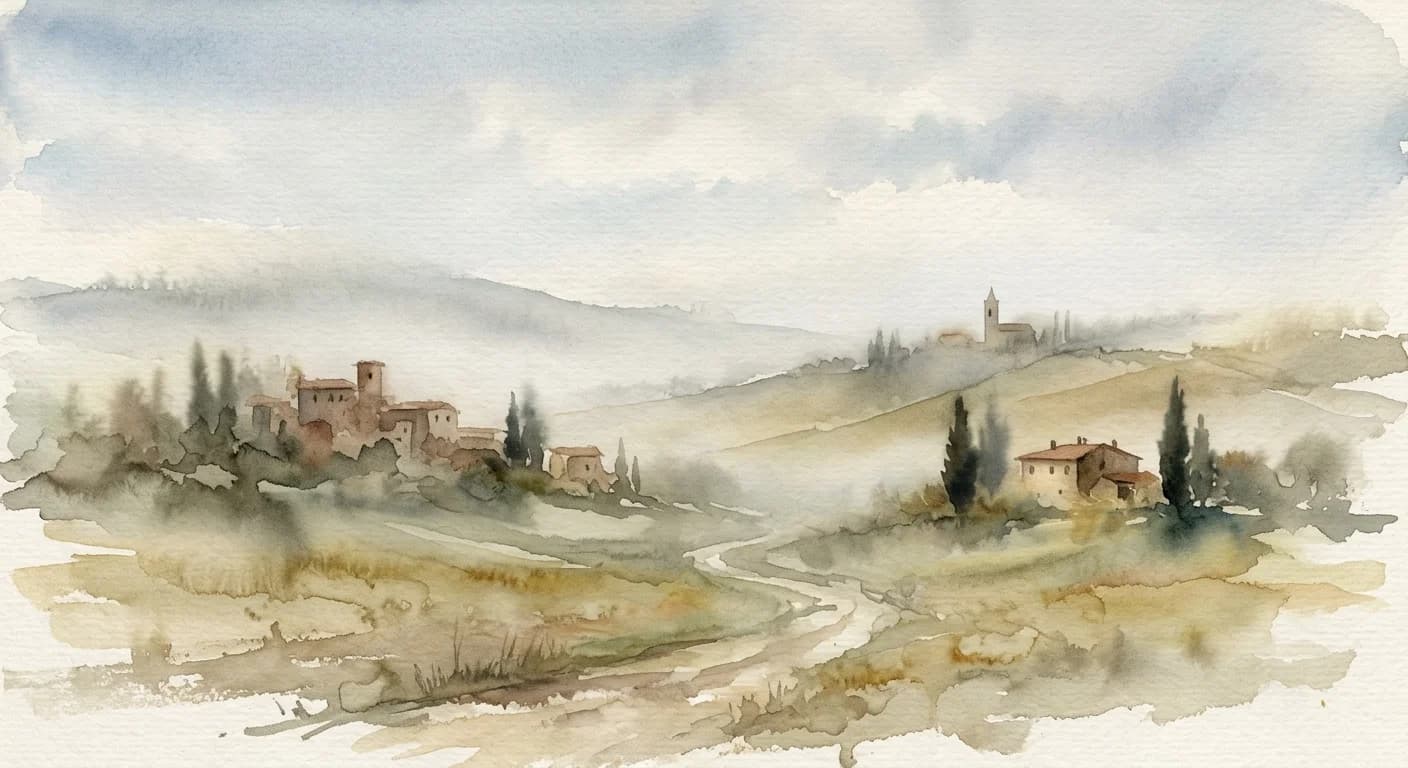
Sfumato, literally meaning 'smoked' or 'to vanish like smoke,' describes an artistic technique where colors and tones subtly merge into one another without discernible lines or borders, creating a soft, hazy, and dreamlike quality. This nuanced blending, famously perfected by Leonardo da Vinci, imbues subjects, particularly faces and landscapes, with an ethereal depth and an almost imperceptible transition from light to shadow. It evokes a sense of mystery and living presence, making forms emerge gently from the background as if seen through a delicate mist, capturing the fleeting essence of reality rather than its stark outlines.
Literal Translation
smoked
The Story Behind the Word
The emergence of sfumato in Renaissance Italy reflects a profound shift in artistic and philosophical thought. Prior to this, art often favored clear outlines and distinct forms, aligning with a more rigid, ordered worldview. Sfumato, however, embraced ambiguity and the subtle complexities of human perception, mirroring the burgeoning scientific curiosity and humanism of the era. Leonardo da Vinci, deeply engaged in anatomical study, optics, and the natural world, sought to capture the living, breathing quality of his subjects, recognizing that reality is not defined by sharp edges but by continuous, nuanced transitions. This technique speaks to a cultural appreciation for understated beauty, psychological depth, and the enigmatic aspects of existence, moving beyond mere representation to evoke emotion and intellectual contemplation.
Experience It
Mona Lisa's Gaze
A visitor stands mesmerized by the Mona Lisa, her enigmatic smile seemingly shifting. The artist remarks, 'It's the sfumato, a technique that blurs the lines around her mouth and eyes, making her expression elusive and endlessly captivating, almost as if she breathes.'
Twilight Landscape
An art student gazes at a Tuscan landscape painting, where distant hills melt into the hazy sky. 'The artist truly mastered sfumato here,' she muses, 'the way the mountains dissolve into the atmospheric perspective creates such a profound sense of depth and quietude, like a soft, lingering dream.'
The Deeper Meaning
Sfumato embodies a philosophical acceptance of ambiguity and the inherent mystery of perception. It suggests that truth and beauty are not found in stark definitions but in the subtle interplay of light and shadow, the unsaid, and the indefinable. This technique encourages contemplation, inviting the viewer to engage actively with the art, rather than passively observing, reflecting a worldview that values nuanced understanding over rigid certainty.
Did You Know?
Leonardo da Vinci, obsessed with the human eye's perception, used sfumato to mimic how our vision naturally blurs peripheral details, making his figures appear more alive and engaging.
How It's Used
Primarily used in art history and criticism to describe a specific painting technique, especially in Renaissance art. It can also be used metaphorically to describe anything characterized by subtle gradations or a lack of sharp definition.