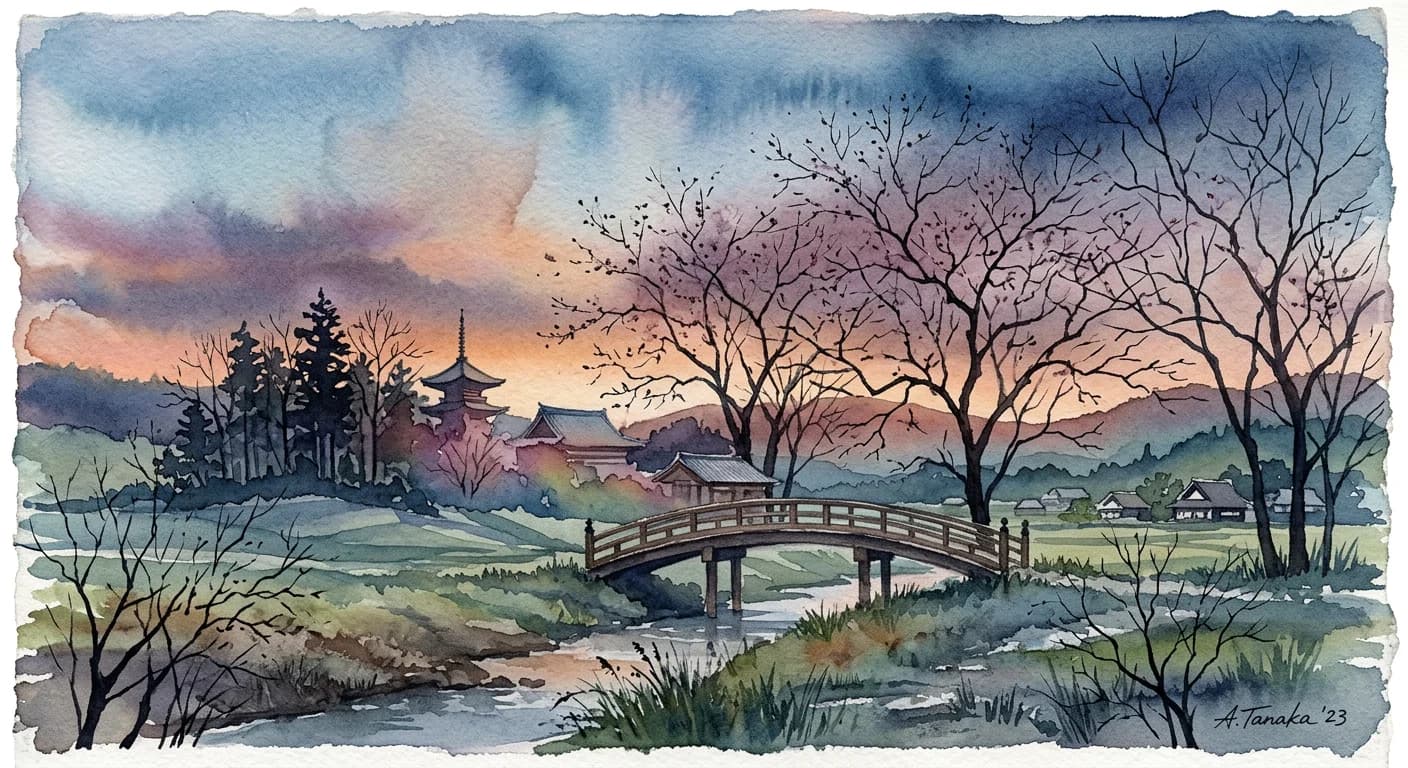
Tasogare
/TAH-soh-gah-reh/
Meaning
Tasogare transcends a simple descriptor for dusk; it embodies a profound liminality, the exquisite, fleeting interval where day surrenders to night. As the sun dips below the horizon, it bathes the world in soft, ambiguous hues, blurring the sharp edges of reality and inviting a gentle introspection. This moment is imbued with a melancholic beauty, a quiet contemplation of transition and the ephemeral nature of all things, deeply resonating with Japanese aesthetic sensibilities.
Literal Translation
Twilight, dusk
The Story Behind the Word
The concept of "tasogare" is deeply rooted in Japan's historical and philosophical appreciation for impermanence (mujo) and the beauty found in natural transitions. In ancient times, this twilight hour was considered a mystical boundary, a time when the human and spirit worlds were thought to draw closer, hence the term's possible etymological connection to "ta ga sore" (誰がそれ - "who is that?"), reflecting the difficulty in recognizing faces in the dim light. This period is also central to traditional Japanese arts, from poetry (waka, haiku) to painting, where the subtle interplay of light and shadow, and the emotional resonance of fading clarity, are often celebrated. It reveals a culture that finds profound meaning not just in beginnings and endings, but in the delicate, often melancholic, spaces in between.
Experience It
Riverside Tasogare
She sat by the river, watching the sky shift from brilliant orange to a deep indigo. The tasogare deepened, casting long, wavering shadows of the willow trees onto the water, and she felt a familiar, gentle melancholy settle over her, a quiet understanding of the day's end.
Mountain Village Dusk
As tasogare fell over the mountain village, the faint glow from paper lanterns began to pepper the darkening slopes. Sounds softened, and a sense of peaceful quiet descended, inviting contemplation about the fleeting nature of time and the beauty of passing moments.
The Deeper Meaning
Tasogare embodies the Japanese aesthetic principle of 'mono no aware' – the pathos of things, a gentle sadness at the transient nature of beauty and life. It encourages an acceptance of impermanence and finds profound beauty in moments of transition and fading, rather than clinging to permanence. This worldview fosters a deep appreciation for the present and the subtle emotional textures of existence.
Did You Know?
The word 'tasogare' is thought to derive from 'ta ga sore' (誰がそれ), meaning 'who is that?', reflecting the ancient belief that twilight was a time when it was hard to distinguish people, blurring the line between human and spirit worlds.
How It's Used
Tasogare is used to describe the time of day, specifically dusk or twilight. It can also be used poetically to evoke the mood or atmosphere associated with this time, often implying a sense of gentle melancholy or quiet reflection.