Zaghrouda
/zah-GROO-dah/
Meaning
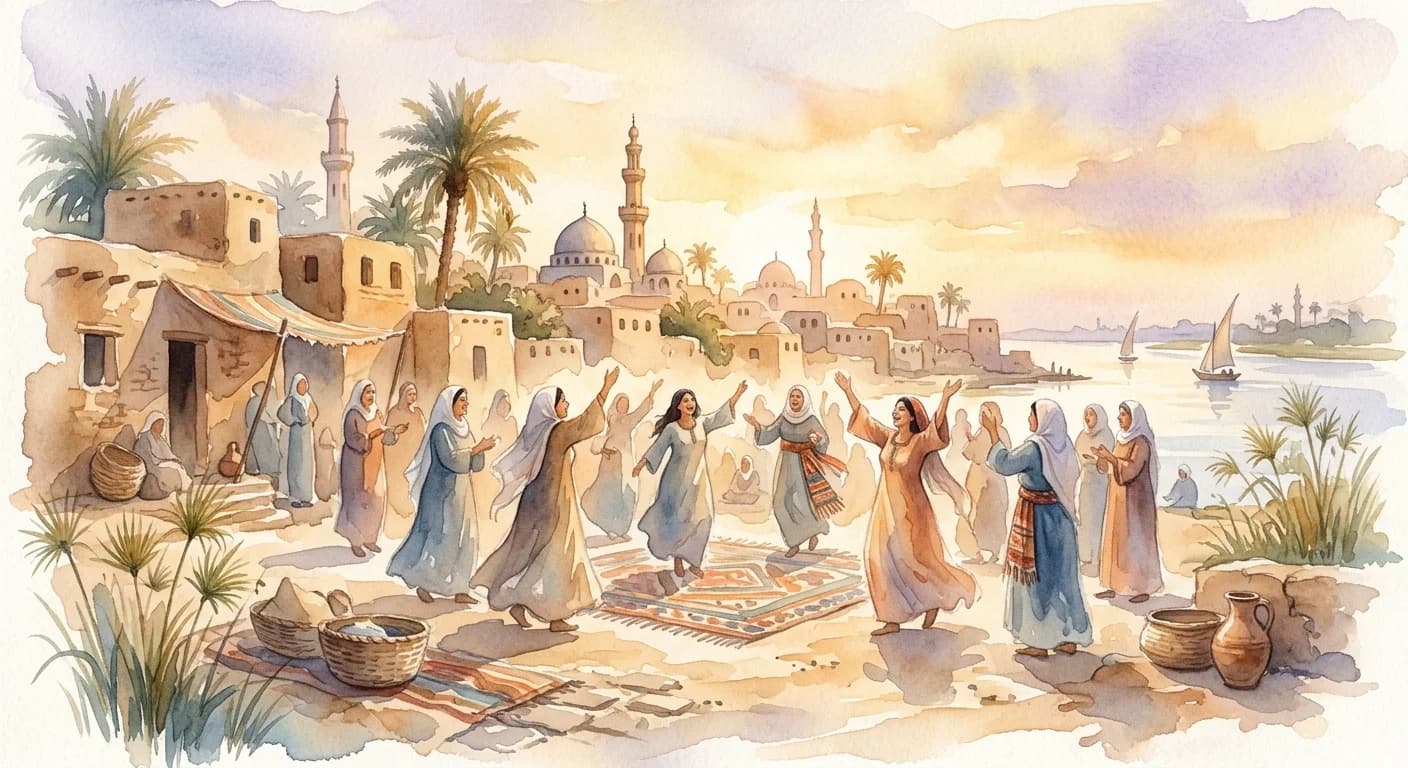
Zaghrouda is a breathtaking, high-pitched ululation, a rapid oscillation of the tongue against the palate that produces a distinctive, trilling sound. It's not merely a vocalization but a profound expression of overwhelming joy, triumph, and collective excitement, often erupting spontaneously during moments of intense celebration. This ancient sonic tradition powerfully amplifies festive atmospheres, acting as a vibrant, communal outpouring of shared happiness that resonates deeply within the cultural fabric of many Arab societies.
Literal Translation
Ululation
The Story Behind the Word
The zaghrouda is more than just a sound; it's a sonic thread woven into the very tapestry of Arab communal life, particularly for women. Its origins are ancient, likely pre-dating Islam, and it has persisted as a powerful form of non-verbal communication, often used by women to express emotions that might otherwise be unsaid. It signifies collective affirmation and shared emotion, transforming individual joy into a public declaration of happiness. The zaghrouda reveals a cultural emphasis on communal celebration and the importance of expressing intense emotions openly, especially in moments marking significant life transitions or victories. It embodies a spirit of resilience and joy, turning even struggles into occasions for celebratory release.
Experience It
Wedding Procession Joy
As the bride, adorned in white, stepped out of her family home, a wave of zaghroudat erupted from the women gathered. The piercing, joyful trills filled the air, signaling the start of the grand procession and conveying boundless happiness for the new couple.
Newborn's Arrival
When the news spread that a healthy baby boy had been born, the grandmother let out a series of triumphant zaghroudat. Her ululations echoed through the family home, announcing the joyous arrival and inviting everyone to share in the blessing.
The Deeper Meaning
The zaghrouda embodies a philosophy of shared human experience and collective emotional expression. It highlights a cultural value where individual joy is amplified and validated through communal participation, transforming private happiness into a publicly declared, resonating triumph. It speaks to the power of sound as a binding force, transcending words to create an immediate, visceral connection among people in celebration.
Did You Know?
Historically, zaghroudat were sometimes used by women not only for celebration but also to rally warriors, announce victory in battle, or even mourn, showcasing their versatile emotional power.
How It's Used
Zaghrouda is primarily used as an expression of extreme joy and celebration, particularly by women, during significant life events such as weddings, the birth of a child, or other joyous gatherings. It is a vocalization that amplifies the celebratory atmosphere and expresses collective happiness.