U.
HomeRegionsLanguagesEmotionsCollections
Find Your Word

“The limits of my language mean the limits of my world.”

— Ludwig Wittgenstein, Philosopher

Untranslatable

A curated collection of the world's most beautiful expressions—words that remind us language is humanity's greatest invention.

  • Home
  • Collections
  • Regions
  • Countries
  • Emotions
  • Tags
  • Contexts
  • Finder
  • Europe
  • Asia
  • Americas
  • Africa
  • Middle East
  • About
  • Contact
  • Privacy Policy
  • Terms of Service

2026 © Untranslatable. All rights reserved.

    /
    /
    1. Home
    2. /
    3. Americas
    4. /
    5. Sacolejar
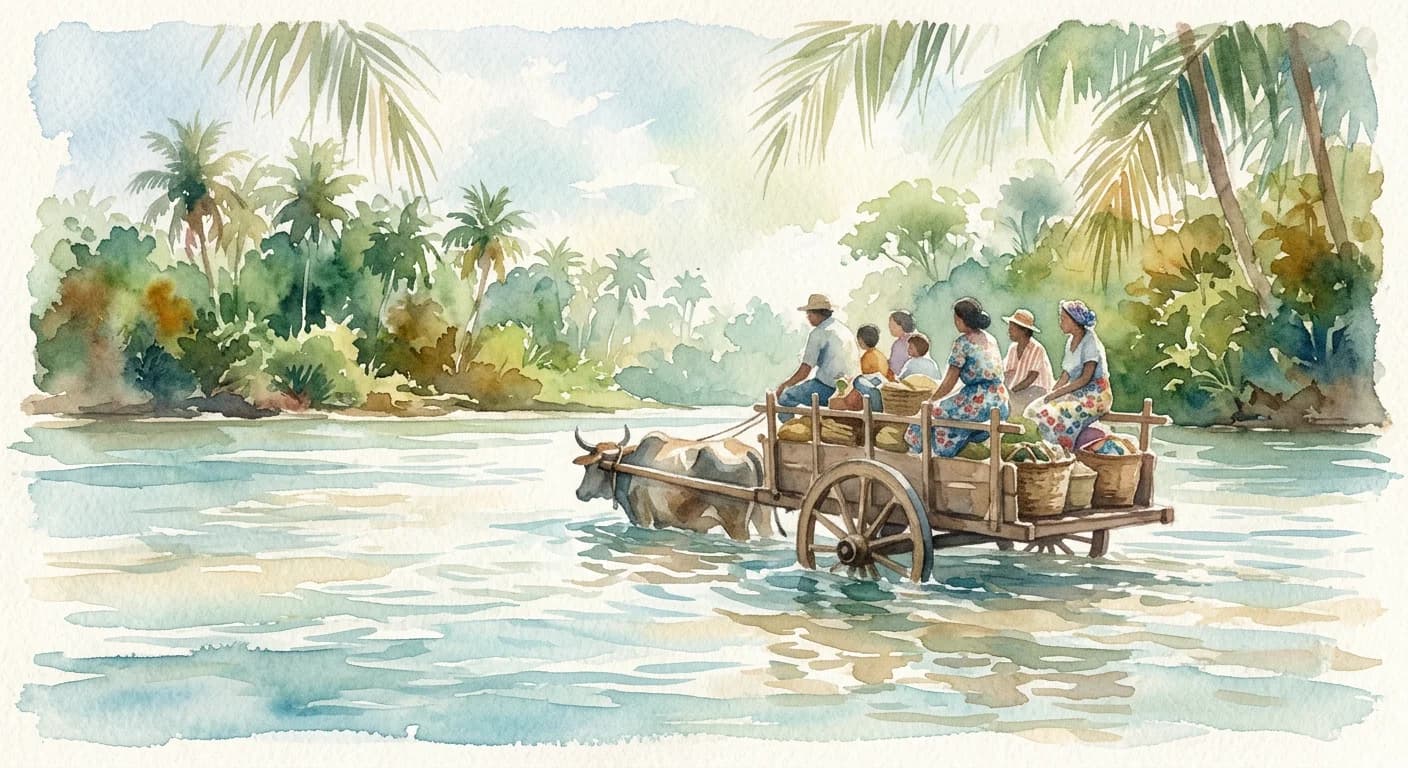
    Artistic representation of Sacolejar
    Portuguese•
    🇧🇷Brazil🇵🇹Portugal

    Sacolejar

    /sah-koh-leh-ZHAHR/

    Meaning

    Sacolejar vividly describes the rhythmic, often involuntary shaking and jostling experienced when traversing uneven terrain or choppy waters. It's the distinct sensation of your body being tossed about, not violently, but persistently, as a vehicle navigates bumps, potholes, or waves. This word perfectly encapsulates the minor discomfort, the sometimes amusing disequilibrium, and the very physical reality of a journey that is far from smooth, embedding the experience of travel itself into its very sound.

    Literal Translation

    to shake, to jolt, to rattle

    The Story Behind the Word

    The existence and common usage of "sacolejar" in Brazil speak volumes about the country's vast geography and historical infrastructure challenges. For generations, travel across Brazil's immense landmass, whether by bus through rural areas, by car on poorly maintained roads, or by boat along its extensive coastline and rivers, has often involved significant physical discomfort. This word acknowledges and normalizes that experience, making light of the bumps and shakes rather than lamenting them. It reflects a certain resilience and an acceptance of the 'journey' as inherently imperfect, a part of life's unpredictable rhythm. It's a term born from necessity and forged in shared experience, embodying a collective memory of countless bumpy rides.

    Experience It

    Bus Ride to the Coast

    The old bus rattled and groaned, and as it hit another series of potholes on the unpaved road, everyone inside began to sacolejar. Heads bobbed, bags shifted, and a few sleepy passengers were suddenly wide awake, bracing themselves for the next jolt.

    Fishing Boat Adventure

    Out on the open sea, the small fishing boat began to sacolejar with the waves, a gentle but constant rocking that made even seasoned sailors feel a little queasy. The rhythmic movement became a part of the journey, almost like a lullaby.

    The Deeper Meaning

    This word subtly reflects a pragmatic acceptance of life's inherent imperfections and unpredictability. It suggests that not all journeys are smooth, and sometimes, the discomfort of 'sacolejar' is simply part of the experience, to be endured or even found amusing, rather than resisted. It embodies a resilience and a knowing smile in the face of minor adversity.

    Did You Know?

    The root 'saco' means 'bag' or 'sack' in Portuguese, subtly hinting at the feeling of being shaken around like contents in a sack during travel.

    How It's Used

    Used to describe the sensation of being shaken or jolted, particularly during travel over rough surfaces or seas.

    Emotions
    anxiety,joy
    Contexts
    travel,weather
    🇧🇷Brazil🇵🇹Portugal

    by Dr. Kenji Tanaka·Written Mar 10, 2026·Updated Apr 3, 2026

    Related Words

    Explore more
    Pura vidaSpanish

    More than just 'pure life,' "Pura vida" encapsulates a profound philosophy of embracing the present moment with unwavering optimism and gratitude. It's a daily commitment to finding joy in simple pleasures, accepting life's challenges with a positive spirit, and prioritizing well-being over material possessions. This ubiquitous phrase reflects a national identity built on resilience, community, and an deep appreciation for nature's bounty.

    JayusIndonesian

    Jayus describes that peculiar moment when a joke is so utterly devoid of humor, so poorly delivered, or so nonsensical that its very ineptitude triggers an involuntary, almost sympathetic burst of laughter. It's not laughter at the joke itself, but rather a reaction to the sheer awkwardness and the unexpected, delightful absurdity of someone failing so spectacularly to be funny. The humor stems from the meta-experience of witnessing a comedic train wreck, transforming discomfort into a shared moment of mirth.

    MamihlapinatapaiYaghan

    Mamihlapinatapai encapsulates that profound, unspoken moment when two individuals lock eyes, each silently acknowledging a mutual desire or intention, yet both hesitate to be the first to act upon it. It's a delicate dance of anticipation, a shared gaze brimming with common understanding and a quiet longing for the other to break the ice. This intricate look carries the weight of a shared, uninitiated potential, a silent conversation where both parties are perfectly aware of what could happen, but neither makes the first move.

    TarabArabic

    Tarab is far more than mere enjoyment; it's a profound, almost spiritual communion with music, where the performer and audience become one in a shared emotional journey. It signifies a state of ecstatic enchantment, a deep emotional surrender that transcends the self, leading to a transformative experience. This intense connection often manifests as spontaneous vocalizations, tears, or even physical swaying, as the music penetrates the soul and evokes a powerful release of feeling. It's a moment of pure, unadulterated musical rapture.