U.
HomeRegionsLanguagesEmotionsCollections
Find Your Word

“The limits of my language mean the limits of my world.”

— Ludwig Wittgenstein, Philosopher

Untranslatable

A curated collection of the world's most beautiful expressions—words that remind us language is humanity's greatest invention.

  • Home
  • Collections
  • Regions
  • Countries
  • Emotions
  • Tags
  • Contexts
  • Finder
  • Europe
  • Asia
  • Americas
  • Africa
  • Middle East
  • About
  • Contact
  • Privacy Policy
  • Terms of Service

2026 © Untranslatable. All rights reserved.

    /
    /
    1. Home
    2. /
    3. Asia
    4. /
    5. Emaki
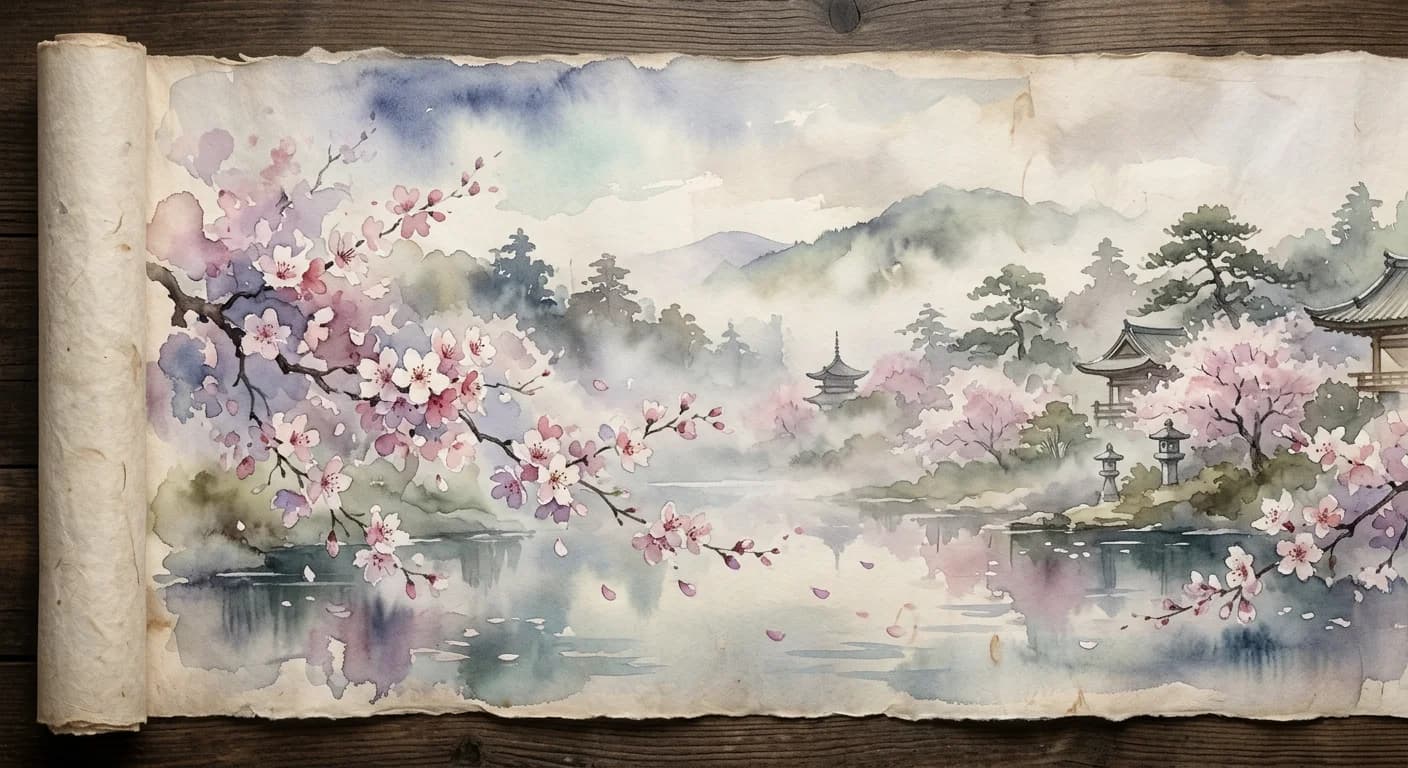
    Artistic representation of Emaki
    Japanese•
    🇯🇵Japan

    Emaki

    /EH-mah-kee/

    Meaning

    Emaki refers to the captivating traditional Japanese picture scrolls, a narrative art form where intricate paintings and elegant calligraphy intertwine to unfold a story. These scrolls, meant to be unrolled sequentially, offer a cinematic experience, guiding the viewer through a continuous flow of images and text, often depicting historical events, Buddhist parables, or classic literature. This immersive format transforms passive viewing into an active journey through ancient Japanese culture, blending artistic mastery with profound storytelling.

    Literal Translation

    picture scroll

    The Story Behind the Word

    Emaki emerged in Japan during the Heian period (794-1185) and flourished through the Kamakura and Muromachi periods, serving as a vital medium for both religious instruction and secular entertainment. Their existence reflects a core Japanese aesthetic that values narrative progression, meticulous craftsmanship, and the integration of diverse art forms. By depicting everything from imperial court life and epic battles to supernatural tales and the lives of ordinary people, emaki acted as visual encyclopedias and moral compasses. The act of unrolling an emaki, often in a shared setting, fostered a communal experience of storytelling, highlighting a cultural appreciation for shared narratives and the tangible preservation of history and folklore. They reveal a worldview where beauty, wisdom, and story are inextricably linked, and where the past actively informs the present.

    Experience It

    Unrolling a Tale

    A family gathers around a low table, the eldest carefully unrolling a section of an ancient emaki. As the vibrant scenes of a samurai battle unfold, his grandchildren lean in, captivated by the intricate details and his whispered explanations of the heroic figures and dramatic events.

    Monk's Teaching Scroll

    Inside a temple, a monk uses an emaki to illustrate a complex Buddhist teaching. He slowly reveals each segment, pointing to the painted figures and calligraphic passages, guiding his students through the visual narrative to deepen their understanding of spiritual concepts.

    The Deeper Meaning

    Emaki embody a philosophy of 'time in space,' where narrative unfolds not through discrete frames, but as a continuous journey across a physical scroll. This reflects a cyclical, interconnected view of existence and history, where past, present, and future are fluidly linked, inviting contemplation on the passage of time and the enduring nature of human experience.

    Did You Know?

    Some emaki can stretch over 20 meters (65 feet) in length, requiring multiple people to fully appreciate the entire narrative, making them truly monumental works of art!

    How It's Used

    Used to refer to Japanese hand-scroll paintings.

    Emotions
    nostalgia,serenity,wonder
    Contexts
    art,history,travel
    🇯🇵Japan

    by Anya Petrova·Written Mar 14, 2026·Updated Apr 3, 2026

    Related Words

    Explore more
    Wabi-sabiJapanese

    Wabi-sabi is the profound appreciation for the ephemeral, the imperfect, and the incomplete aspects of existence. It is about discovering beauty in the subtle textures of age, the unique character of flaws, and the gentle decay that marks the passage of time. This philosophy encourages a quiet acceptance of impermanence and a mindful connection to the natural world, finding elegance in simplicity and authenticity.

    IkigaiJapanese

    Ikigai is more than just a reason to get out of bed; it's a deeply personal and evolving sense of purpose that brings genuine fulfillment and joy to one's life. It represents the sweet spot where your passions, talents, needs of the world, and what you can be paid for beautifully converge. Discovering your ikigai often leads to a life lived with intentionality, resilience, and a profound connection to one's contributions. It's the intrinsic motivation that fuels a meaningful existence, regardless of external circumstances.

    NunchiKorean

    Nunchi is the sophisticated, almost telepathic, ability to instantly grasp the unspoken dynamics of any social situation, anticipating others' thoughts and feelings, and then responding with impeccable grace and timing. It's an acute form of social intuition, allowing one to navigate complex interpersonal landscapes by reading subtle cues like body language, tone, and context. Possessing good nunchi means effortlessly understanding the underlying emotional currents and adjusting one's behavior to maintain harmony and effectiveness, often without a single word exchanged.

    JugaadHindi

    Jugaad is more than just a quick fix; it embodies the spirit of resourceful, ingenious improvisation in the face of scarcity or systemic challenges. It's the art of bending rules, repurposing materials, and thinking outside the box to achieve a desired outcome, often with limited financial or technological resources. This approach celebrates clever workarounds and innovative adaptations, turning constraints into catalysts for creative problem-solving. It's about making do and making something work, brilliantly.