Eigengrau
/EYE-gen-grow/
Meaning
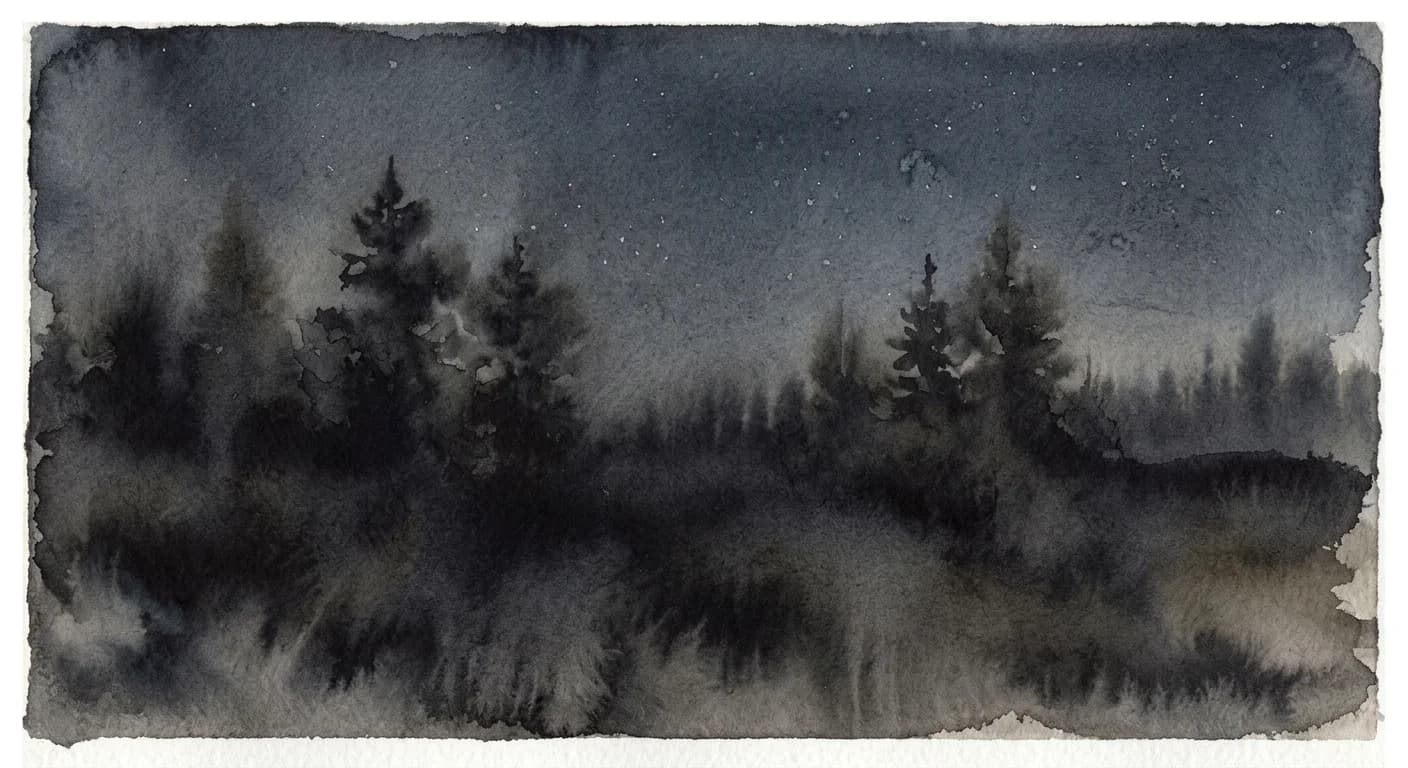
Eigengrau, literally 'own gray,' is the unique, dark gray hue that the human eye perceives in absolute darkness. It's not the stark, true black of an object absorbing all light, but rather a soft, slightly flickering, and subtly textured field of gray that represents the intrinsic activity and baseline 'noise' of our own optic nerve and visual cortex. This phenomenon highlights that our perception of 'nothing' is still a biological event, a self-generated visual hum that precedes any external stimulus.
Literal Translation
own gray
The Story Behind the Word
The very existence of 'Eigengrau' in the German lexicon, particularly its scientific and philosophical integration, speaks to a cultural inclination towards precise observation and a deep introspection into human perception and experience. German thought, especially in philosophy and psychology, has a long tradition of meticulously dissecting phenomena that others might take for granted, from Kant's critiques of pure reason to the Gestalt psychologists' exploration of perception. 'Eigengrau' fits perfectly into this tradition, acknowledging that even the absence of external input is a complex, internally generated experience. It reflects a culture that values defining and categorizing the subtle, often overlooked aspects of existence, suggesting that even our 'nothingness' is something to be precisely understood and named.
Experience It
Sensory Deprivation Tank
Floating in the inky blackness of the sensory deprivation tank, Sarah expected true black. Instead, a soft, shimmering Eigengrau enveloped her, a subtle visual hum that reminded her even her own eyes were actively 'seeing' something in the void.
Before Sleep
Lying in bed with the lights out, before sleep fully claimed him, Mark often stared into the Eigengrau. It wasn't frightening, but a familiar, gentle gray that felt like the visual canvas of his mind, quietly waiting for dreams to paint upon it.
The Deeper Meaning
Eigengrau offers a profound insight into the subjective nature of reality, suggesting that even our most fundamental perceptions are not passive recordings of the external world, but active constructions of our own biology. It highlights the inherent 'self' in our seeing, reminding us that even in apparent emptiness, our internal systems are always at work, shaping the world we experience.
Did You Know?
Eigengrau is slightly brighter than true black because the cells in your retina are never completely 'off'; they generate a low level of neural activity even without light, which your brain interprets as this specific shade of gray.
How It's Used
This term is primarily used within scientific and psychological contexts, particularly in discussions about visual perception, optometry, and the physiology of the eye. It's employed when describing the visual field in conditions of complete darkness or when discussing the inherent noise within the visual system.