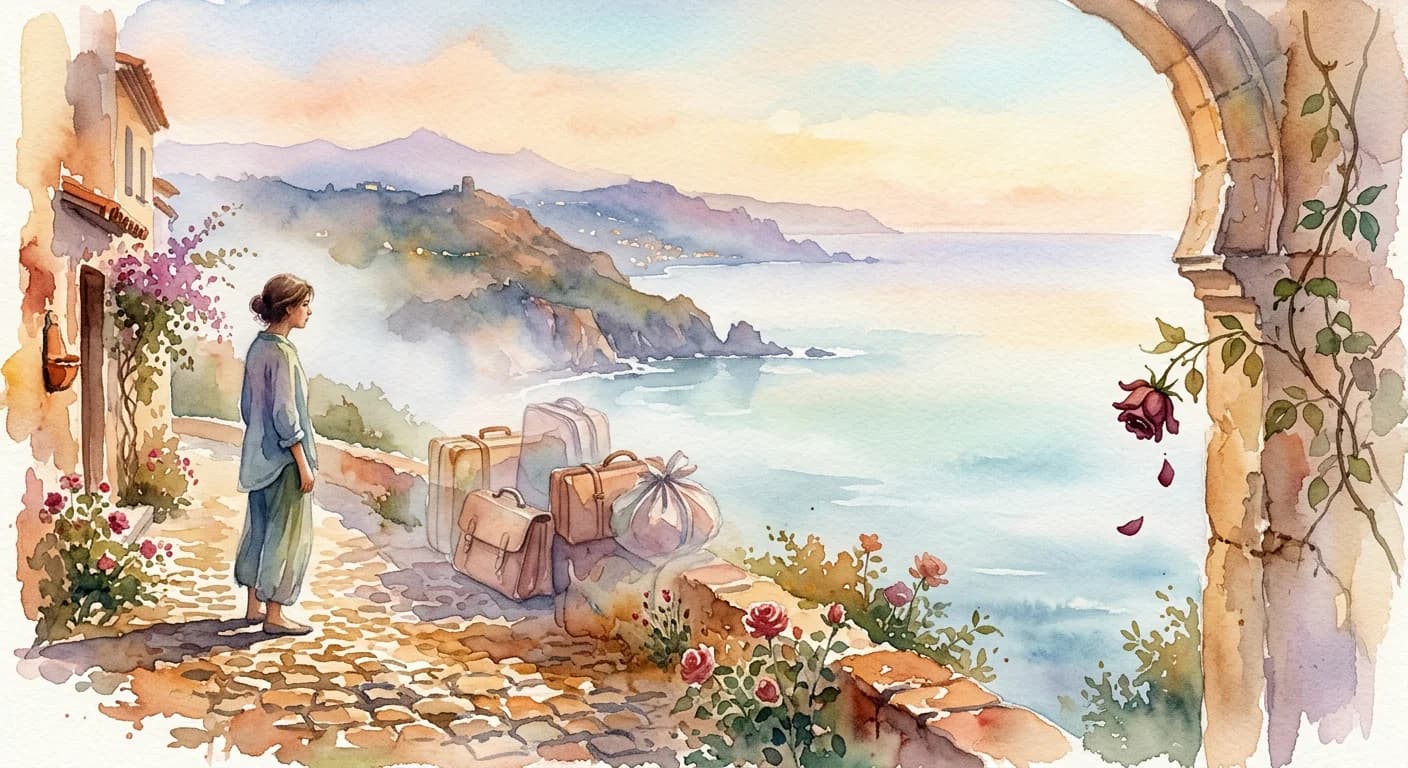
Equipaje
/eh-kee-PAH-heh/
Meaning
"Equipaje" transcends mere physical luggage; it encapsulates the profound collection of experiences, memories, joys, sorrows, and even burdens that an individual accumulates over a lifetime's journey. It speaks to the invisible baggage one carries, the sum total of personal history and emotional weight that shapes identity and influences every step forward. This concept highlights the continuous process of gathering and carrying one's past, making it an intrinsic part of who they are in the present and future.
Literal Translation
Baggage, luggage
The Story Behind the Word
The concept of "equipaje" in Spanish culture is deeply rooted in a worldview that values personal history, resilience, and the understanding that life is a continuous journey of accumulation, both tangible and intangible. Spain's rich history, marked by migrations, conquests, and a strong sense of community and family, has fostered a cultural appreciation for the stories and burdens passed down through generations. The word reflects a philosophy where one's past is not simply left behind but is an integral, carried component of identity. This perspective contrasts with more individualistic cultures that might encourage 'shedding' the past; instead, Spanish culture often embraces the weight of one's "equipaje" as a testament to their life's path and the wisdom gained. It underscores a collective consciousness where personal narratives are intertwined with historical and communal experiences.
Experience It
The Artist's Equipaje
An elderly painter, known for his melancholic yet vibrant works, often spoke of his "equipaje." Each brushstroke seemed to carry the weight of his youth in Andalusia, the heartbreak of a lost love, and the quiet joy of solitary creation, all meticulously packed into his artistic expression.
Family's Shared Burden
During a family reunion, a grandmother looked at her grandchildren, remarking on how each carried a unique "equipaje." She wasn't referring to their suitcases, but to the shared family stories, the resilience passed down, and the unspoken responsibilities that bound them together across generations.
What Gets Lost in Translation
English speakers often miss the profound metaphorical depth of "equipaje," reducing it merely to "baggage" or "luggage." The nuance lies in its almost reverent acknowledgment of personal history and inherited experiences as an intrinsic part of one's being, rather than solely a burden to be shed. It's not always negative; it can encompass cherished memories and wisdom.
Across Cultures
While not a direct translation, the Japanese concept of "mono no aware" (a gentle melancholy at the transience of things, often appreciating their beauty) touches upon the emotional accumulation of life, albeit with a different emphasis. Similarly, the German word "Lebensgepäck" (life's luggage) conveys a very similar idea of carrying one's experiences, though perhaps without the same poetic resonance as "equipaje."
The Deeper Meaning
"Equipaje" reveals a worldview where identity is not static but a dynamic accumulation. It suggests that our past is not a separate entity but an integral, carried component of our present self, shaping our perspective and journey. This philosophy embraces the continuity of life, acknowledging that every experience, good or bad, contributes to the rich tapestry of who we are, making us more resilient and whole.
Did You Know?
Did you know that in Spanish, the phrase "cargar con el equipaje" (to carry the baggage) is commonly used to express bearing a heavy emotional or historical burden, far beyond just physical luggage?
How It's Used
Used to refer to physical luggage for travel, but also metaphorically to describe the accumulated experiences, memories, and emotional baggage a person carries.