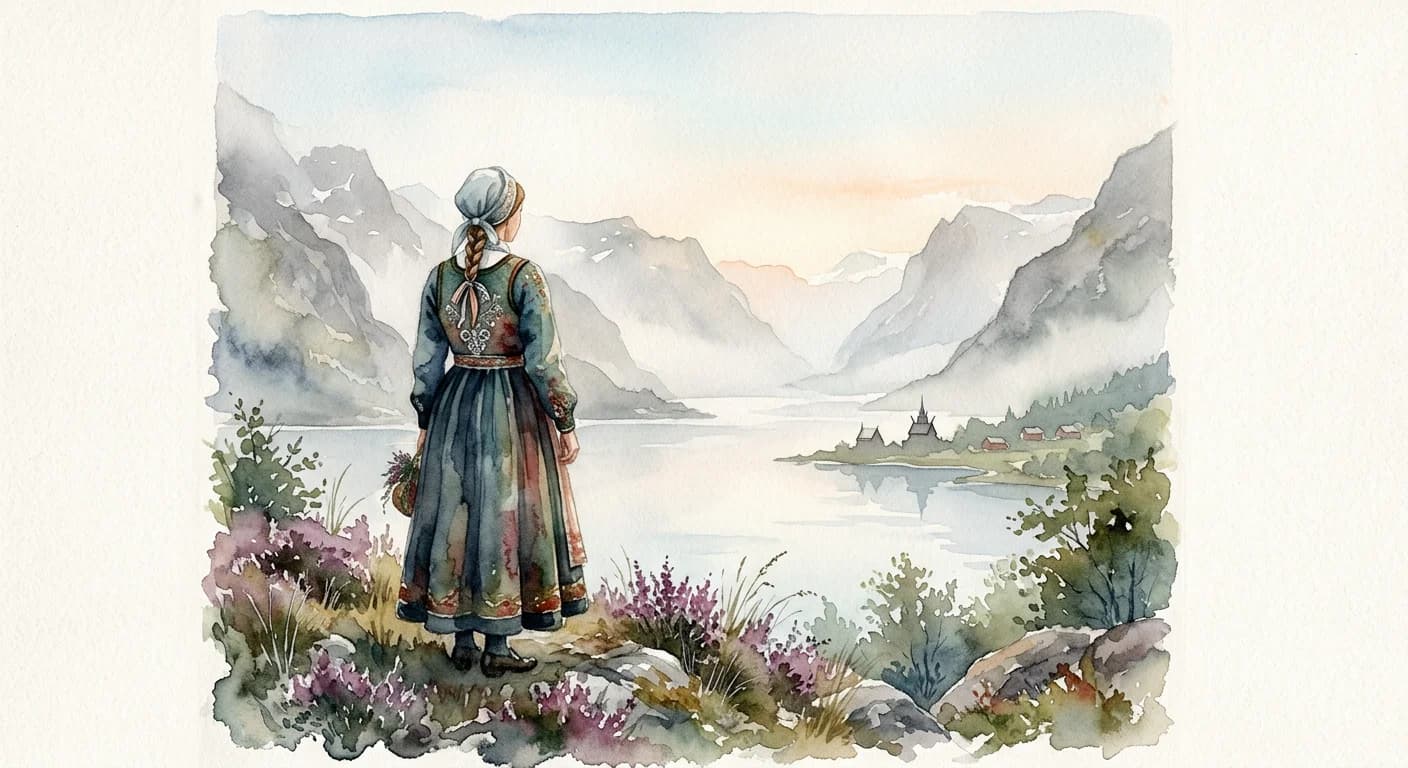
Folkedrakt
/FOL-drahkt/
Meaning
Folkedrakt transcends mere clothing; it is the vibrant, traditional national costume of Norway, a deeply cherished emblem of cultural identity and historical continuity. Each meticulously crafted garment, often hand-stitched and adorned with intricate embroidery, tells a story of regional heritage and community pride. Worn with reverence during national holidays, weddings, and significant celebrations, the folkedrakt evokes a powerful sense of belonging, nostalgia, and an unbroken connection to ancestral traditions.
Literal Translation
Folk costume
The Story Behind the Word
The concept of 'folkedrakt' emerged strongly in the 19th century during Norway's romantic nationalism period, coinciding with its quest for independence from Sweden. It became a powerful symbol of a distinct Norwegian identity, an antidote to foreign cultural influences. Each region, valley, and even parish developed its own unique 'drakt,' reflecting local traditions, available materials, and social status. Wearing a folkedrakt is an act of cultural affirmation, a visible declaration of one's roots and a celebration of collective memory. It embodies a reverence for craftsmanship, tradition, and the enduring spirit of Norwegian rural life, highlighting a culture that values its past as a foundation for its future.
Experience It
May 17th Parade
On Norway's Constitution Day, a young girl beams as she parades through the streets of Oslo, proudly wearing her grandmother's bunad (a specific type of folkedrakt) from Telemark. The vibrant embroidery and silver clasps glint in the sun, connecting her to generations of women who wore the same cherished attire.
Wedding Celebration
At a scenic fjord-side wedding, the groom stands tall in his intricately designed folkedrakt, reflecting his family's heritage from Hardanger. The rich wool and detailed vest symbolize not only his personal commitment but also a profound respect for cultural traditions being woven into the fabric of his new life.
The Deeper Meaning
The folkedrakt embodies a philosophy of rootedness and continuity, suggesting that identity is not just individual but deeply communal and historically informed. It reflects a worldview where heritage is a living, wearable legacy, and where the past is actively performed and celebrated in the present, fostering a collective memory and a strong sense of national cohesion.
Did You Know?
There are hundreds of distinct folkedrakt variations across Norway, each meticulously documented and reflecting specific regional histories, social standing, and even marital status through subtle design differences.
How It's Used
Used to refer to traditional Norwegian national costumes, often seen during national holidays like May 17th, weddings, and other festive occasions.