Garbo
/GAHR-boh/
Meaning
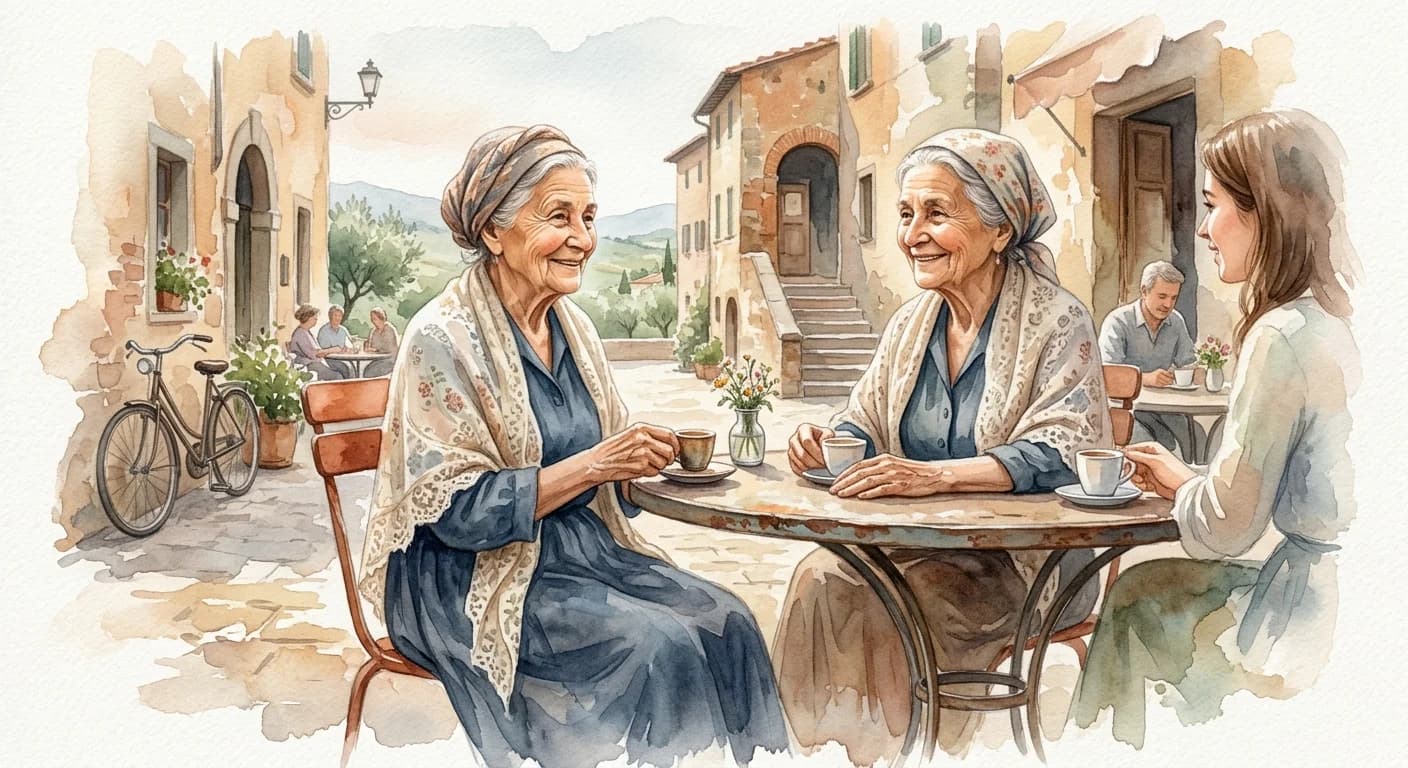
Garbo transcends mere elegance; it embodies a refined and dignified demeanor rooted in innate politeness and a deep consideration for others. It signifies an inner quality of being impeccably well-mannered, charming without being ostentatious, and possessing an understated class that permeates one's actions, words, and presence. This quality is highly esteemed in Italian society, reflecting a commitment to social harmony and a gentle, respectful approach to all interactions, making it far more profound than a simple translation of 'grace' or 'good manners'.
Literal Translation
Elegance, grace, good manners
The Story Behind the Word
The concept of 'garbo' is deeply interwoven with Italy's historical emphasis on civility, aesthetics, and the art of living ('la bella figura'). Emerging from a long tradition of courtly manners, Renaissance humanism, and the importance of social graces, 'garbo' reflects a society that values not just what one achieves, but how one conducts oneself. It reveals a worldview where personal conduct is an integral part of one's identity and contribution to the collective social fabric. To possess 'garbo' is to navigate the world with a gentle touch, an intuitive understanding of social cues, and a genuine respect for others, ensuring interactions are smooth, pleasant, and imbued with a sense of mutual dignity. It's a cornerstone of Italian 'savoir-vivre', suggesting that true beauty lies not just in appearance, but in the elegance of one's spirit and actions.
Experience It
Dining with Garbo
At a bustling trattoria, an elderly gentleman observes the young couple at the next table. He notices how the man, despite the casual setting, speaks softly, listens attentively, and offers his partner the best piece of bread with a subtle, unforced gesture. 'Che garbo!' he muses, appreciating the man's natural politeness and consideration.
A Diplomatic Reply
During a heated family discussion about holiday plans, Aunt Isabella, rather than raising her voice or interrupting, waits for a natural pause. She then gently offers a compromise, phrasing her suggestion with such tact and understanding that it immediately defuses the tension and brings smiles to everyone's faces. Her intervention was full of 'garbo'.
The Deeper Meaning
Garbo reflects a philosophy that values relational ethics and the aesthetics of human interaction above individualistic assertiveness. It posits that true character is expressed not through dominance or self-interest, but through the harmonious integration of self with community, demonstrated by a gentle demeanor, empathetic understanding, and an inherent respect for the dignity of others. It suggests that a life well-lived is one conducted with grace, consideration, and an unspoken commitment to collective well-being.
Did You Know?
While 'garbo' is seen as an admirable trait, its origin is believed by some to be from the Arabic 'qālib', meaning 'mold' or 'form', suggesting the shaping of refined behavior.
How It's Used
Used to describe a person's refined and polite demeanor, often in social settings or when referring to their general conduct.