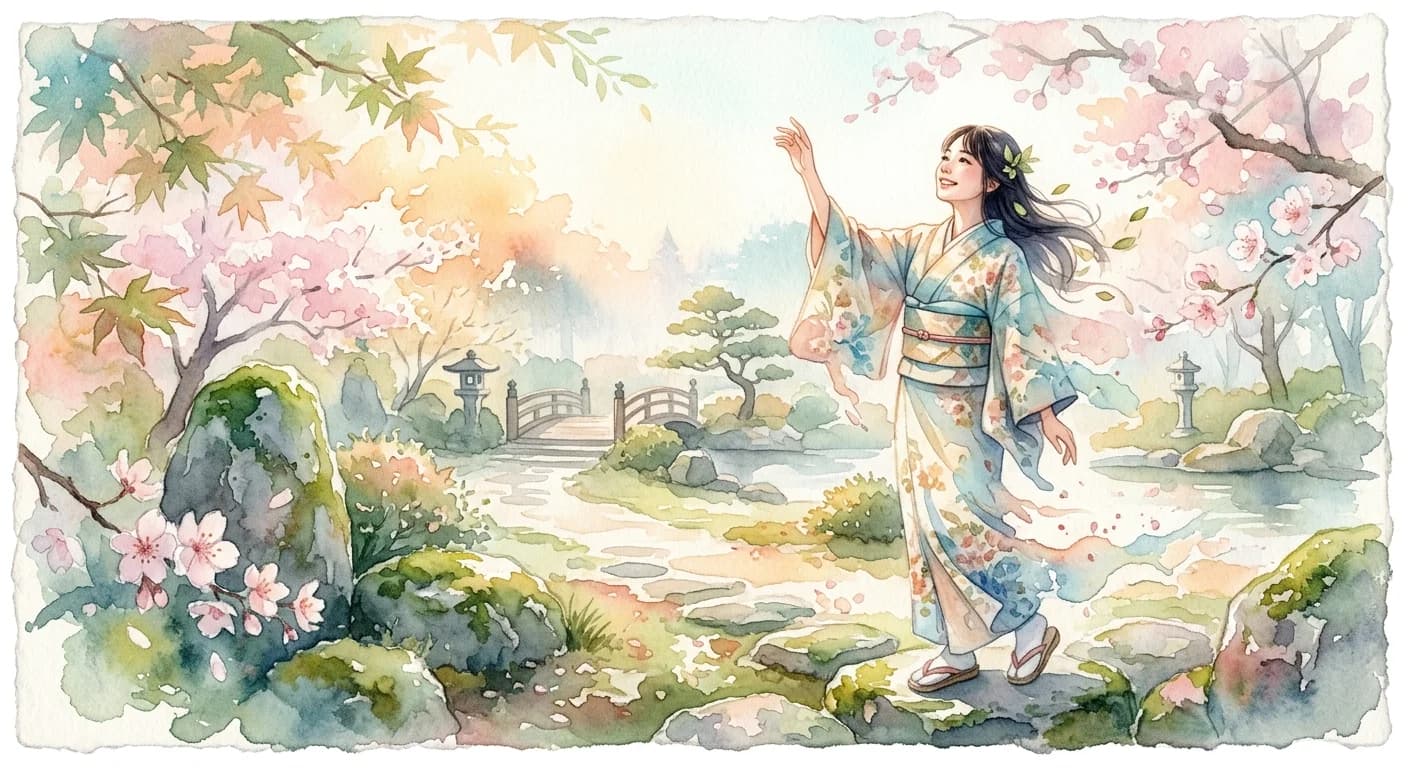
Genki
/GEN-kee/
Meaning
Genki encapsulates a radiant state of being, far beyond mere physical health; it's a dynamic vitality that encompasses a cheerful disposition, mental alertness, and an energetic spirit. To be genki is to be actively engaged with life, possessing an inner glow and positive outlook that is both deeply felt personally and visibly expressed to others. It signifies a holistic well-being where one's physical, mental, and emotional energies are in harmonious, thriving alignment, projecting an infectious sense of vigor. It is about a sustained, active engagement with the world, reflecting a positive life force.
Literal Translation
health, vigor, energy, spirit
The Story Behind the Word
The concept of 'genki' is deeply rooted in traditional Japanese philosophy and societal values, emphasizing harmony, resilience, and a positive contribution to the collective. The characters for 'genki' (元気) literally mean 'origin' (gen) and 'spirit/energy' (ki), suggesting an inherent, fundamental life force within every individual. This reflects a worldview where internal energy and spirit are paramount to one's existence and interaction with the world. Unlike a fleeting mood, genki is cultivated through healthy living, a positive mindset, and active participation in community life. It reveals a culture that values not just individual well-being, but also the positive energy an individual brings to their surroundings, fostering a sense of collective buoyancy and mutual support. Maintaining genki is seen as a personal responsibility that contributes to the overall health and vibrancy of society.
Experience It
Morning Greetings
A grandmother sees her grandson bounding down the stairs, eyes bright and a wide smile on his face. She greets him warmly, 'Ohayō! Kyō mo genki da ne!' (Good morning! You're so genki today!), acknowledging his lively spirit and readiness for the day.
Post-Illness Recovery
After a bout of flu, a colleague returns to work, still a bit pale but tackling tasks with enthusiasm and a positive attitude. His boss remarks, 'Yokatta! Genki ni natte kurete ureshii yo!' (Good! I'm glad you've become genki!), recognizing his recovered energy and cheerful disposition.
The Deeper Meaning
Genki embodies a profound Japanese philosophy that views well-being not as a passive state, but as an active, dynamic force that influences both the individual and their surroundings. It suggests that one's internal energy and spirit are fundamental to a fulfilling life and positive social interactions. This emphasizes a holistic connection between mind, body, and spirit, where maintaining a vibrant 'ki' is essential for personal resilience and contributing positively to the collective harmony, reflecting a deep-seated value for inner strength and outward vitality.
Did You Know?
The 'ki' (気) in genki is the same character used in words like 'kimochi' (feeling) and 'kibun' (mood), highlighting its connection to one's internal state and spirit, not just physical health.
How It's Used
Used to inquire about someone's well-being ('O-genki desu ka?' - 'Are you well?') or to describe someone who is lively, healthy, and energetic.