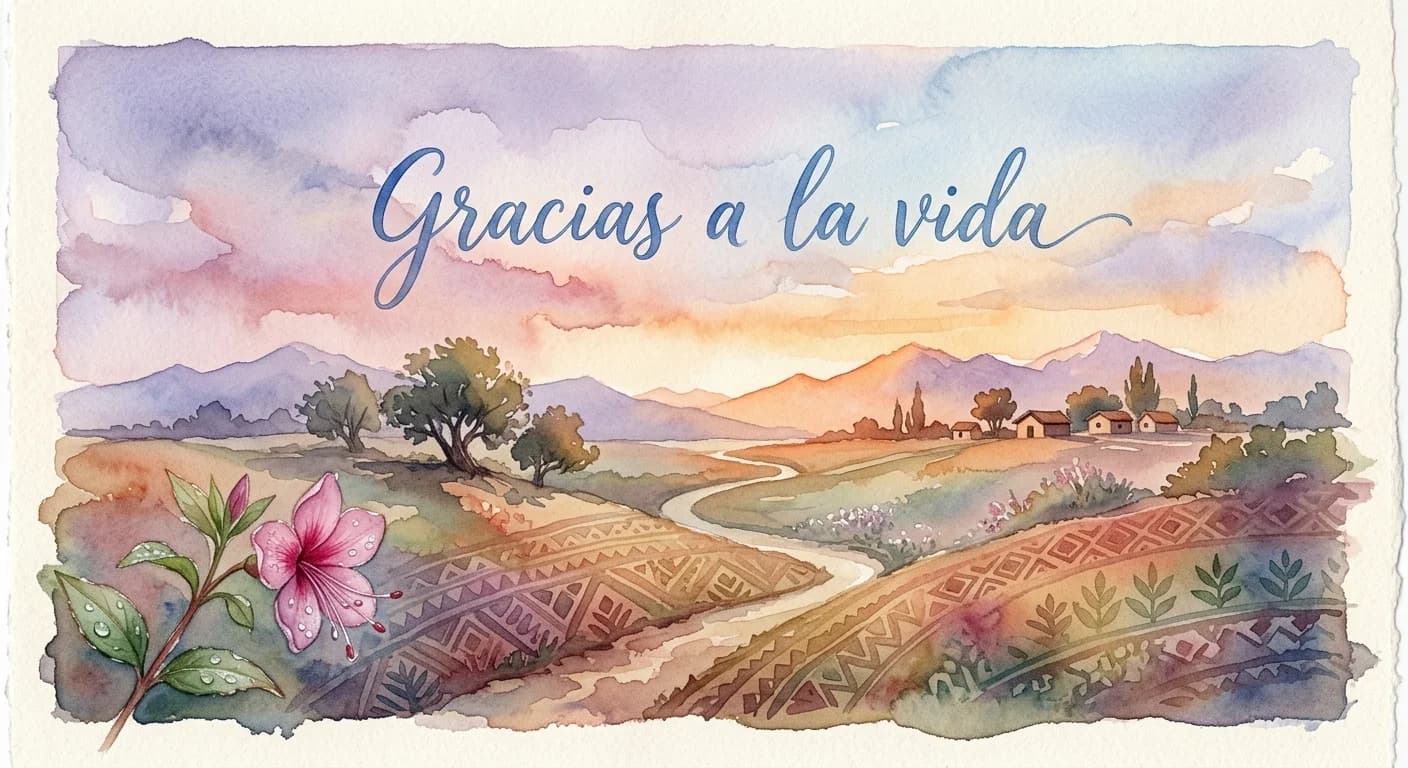
Gracias a la vida
/GRAH-thee-ahs ah lah VEE-dah (Castilian Spanish) / GRAH-see-ahs ah lah VEE-dah (Latin American Spanish)/
Meaning
This iconic Chilean phrase transcends a simple 'thank you for life,' embodying a profound, existential gratitude that embraces the full spectrum of existence. It acknowledges life's inherent beauty, its inevitable struggles, and the quiet joy found in everyday moments. It is a heartfelt recognition of the sheer privilege of being alive, a deep appreciation for all that life bestows, both the light and the shadow, culminating in a powerful affirmation of one's place within the grand tapestry of human experience.
Literal Translation
Thanks to the life
The Story Behind the Word
The phrase "Gracias a la vida" is inextricably linked to Violeta Parra, a Chilean folk singer, songwriter, and artist who became a foundational figure in the "Nueva Canción Chilena" (New Chilean Song) movement. Her music, deeply rooted in Chilean folklore and social commentary, gave voice to the struggles and hopes of the common people. The song, written in 1966, was a testament to her profound connection to her homeland, its people, and the raw, unvarnished truth of life. It emerged during a politically turbulent era in Latin America, offering a message of resilience and appreciation amidst hardship. For Chileans, it's more than a song; it's an anthem of national identity, a philosophical statement, and a cultural touchstone that reflects a capacity for profound emotional depth and a steadfast spirit in the face of adversity. It speaks to a cultural worldview that finds beauty and meaning even in suffering, recognizing that life's richness comes from its entirety.
Experience It
Post-Earthquake Reflection
After a devastating earthquake, an elderly Chilean woman surveys her damaged but standing home. She hugs her family tightly, tears in her eyes, and whispers, "Gracias a la vida" – not for the disaster, but for the survival, for the resilience, for the love that remains.
Simple Morning Joy
A young artist sips her morning coffee, watching the sunrise over the Andes. The quiet beauty fills her with a sense of peace. She smiles, a silent "Gracias a la vida" passing through her thoughts, appreciating the simple, profound gift of another day.
The Deeper Meaning
This phrase encapsulates a profound existential philosophy: an active, conscious embrace of life in its totality. It suggests that true gratitude isn't conditional on only good experiences, but rather a holistic appreciation for the very act of existing, with all its inherent contradictions and complexities. It speaks to a resilience that finds meaning and beauty even in struggle, affirming that every breath, every sight, every feeling is a gift deserving of thanks.
Did You Know?
Violeta Parra's "Gracias a la vida" was famously covered by American folk legend Joan Baez, introducing its powerful message to a global audience and solidifying its status as an international anthem of gratitude and resilience.
How It's Used
This phrase is often used as an expression of profound gratitude for life, especially after overcoming a significant hardship or when reflecting on the beauty of existence. It can be used as a standalone exclamation of appreciation or as part of a larger expression of thanks.