U.
HomeRegionsLanguagesEmotionsCollections
Find Your Word

“The limits of my language mean the limits of my world.”

— Ludwig Wittgenstein, Philosopher

Untranslatable

A curated collection of the world's most beautiful expressions—words that remind us language is humanity's greatest invention.

  • Home
  • Collections
  • Regions
  • Countries
  • Emotions
  • Tags
  • Contexts
  • Finder
  • Europe
  • Asia
  • Americas
  • Africa
  • Middle East
  • About
  • Contact
  • Privacy Policy
  • Terms of Service

2026 © Untranslatable. All rights reserved.

    /
    /
    1. Home
    2. /
    3. Asia
    4. /
    5. Hadaka matsuri
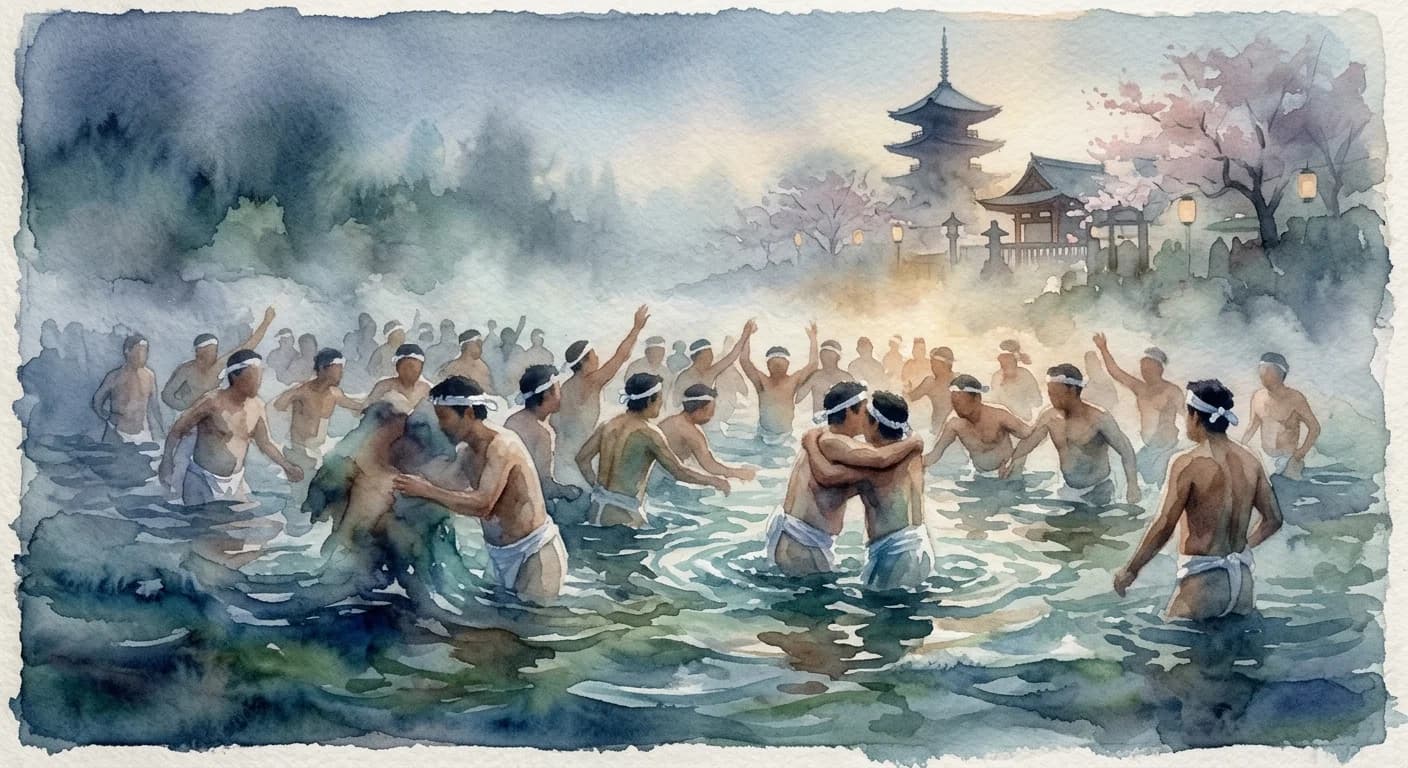
    Artistic representation of Hadaka matsuri
    Japanese•
    🇯🇵Japan

    Hadaka matsuri

    /HAH-dah-kah mah-TSOO-ree/

    Meaning

    Hadaka Matsuri, or "Naked Festival," transcends a mere display of minimal clothing; it is a profound spiritual cleansing and communal reaffirmation. Participants, primarily men clad only in a fundoshi, engage in vigorous, often physically demanding rituals, believing that by exposing themselves to the elements and engaging in spirited contests, they can purge impurities, absorb divine favor, and usher in prosperity. These ancient rites are a raw, visceral connection to tradition, fostering intense camaraderie and a collective plea for fertility, good harvests, and protection from misfortune.

    Literal Translation

    Naked Festival

    The Story Behind the Word

    The existence of Hadaka Matsuri reveals a deep-seated Japanese belief in ritual purity (kegare and harai) and the power of collective action to influence the spiritual realm. Rooted in ancient agricultural and Shinto practices, these festivals often coincide with seasonal changes, marking transitions and seeking blessings for the coming period. The shedding of elaborate clothing symbolizes a return to a primal, unadorned state, making participants more receptive to divine energy. It underscores a worldview where humans are not separate from nature or the gods, but intimately connected, and where physical endurance and shared struggle purify the spirit and strengthen community bonds. These festivals are not about exhibitionism, but about humility, resilience, and a communal plea to the cosmos.

    Experience It

    Winter Purification

    Shivering in the biting cold, Kenji adjusted his fundoshi, the steam rising from his skin as he joined the throng of men pushing towards the sacred pillar. This annual Hadaka Matsuri was a test of endurance, a communal purification ritual he’d participated in since his youth, believing it would bring good fortune to his family for the coming year.

    Lucky Charm Rush

    The roar of the crowd intensified as the priest tossed the lucky wooden charm into the sea of bodies. Hiroshi, sweat stinging his eyes, plunged into the scrum, elbowing and jostling with hundreds of other men, all vying to grab the talisman. This was the climax of the Hadaka Matsuri, a chaotic yet sacred struggle for a blessing believed to guarantee a year of health and prosperity.

    The Deeper Meaning

    Hadaka Matsuri embodies a philosophy where vulnerability and physical hardship are pathways to spiritual strength and communal harmony. By stripping away societal layers and enduring shared challenges, participants reconnect with fundamental human existence, fostering an intense sense of unity and purpose. It highlights the belief that purification through physical trial can align individuals and communities with cosmic forces, ensuring well-being and prosperity.

    Did You Know?

    Some Hadaka Matsuri involve participants plunging into icy rivers or being doused with cold water, further emphasizing the theme of purification and endurance against the elements.

    How It's Used

    Used to describe a specific type of traditional Japanese festival characterized by participants wearing minimal clothing.

    Emotions
    belonging,hope,joy,wonder
    Contexts
    celebration,seasons,tradition
    🇯🇵Japan

    by Dr. Kenji Tanaka·Written Mar 14, 2026·Updated Apr 3, 2026

    Related Words

    Explore more
    SobremesaSpanish

    Sobremesa is the cherished, often extended period immediately following a meal, particularly lunch or dinner, where diners remain seated at the table to enjoy conversation, coffee, and digest not just the food, but the company itself. It’s a dedicated time for unhurried social bonding, storytelling, and shared laughter, transforming a simple meal into a profound communal experience. Far from just clearing the dishes, sobremesa is an integral part of Spanish social life, often lasting for hours.

    Wabi-sabiJapanese

    Wabi-sabi is the profound appreciation for the ephemeral, the imperfect, and the incomplete aspects of existence. It is about discovering beauty in the subtle textures of age, the unique character of flaws, and the gentle decay that marks the passage of time. This philosophy encourages a quiet acceptance of impermanence and a mindful connection to the natural world, finding elegance in simplicity and authenticity.

    IkigaiJapanese

    Ikigai is more than just a reason to get out of bed; it's a deeply personal and evolving sense of purpose that brings genuine fulfillment and joy to one's life. It represents the sweet spot where your passions, talents, needs of the world, and what you can be paid for beautifully converge. Discovering your ikigai often leads to a life lived with intentionality, resilience, and a profound connection to one's contributions. It's the intrinsic motivation that fuels a meaningful existence, regardless of external circumstances.

    NunchiKorean

    Nunchi is the sophisticated, almost telepathic, ability to instantly grasp the unspoken dynamics of any social situation, anticipating others' thoughts and feelings, and then responding with impeccable grace and timing. It's an acute form of social intuition, allowing one to navigate complex interpersonal landscapes by reading subtle cues like body language, tone, and context. Possessing good nunchi means effortlessly understanding the underlying emotional currents and adjusting one's behavior to maintain harmony and effectiveness, often without a single word exchanged.