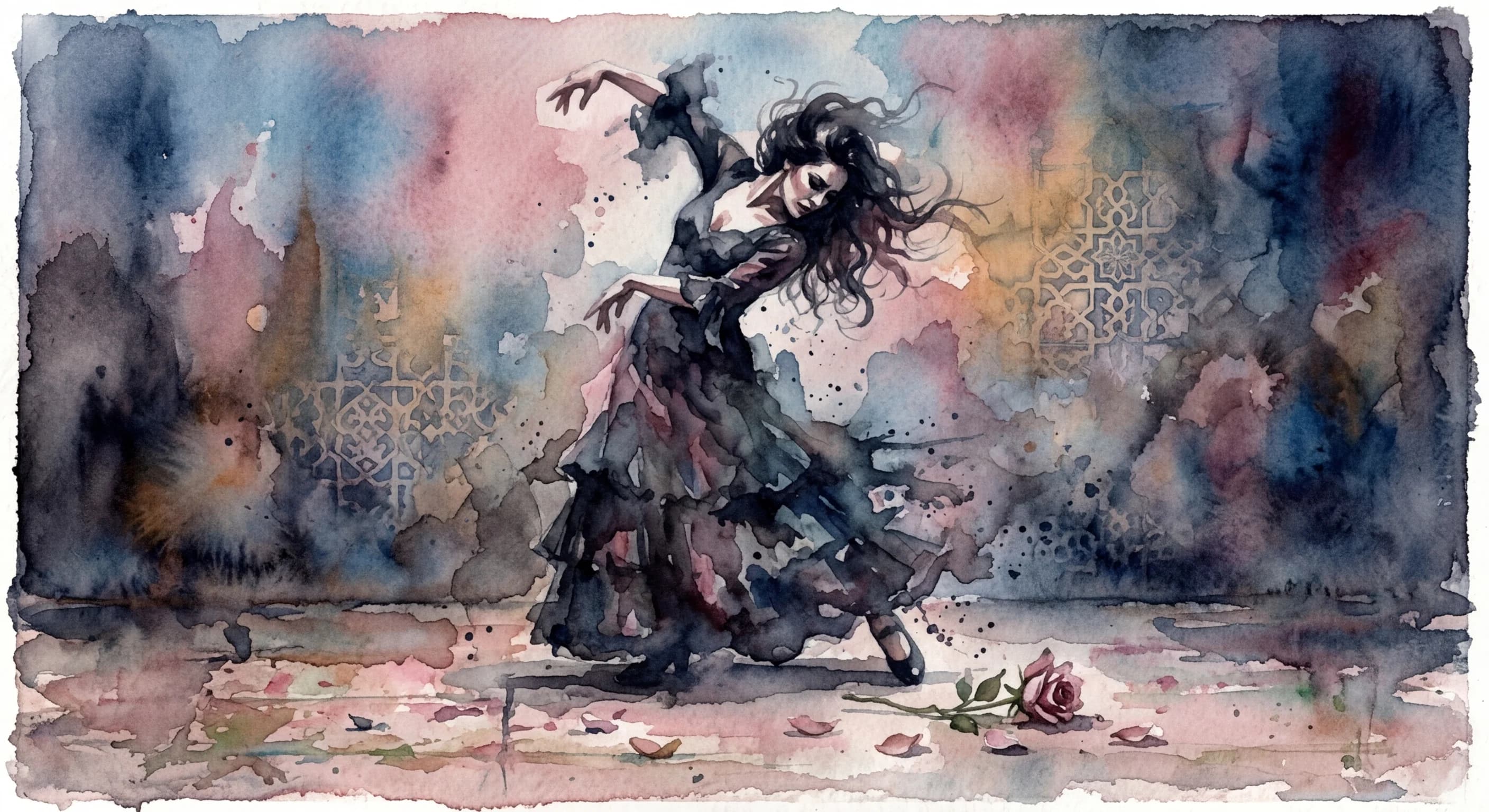
Duende
/doo-EN-day/
Meaning
Duende is the visceral, almost supernatural force that erupts from a truly profound artistic performance, particularly within the soul-stirring depths of flamenco. It transcends mere skill, embodying a raw, untamed spirit that connects performer and audience through a shared, often painful, human experience. This elusive power, like a sudden gust of wind, can evoke shivers, tears, and an undeniable sense of awe, transforming a moment into an unforgettable communion of passion and truth. It's the moment when art ceases to be entertainment and becomes an almost spiritual revelation.
Literal Translation
goblin, elf, spirit
The Story Behind the Word
The concept of duende is deeply woven into the fabric of Spanish, especially Andalusian, culture, reflecting a profound appreciation for art that originates from the soul's rawest depths rather than intellectual prowess alone. Its roots can be traced to the diverse cultural melting pot of Andalusia, where Gypsy, Moorish, and Jewish influences converged to create art forms like flamenco, which prioritize authentic emotion and a connection to ancestral suffering. The word's literal meaning, 'goblin' or 'spirit,' hints at its mystical, almost otherworldly nature, suggesting that true artistic expression is not entirely within human control but is instead a visitation, an inspiration from another realm. This perspective reveals a culture that values vulnerability, intensity, and the cathartic power of expressing life's inherent sorrow and joy, seeing art as a conduit for collective emotional release and spiritual transcendence. It's a testament to a people who find beauty in the profound, often melancholic, truths of existence.
Experience It
Flamenco's Fiery Heart
The dancer, eyes closed, stomped with a fury that shook the floor, her movements a raw cry of anguish and defiance. Suddenly, a gasp rippled through the audience as an unseen force seemed to possess her, her body articulating generations of pain and passion. That, the old man whispered, was duende.
Poet's Unveiling Truth
The poet's voice, usually soft, cracked with an unexpected power as he recited verses about loss. A profound silence fell, broken only by a few sniffles, as his words, charged with an almost unbearable honesty, pierced the hearts of every listener. He didn't just read; he conjured the duende.
The Deeper Meaning
Duende embodies a philosophy that true art is not about perfection or beauty in a conventional sense, but about confronting the rawness of human existence, including suffering and mortality. It suggests that profound artistic expression arises from a deep, often painful, connection to the primal forces of life and death, revealing a culture that values authenticity and emotional depth above all else. It's an affirmation that the most moving art often comes from the shadows, not just the light.
Did You Know?
Federico García Lorca, the renowned Spanish poet, dedicated an entire essay, 'Theory and Play of the Duende,' to exploring this mysterious, dark, and vital force in art, distinguishing it from mere muse or angel.
How It's Used
Used to describe the captivating, almost magical power of an artist or performer, especially in flamenco, that deeply moves an audience.