U.
HomeRegionsLanguagesEmotionsCollections
Find Your Word

“The limits of my language mean the limits of my world.”

— Ludwig Wittgenstein, Philosopher

Untranslatable

A curated collection of the world's most beautiful expressions—words that remind us language is humanity's greatest invention.

  • Home
  • Collections
  • Regions
  • Countries
  • Emotions
  • Tags
  • Contexts
  • Finder
  • Europe
  • Asia
  • Americas
  • Africa
  • Middle East
  • About
  • Contact
  • Privacy Policy
  • Terms of Service

2026 © Untranslatable. All rights reserved.

    /
    /
    1. Home
    2. /
    3. Americas
    4. /
    5. Curandera
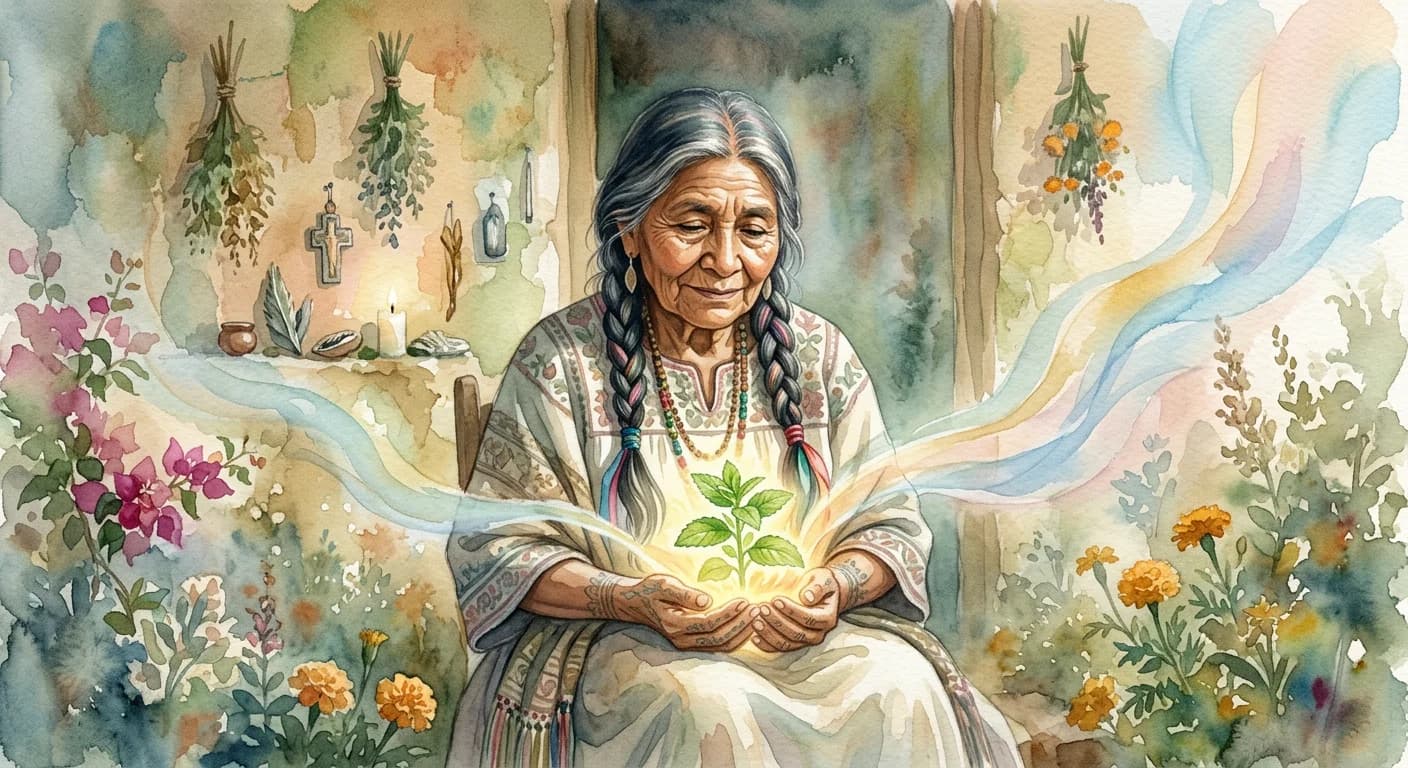
    Artistic representation of Curandera
    Spanish•
    🇧🇴Bolivia🇪🇨Ecuador🇲🇽Mexico🇵🇪Peru🇺🇸United States

    Curandera

    /koo-rahn-DEH-rah/

    Meaning

    A curandera is far more than a simple herbalist; she is a revered spiritual conduit and folk healer, often a woman, deeply woven into the fabric of indigenous and mestizo communities across Latin America. Drawing upon generations of ancestral knowledge, she masterfully blends natural remedies with sacred rituals, prayers, and divination to restore balance to the body, mind, and spirit. Her practice offers holistic healing, addressing ailments that Western medicine might overlook, and provides solace rooted in a profound connection to the earth and cosmic forces.

    Literal Translation

    Healer

    The Story Behind the Word

    The existence of the curandera reflects a worldview where health is not merely the absence of disease, but a state of harmony between the individual, community, nature, and the spiritual realm. This role emerged from pre-Columbian indigenous traditions, later integrating elements of Catholicism and West African spiritual practices, creating a unique syncretic healing art. Curanderas are often seen as guardians of cultural identity and ancestral wisdom, embodying resilience against colonial impositions and modern medical systems. Their practices underscore a belief in the interconnectedness of all things and the power of faith, ritual, and natural elements to mend what is broken, both physically and spiritually. They are pillars of their communities, offering accessible and culturally resonant care.

    Experience It

    Seeking Soul Retrieval

    María felt a profound emptiness after a traumatic event, a sense that a part of her was missing. Distrusting doctors, she sought out Doña Elena, a local curandera known for treating 'susto' (fright sickness). Doña Elena performed a limpia, sweeping María with herbs and chanting ancient prayers, inviting her spirit to return and settle within her.

    Ailing Child's Fever

    Little Carlos had a persistent fever, and his grandmother, concerned by the hospital's coldness, brought him to the curandera in their village. The curandera gently rubbed Carlos with a special ointment, offered him a herbal infusion, and spoke comforting words, reassuring his grandmother that the boy's spirit was being gently guided back to health.

    The Deeper Meaning

    The curandera embodies a philosophy where healing is an act of re-establishing equilibrium, recognizing that illness often stems from disharmony—be it spiritual, emotional, or environmental. This worldview challenges the reductionist approach of Western medicine, asserting that true well-being requires addressing the whole person within their cultural and cosmic context, and that ancient wisdom holds profound truths about human suffering and restoration.

    Did You Know?

    Many curanderas do not charge a fixed fee, instead accepting donations or goods, believing their healing gifts are sacred and should not be commodified.

    How It's Used

    Used to refer to a traditional folk healer, particularly in communities with strong indigenous roots or in areas with significant Hispanic populations. It is invoked when discussing alternative medicine, spiritual healing, or traditional practices for well-being.

    Emotions
    comfort,gratitude,hope,warmth
    Contexts
    community,family,health,tradition
    🇧🇴Bolivia🇪🇨Ecuador🇲🇽Mexico🇵🇪Peru🇺🇸United States

    by Kwame Nkrumah·Written Mar 14, 2026·Updated Apr 3, 2026

    Related Words

    Explore more
    GezelligDutch

    Gezellig encapsulates a profound sense of warmth, belonging, and convivial comfort, extending beyond mere coziness to embrace the social and emotional atmosphere. It's the feeling of being truly at ease, surrounded by good company, laughter, and a shared sense of contentment. This untranslatable term describes not just a physical space, but a holistic experience where time seems to slow down, fostering genuine connection and a deep sense of well-being.

    Pura vidaSpanish

    More than just 'pure life,' "Pura vida" encapsulates a profound philosophy of embracing the present moment with unwavering optimism and gratitude. It's a daily commitment to finding joy in simple pleasures, accepting life's challenges with a positive spirit, and prioritizing well-being over material possessions. This ubiquitous phrase reflects a national identity built on resilience, community, and an deep appreciation for nature's bounty.

    MamihlapinatapaiYaghan

    Mamihlapinatapai encapsulates that profound, unspoken moment when two individuals lock eyes, each silently acknowledging a mutual desire or intention, yet both hesitate to be the first to act upon it. It's a delicate dance of anticipation, a shared gaze brimming with common understanding and a quiet longing for the other to break the ice. This intricate look carries the weight of a shared, uninitiated potential, a silent conversation where both parties are perfectly aware of what could happen, but neither makes the first move.

    TingoPascuense

    Tingo describes the subtle, insidious process of progressively appropriating a neighbor's belongings by habitually requesting to borrow them, only to 'forget' their return. It's not outright theft, but a slow, deliberate erosion of another's possessions, often under the guise of neighborly exchange. This gradual accumulation, piece by piece, ultimately results in a significant transfer of goods without any direct confrontation or formal acknowledgment of the loss. It speaks to a passive-aggressive form of acquisition, where social niceties are weaponized.