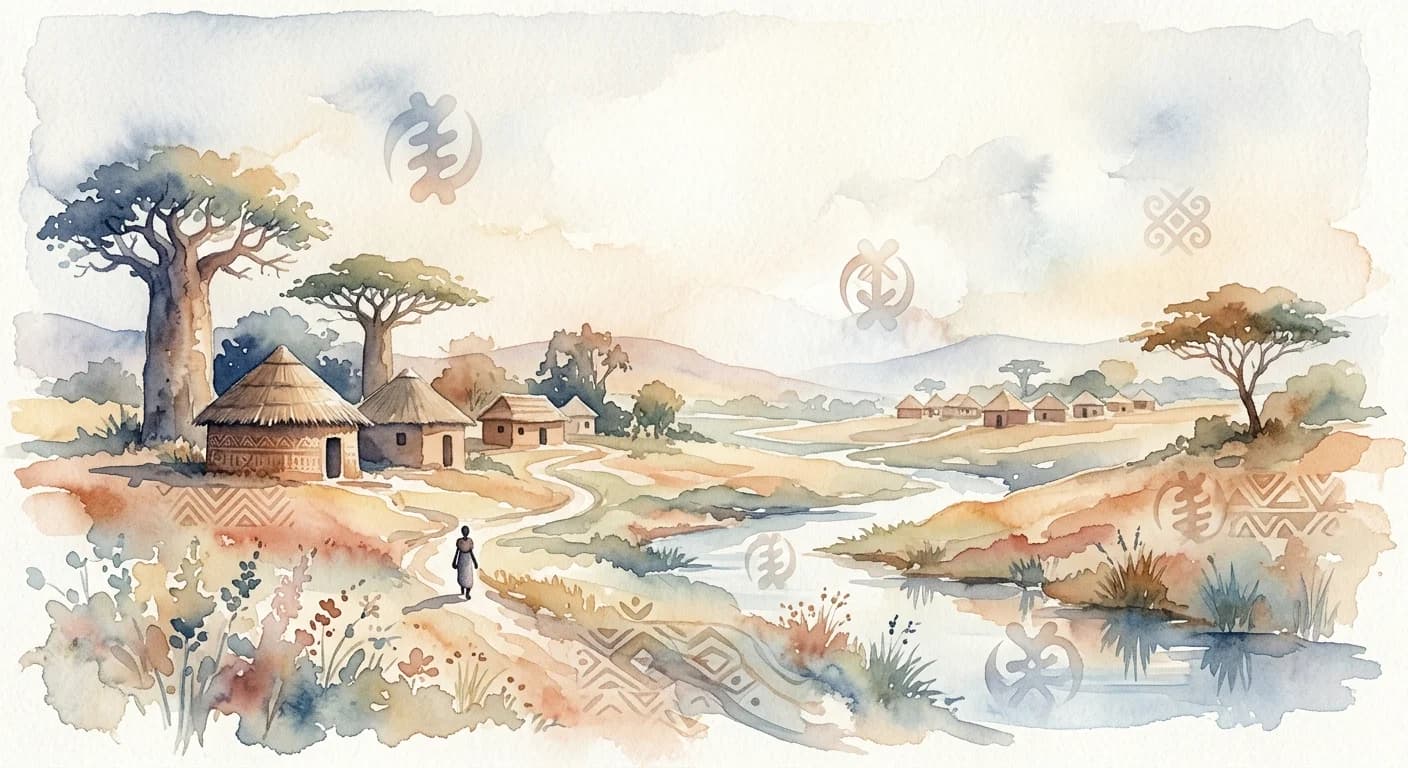
Adinkra
/ah-DEEN-krah/
Meaning
Adinkra represents a profound visual lexicon of the Akan people, where each symbol is a condensed narrative, proverb, or philosophical concept. Far beyond mere aesthetics, these intricate designs serve as a powerful mnemonic for ancestral wisdom, historical events, and deeply held spiritual beliefs. They are a silent, yet eloquent, communication system, weaving complex ideas and emotions into the very fabric of daily life and ceremonial expression, particularly on textiles, pottery, and carvings.
Literal Translation
The literal meaning of 'Adinkra' is debated, but it is often associated with 'goodbye' or 'farewell' in the context of its use on funeral cloths, or linked to the idea of 'saying goodbye' to the old and 'welcoming' the new.
The Story Behind the Word
The genesis of Adinkra is steeped in a historical conflict between the Asante and Gyaman kingdoms, with the symbols originally associated with the captured Gyaman king, Adinkra. His defeat and the subsequent adoption of his royal symbols by the victorious Asante transformed them from markers of a vanquished foe into powerful emblems of Akan identity, wisdom, and resilience. This origin story imbues Adinkra with a deep sense of historical memory and the ability to reclaim and repurpose meaning. The symbols reflect a worldview where knowledge is highly valued, passed down visually and orally, and where every aspect of life, from birth to death, is imbued with spiritual and philosophical significance. They reveal a culture that believes in learning from the past, embracing ethical conduct, and understanding the interconnectedness of existence.
Experience It
Funeral Cloth Tribute
At a solemn Akan funeral, mourners wear black or red cloth adorned with Adinkra symbols like 'Gye Nyame' (except God) signifying God's omnipotence, and 'Sankofa' (return and get it) urging them to learn from the past. The patterns silently articulate shared grief, spiritual solace, and collective memory, creating a visual tapestry of communal understanding and support.
Wisdom on Display
A young Ghanaian student proudly wears a t-shirt featuring the 'Nkyinkyim' symbol, representing 'twistings' or 'life's journey.' This choice isn't just fashion; it's a personal affirmation of resilience and adaptability, a silent declaration of their commitment to navigating life's complexities with wisdom, drawing strength from an ancient visual language.
The Deeper Meaning
Adinkra embodies a profound Akan philosophy that wisdom is not merely spoken, but lived and visually encoded. It reflects an epistemology where knowledge is communal, layered, and accessible through symbolic interpretation, emphasizing the importance of proverbs, historical memory, and ethical conduct. The symbols serve as constant reminders of moral principles, the cycle of life, and humanity's relationship with the divine, fostering a reflective and value-driven approach to existence.
Did You Know?
The original Adinkra symbols were traditionally hand-stamped onto cloth using carved calabash gourds and a natural dye made from tree bark, giving them their characteristic dark, earthy appearance.
How It's Used
Adinkra symbols are used in various forms of visual art, most famously on textiles (Adinkra cloth), but also in wood carvings, jewelry, and pottery. They are often printed or stamped onto cloth for special occasions, funerals, and celebrations, conveying messages of remembrance, wisdom, or spiritual significance.