U.
HomeRegionsLanguagesEmotionsCollections
Find Your Word

“The limits of my language mean the limits of my world.”

— Ludwig Wittgenstein, Philosopher

Untranslatable

A curated collection of the world's most beautiful expressions—words that remind us language is humanity's greatest invention.

  • Home
  • Collections
  • Regions
  • Countries
  • Emotions
  • Tags
  • Contexts
  • Finder
  • Europe
  • Asia
  • Americas
  • Africa
  • Middle East
  • About
  • Contact
  • Privacy Policy
  • Terms of Service

2026 © Untranslatable. All rights reserved.

    /
    /
    1. Home
    2. /
    3. Europe
    4. /
    5. Alazán
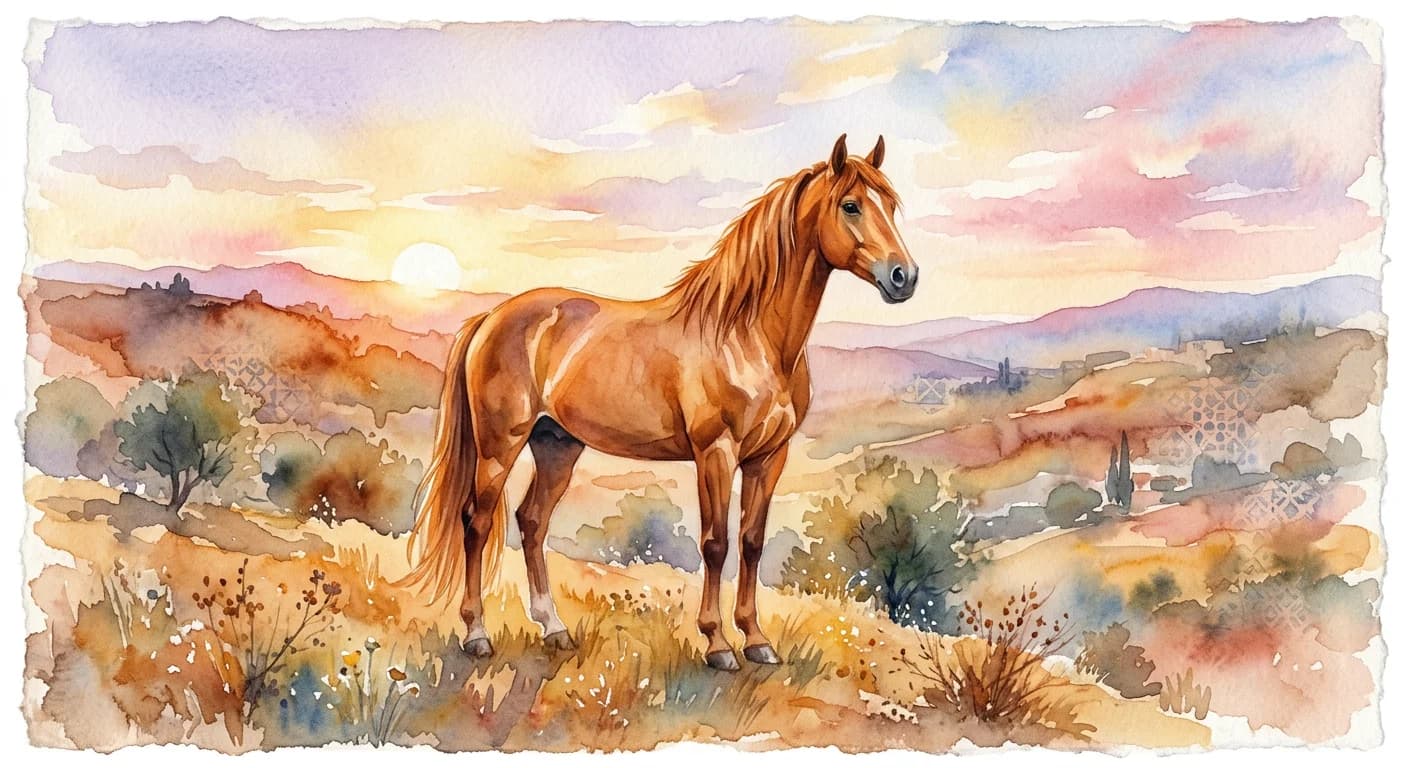
    Artistic representation of Alazán
    Spanish•
    🇦🇷Argentina🇧🇴Bolivia🇨🇱Chile🇨🇴Colombia🇨🇷Costa Rica🇨🇺Cuba🇩🇴Dominican Republic🇪🇨Ecuador🇸🇻El Salvador🇬🇹Guatemala🇭🇳Honduras🇲🇽Mexico🇳🇮Nicaragua🇵🇦Panama🇵🇾Paraguay🇵🇪Peru🇵🇷Puerto Rico🇪🇸Spain🇺🇾Uruguay🇻🇪Venezuela

    Alazán

    /ah-lah-THAHN (Castilian Spanish) or ah-lah-SAHN (Latin American Spanish)/

    Meaning

    Alazán describes a rich, reddish-brown horse coat, often likened to the color of toasted almonds or burnished copper under the Spanish sun. It's not merely a color; it conjures images of spirited, resilient equines, perfectly adapted to the rugged Iberian landscape. This hue signifies a blend of earthy strength and fiery vitality, deeply rooted in the agricultural and equestrian traditions of Spain, embodying both grace and untamed power.

    Literal Translation

    Reddish-brown (horse color)

    The Story Behind the Word

    The word "alazán" is deeply woven into the fabric of Spanish equestrian culture, reflecting centuries of selective breeding and a profound connection between humans and horses. Its etymology is believed to derive from Arabic (al-hasan, meaning 'the beautiful' or 'the good'), brought during the Moorish presence in Spain, highlighting the historical exchange that shaped Iberian horse breeds. Beyond mere description, "alazán" evokes a specific aesthetic ideal within Spanish horsemanship – often associated with breeds like the Andalusian (Pura Raza Española) and Lusitano, known for their noble bearing and fiery temperament. The prevalence of this term speaks to a culture that meticulously observes and values the nuanced characteristics of its animals, particularly those integral to work, transport, and cultural spectacles like bullfighting or equestrian displays. It reveals a worldview where natural beauty is appreciated in fine detail and where the land's colors are reflected in its most iconic creatures.

    Experience It

    Riding Through Olive Groves

    The old farmer, Mateo, patted his horse's neck. "Este Alazán," he murmured, admiring the sunlight glinting off its reddish-brown coat as they prepared to check the distant olive groves, the horse's color blending seamlessly with the sun-baked earth.

    A Painter's Palette

    Isabel mixed her paints, searching for the perfect shade. "No, no, not just brown," she mused, trying to capture the exact hue of the mare she'd seen at the feria. "It needs to be more... alazán, full of life and warmth, like the earth itself."

    The Deeper Meaning

    The existence and specific usage of "alazán" reflect a deep cultural philosophy of precise observation and appreciation for the natural world, particularly in its living forms. It signifies a worldview that doesn't merely categorize but celebrates the nuanced beauty and character inherent in animals, recognizing that specific colors carry symbolic weight and evoke distinct qualities. It speaks to a profound connection to the land and its creatures, where even a color can tell a story of heritage, strength, and spirit.

    Did You Know?

    While primarily for horses, 'alazán' can also describe a person with reddish-brown hair, lending them a rustic, spirited charm, much like the horses themselves. It's a subtle compliment suggesting natural, untamed beauty.

    How It's Used

    Primarily used in equestrian contexts to describe a horse's coat color. It can also be used more broadly to describe a reddish-brown hue in other contexts, such as in nature or art.

    Emotions
    belonging,warmth,wonder
    Contexts
    nature,travel,work
    🇦🇷Argentina🇧🇴Bolivia🇨🇱Chile🇨🇴Colombia🇨🇷Costa Rica🇨🇺Cuba🇩🇴Dominican Republic🇪🇨Ecuador🇸🇻El Salvador🇬🇹Guatemala🇭🇳Honduras🇲🇽Mexico🇳🇮Nicaragua🇵🇦Panama🇵🇾Paraguay🇵🇪Peru🇵🇷Puerto Rico🇪🇸Spain🇺🇾Uruguay🇻🇪Venezuela

    by Kwame Nkrumah·Written Mar 14, 2026·Updated Apr 3, 2026

    Related Words

    Explore more
    HyggeDanish

    Hygge is more than mere coziness; it's a holistic embrace of comfort, warmth, and belonging that nourishes the soul. It describes the intentional creation of an intimate atmosphere where simple pleasures, genuine connection, and mindful presence converge, fostering a profound sense of contentment and well-being. It's about finding joy and peace in the small, everyday moments, often shared with loved ones.

    SaudadePortuguese

    Saudade encapsulates a profound, melancholic longing for something or someone cherished that is absent, often with the bittersweet knowledge that it may never return. It's a deep emotional state tinged with nostalgia, evoking a sense of loss for past experiences, places, or people, yet also holding a tender appreciation for the beauty of what once was. This yearning is not merely sadness, but a complex tapestry of desire, memory, and a poignant acceptance of absence, holding the beloved in a warm, persistent embrace within the heart.

    GezelligDutch

    Gezellig encapsulates a profound sense of warmth, belonging, and convivial comfort, extending beyond mere coziness to embrace the social and emotional atmosphere. It's the feeling of being truly at ease, surrounded by good company, laughter, and a shared sense of contentment. This untranslatable term describes not just a physical space, but a holistic experience where time seems to slow down, fostering genuine connection and a deep sense of well-being.

    Dolce far nienteItalian

    Dolce far niente captures the profound joy and effortless pleasure derived from simply existing without obligation or purpose. It's the art of savoring moments of pure, unadulterated idleness – lying in the sun, watching the clouds drift, or enjoying a leisurely coffee – not as a break from work, but as a valuable state in itself. This 'sweetness of doing nothing' is a conscious embrace of stillness and contentment, allowing the soul to breathe and the senses to fully engage with the present.