Banya
/BAHN-yah/
Meaning
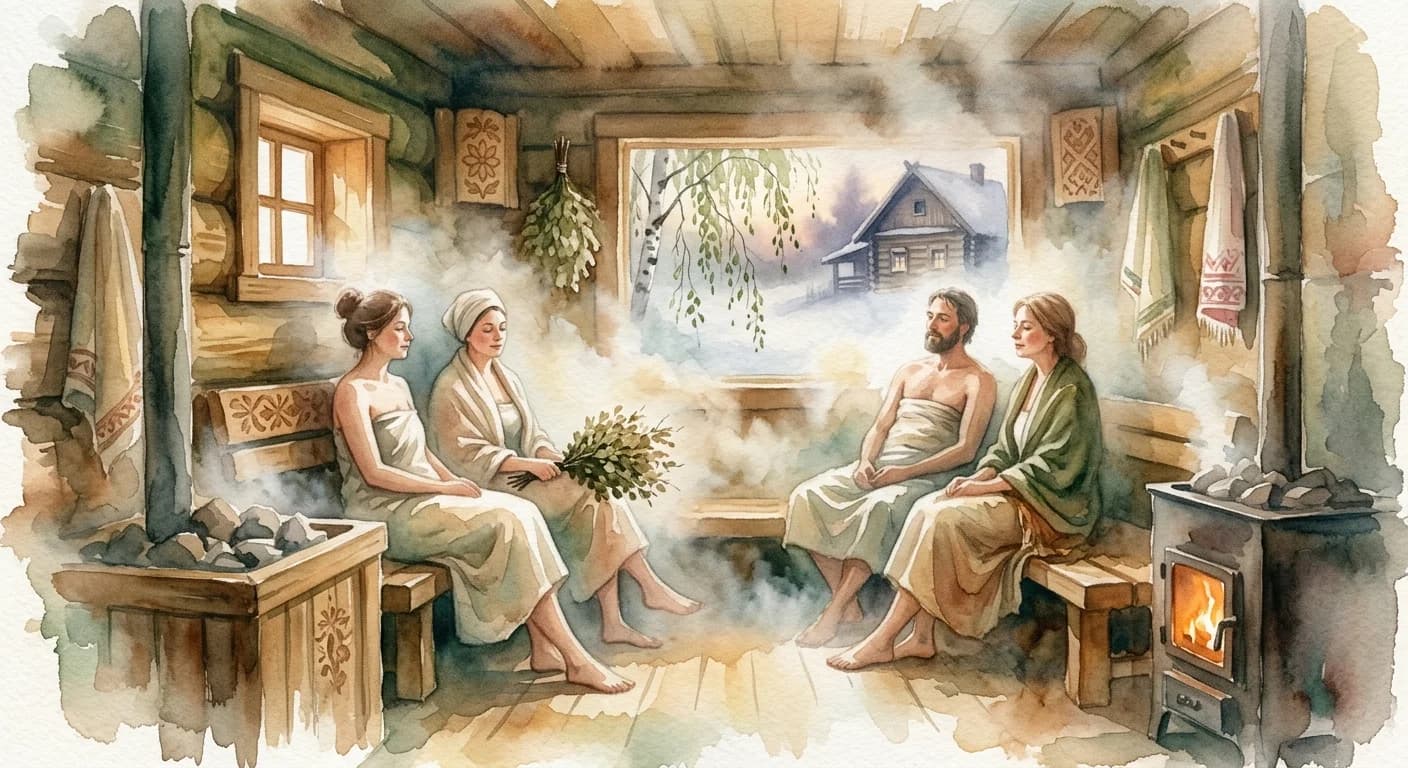
A "banya" transcends a mere bath; it's a sacred Russian ritual centered on a superheated steam room, often fueled by crackling wood fires. Within this intense heat, participants engage in vigorous self-flagellation with "veniks" (birch or oak branches), stimulating circulation and deep detoxification. This communal experience is a profound cleansing, shedding not only physical impurities but also mental burdens, fostering rejuvenation, social bonding, and a unique sense of well-being.
Literal Translation
bathhouse
The Story Behind the Word
The banya is a cornerstone of Russian culture, deeply rooted in ancient Slavic traditions where ritualistic bathing was tied to health, purification, and spiritual renewal. Its enduring presence reflects a cultural emphasis on resilience, communal ties, and a holistic approach to well-being. Historically, it served as a place for birth, healing, and even prophecy, making it a sacred space. The act of enduring the extreme heat and cold, followed by the rigorous venik treatment, embodies a belief in physical and mental fortitude. It reveals a worldview where hardship and communal effort lead to profound purification and rejuvenation, reinforcing social bonds and a connection to ancestral practices.
Experience It
Family Banya Night
After a long week, the Ivanov family gathers at their dacha's banya. Grandfather stokes the wood-fired stove, filling the air with steam and the scent of birch. Inside, laughter and exclamations fill the air as they take turns gently beating each other with veniks, followed by exhilarating plunges into the nearby snow or cold plunge pool.
Post-Harvest Banya
Following a strenuous day in the fields, the villagers head to the communal banya. The heat quickly melts away their fatigue, and shared stories and jokes flow freely amidst the steam. Emerging refreshed, they feel not just physically clean but spiritually renewed, ready for another day of labor.
The Deeper Meaning
The banya embodies a philosophy of purification through intensity and contrast. It reflects a belief that confronting and enduring physical extremes, both heat and cold, leads to profound physical and spiritual cleansing. This ritualistic challenge fosters resilience, communal solidarity, and a deep appreciation for the restorative power of nature and tradition, linking body, mind, and spirit in a unique cultural practice.
Did You Know?
Traditionally, Russians would sometimes jump directly from the scorching banya into an ice-cold river or snowdrift, believing this extreme temperature contrast further boosted health and vitality.
How It's Used
Used to refer to the traditional Russian steam bathhouse and the experience of using it.