Baraza
/bah-RAH-zah/
Meaning
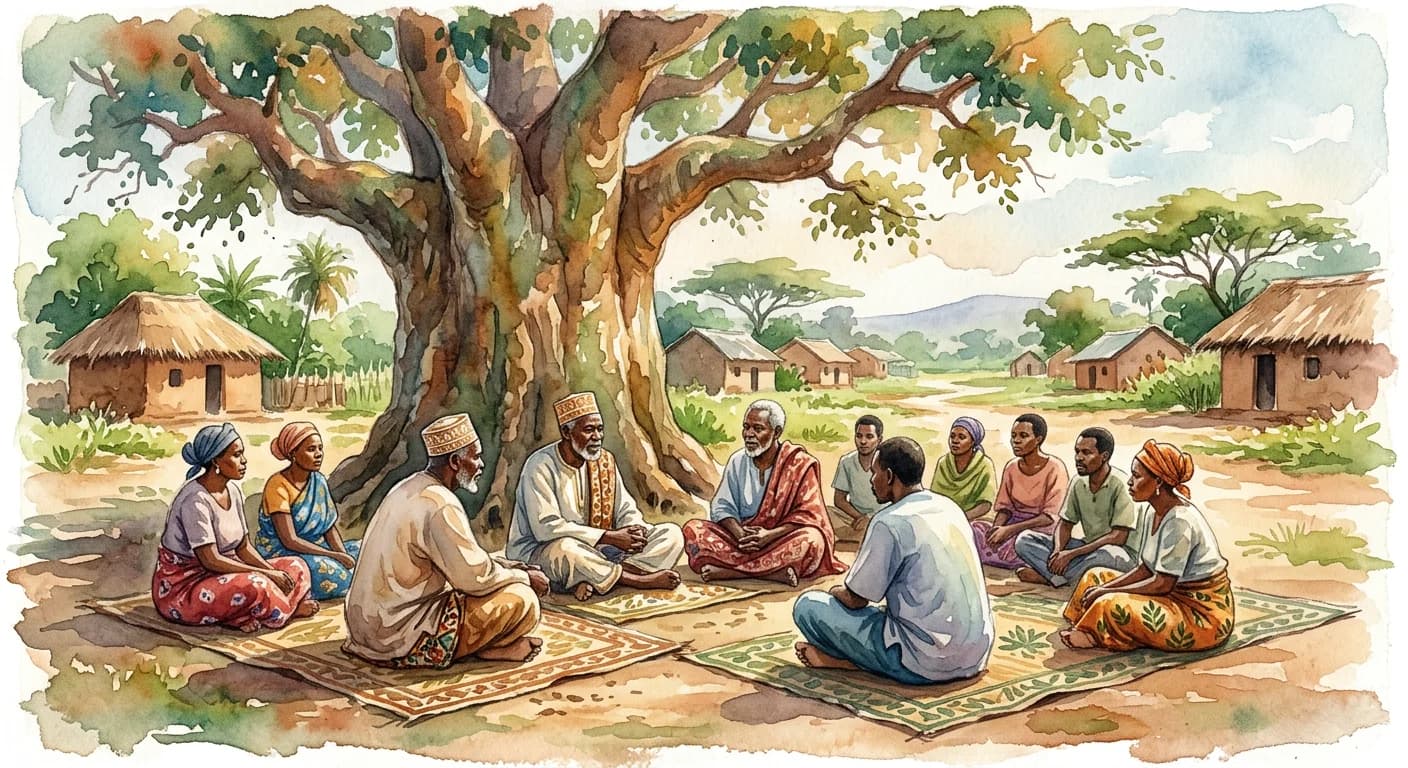
A 'baraza' transcends a mere meeting; it's a vibrant, traditional communal gathering, often unfolding under the shade of a large tree or in an open village space. Here, community members converge to openly deliberate on collective issues, mediate disputes, or simply reinforce social bonds through shared conversation. It embodies a profound sense of collective decision-making and engenders social cohesion, reflecting the deep-seated East African value of open dialogue and shared responsibility where every voice contributes to the group's harmonious well-being.
Literal Translation
Meeting, council, gathering
The Story Behind the Word
The 'baraza' is deeply woven into the fabric of East African communal life, tracing its roots back to pre-colonial social structures where village elders and community members would gather to govern themselves. It embodies the African philosophy of 'Ubuntu' – 'I am because we are' – emphasizing interconnectedness and collective humanity. This tradition reinforces the idea that true wisdom and effective solutions arise from shared perspectives rather than individual authority. The continued existence and reverence for the baraza reveal a culture that prioritizes social harmony, consensual decision-making, and the active participation of all its members in shaping their shared destiny, seeing the community as a living, breathing entity whose health depends on open communication.
Experience It
Village Water Project
The village chief called a 'baraza' under the ancient baobab tree to discuss the new well project. Everyone, from the oldest elder to the youngest adult, offered their thoughts on its location and how the work should be shared, ensuring the decision truly belonged to the community.
Resolving a Land Dispute
Two families were in a long-standing dispute over a boundary line. They brought their arguments to a 'baraza,' where respected elders patiently listened to both sides, guiding the discussion towards a peaceful, mutually agreeable resolution that upheld communal harmony.
The Deeper Meaning
The 'baraza' exemplifies a worldview where true governance and well-being stem from collective wisdom and participatory democracy. It embodies the philosophy that no single individual holds all the answers, and that sustainable solutions emerge only when all voices are heard, fostering a profound sense of shared ownership and communal responsibility over individualistic pursuits.
Did You Know?
Historically, the 'baraza' was often presided over by a council of elders, symbolizing the community's respect for wisdom and experience in guiding collective decisions.
How It's Used
Used for informal community meetings, discussions, or consultations.