Batik
/BAH-teek/
Meaning
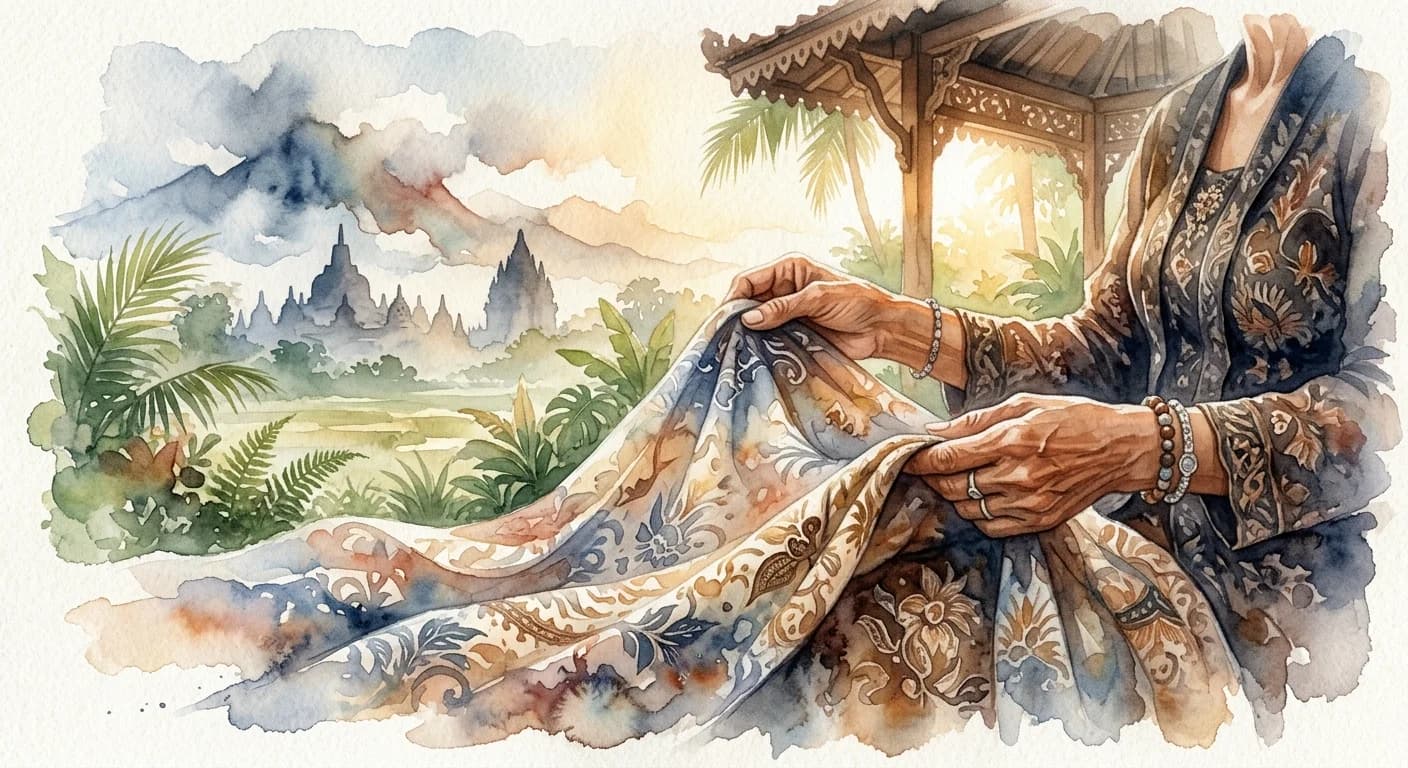
Batik is far more than a textile; it is a profound art form interwoven with Javanese spirituality and identity, referring to both the wax-resist dyeing technique and the exquisite fabric it produces. Each intricate motif, meticulously hand-drawn or stamped, carries layers of symbolic meaning, often narrating ancient myths, reflecting philosophical concepts, or signifying social status. This slow, deliberate creation process transforms cloth into a canvas of heritage, embodying generations of artistic expression and cultural wisdom.
Literal Translation
dot or drop
The Story Behind the Word
Batik's existence in Javanese culture is deeply rooted in animism, Hinduism, and Islam, with early patterns often depicting mythical creatures or sacred symbols believed to offer protection or blessings. Its development was closely tied to the royal courts of Java, where specific motifs were reserved for nobility, signifying power and social hierarchy. The painstaking process of applying wax and dyeing multiple times reflects a philosophy of patience and dedication, mirroring the Javanese concept of 'halus' (refinement and subtlety). Batik is not merely clothing; it's a living heritage, a narrative woven into fabric that connects the wearer to history, community, and spiritual beliefs, revealing a worldview where beauty, meaning, and tradition are inseparable.
Experience It
A Royal Ceremony
At the Sultan's coronation, courtiers were adorned in 'Parang Rusak' batik, its undulating blade-like pattern symbolizing power and the continuous struggle against evil. The rich browns and indigos shimmered under the palace lights, a silent testament to centuries of tradition and the enduring strength of the Javanese monarchy.
Everyday Elegance
Pak Budi, a village elder, proudly wore his 'Kawung' batik shirt to the weekly market, its overlapping circles representing perfection and renewal. Though for daily wear, the subtle elegance of the hand-drawn motifs spoke volumes about his respect for tradition and his connection to ancestral wisdom.
What Gets Lost in Translation
English speakers often perceive 'batik' merely as a patterned fabric, overlooking its profound cultural and spiritual significance. The term 'batik print' can be misleading, as true batik involves a labor-intensive wax-resist process, not just printing. The nuanced stories and social hierarchy embedded in specific motifs are also frequently missed, reducing a complex cultural narrative to a simple design.
Across Cultures
While batik is distinctively Indonesian, similar resist-dyeing techniques exist globally. Japan has 'shibori,' which involves tying, stitching, or folding fabric before dyeing. India features 'bandhani' (tie-dye) and 'ikkat' (resist dyeing of yarns before weaving), all sharing the fundamental principle of preventing dye penetration in certain areas to create patterns, though their aesthetics and cultural roles vary.
The Deeper Meaning
Batik embodies a worldview that values patience, precision, and the interconnectedness of art, spirituality, and daily life. The deliberate, often meditative, creation process reflects a philosophy of 'olah rasa' – the cultivation of inner feeling and intuition. It reveals a culture that sees beauty not just in aesthetics, but in the harmony of symbols, the wisdom of ancestors, and the enduring power of tradition to shape identity.
Did You Know?
The word 'batik' itself comes from the Javanese 'amba' (to write) and 'titik' (dot or drop), referring to the meticulous process of applying wax dots and lines to the fabric. It vividly captures the precision required for this ancient art!
How It's Used
Batik is used to describe the fabric itself, the technique of creating it, and the traditional clothing and art pieces made using this method. It is worn for everyday use, special ceremonies, and formal occasions, and is considered a significant cultural heritage item.