Cacique
/kah-SEE-keh/
Meaning
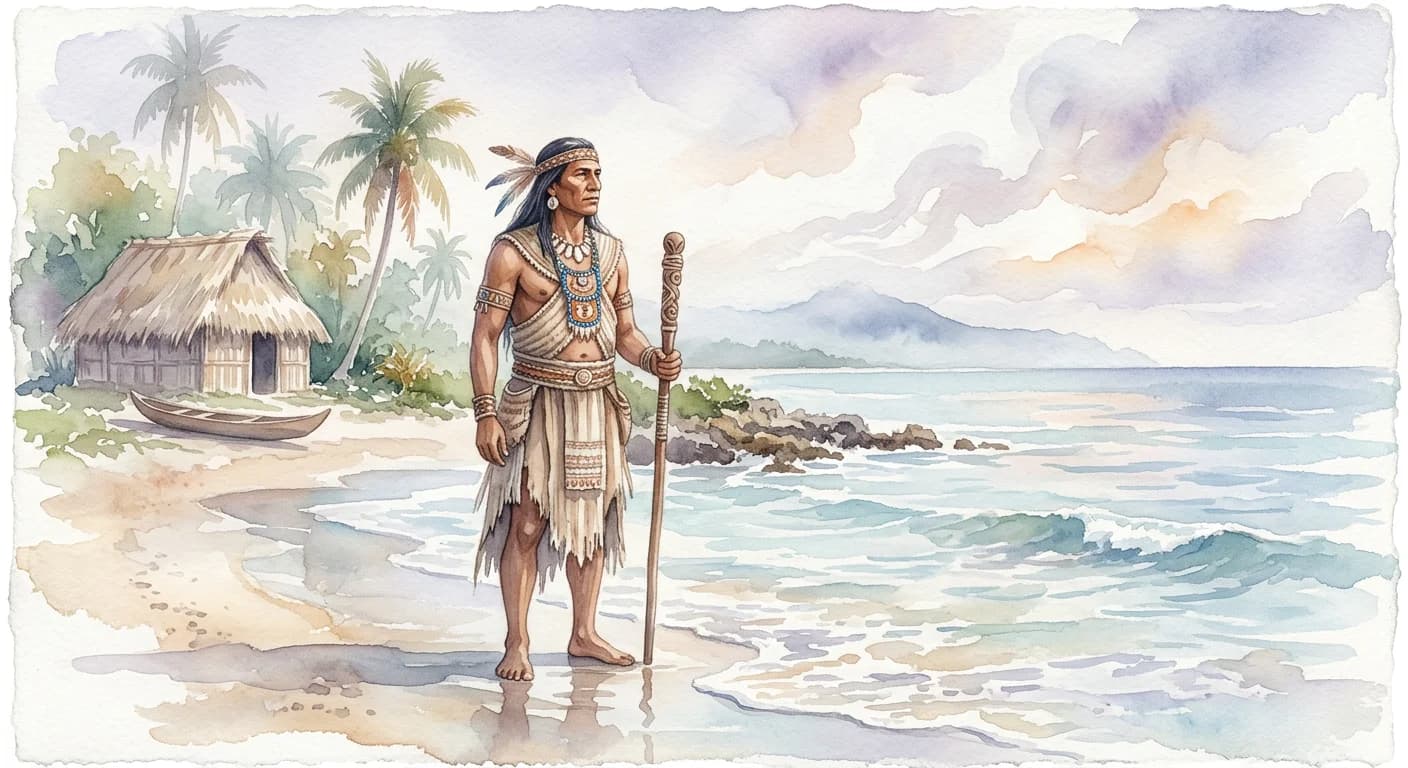
The term 'Cacique' denotes the hereditary chief or paramount leader of the indigenous Taíno people, primarily in the Caribbean. Far more than a mere political title, it signifies a figure imbued with profound social, spiritual, and administrative authority, responsible for the well-being and harmony of their community. A Cacique served as a vital link between the living and ancestral spirits, embodying the collective wisdom and traditions that ensured the prosperity and cultural continuity of their people.
Literal Translation
chief, leader
The Story Behind the Word
The concept of the Cacique is foundational to understanding Taíno society, reflecting a deeply interconnected worldview where leadership was not just about power, but about responsibility and spiritual stewardship. Caciques were often believed to possess special spiritual insights, mediating between the human world and the realm of the 'cemí' (ancestral spirits and deities). Their authority was derived from lineage, wisdom, and their ability to ensure bountiful harvests, resolve disputes, and protect their people. This system highlights a communal ethos where the leader was integral to the spiritual and practical survival of the 'yucayeque' (village), embodying a holistic governance that prioritized collective harmony over individual ambition. The Taíno saw their leaders as protectors of their sacred lands and traditions, a stark contrast to the hierarchical and extractive models introduced by European colonizers.
Experience It
Council of Elders
Before planting season, the village gathers. The Cacique, adorned with a woven cotton 'guanín' and a feather headdress, listens intently to the elders' counsel, weighing their collective wisdom before issuing directives for the community's agricultural efforts, ensuring harmony with the land and spirits.
Mediating a Dispute
Two families present a grievance over hunting grounds. The Cacique, seated on a 'duho' (ceremonial stool), listens patiently to both sides. With deep understanding of tribal customs and a calm demeanor, he proposes a solution that respects ancestral boundaries and restores peace within the 'yucayeque'.
The Deeper Meaning
The role of the Cacique reveals a Taíno philosophy centered on interconnectedness: between leader and led, humanity and nature, and the present with the ancestral past. It emphasizes stewardship over dominion, where true authority stems from a profound commitment to the community's holistic well-being, guided by spiritual wisdom and a deep respect for tradition and the natural world.
Did You Know?
The Taíno word 'cacique' was one of the very first indigenous words adopted by the Spanish conquerors into their language, spreading across the Americas to describe local leaders, regardless of their original culture.
How It's Used
The word 'cacique' is used to refer to the indigenous leaders and rulers of certain pre-Columbian societies, particularly in the Caribbean and parts of Central and South America. It is also used in a broader sense to describe a local political boss or a person of influence in some Latin American countries.