U.
HomeRegionsLanguagesEmotionsCollections
Find Your Word

“The limits of my language mean the limits of my world.”

— Ludwig Wittgenstein, Philosopher

Untranslatable

A curated collection of the world's most beautiful expressions—words that remind us language is humanity's greatest invention.

  • Home
  • Collections
  • Regions
  • Countries
  • Emotions
  • Tags
  • Contexts
  • Finder
  • Europe
  • Asia
  • Americas
  • Africa
  • Middle East
  • About
  • Contact
  • Privacy Policy
  • Terms of Service

2026 © Untranslatable. All rights reserved.

    /
    /
    1. Home
    2. /
    3. Americas
    4. /
    5. Conuco
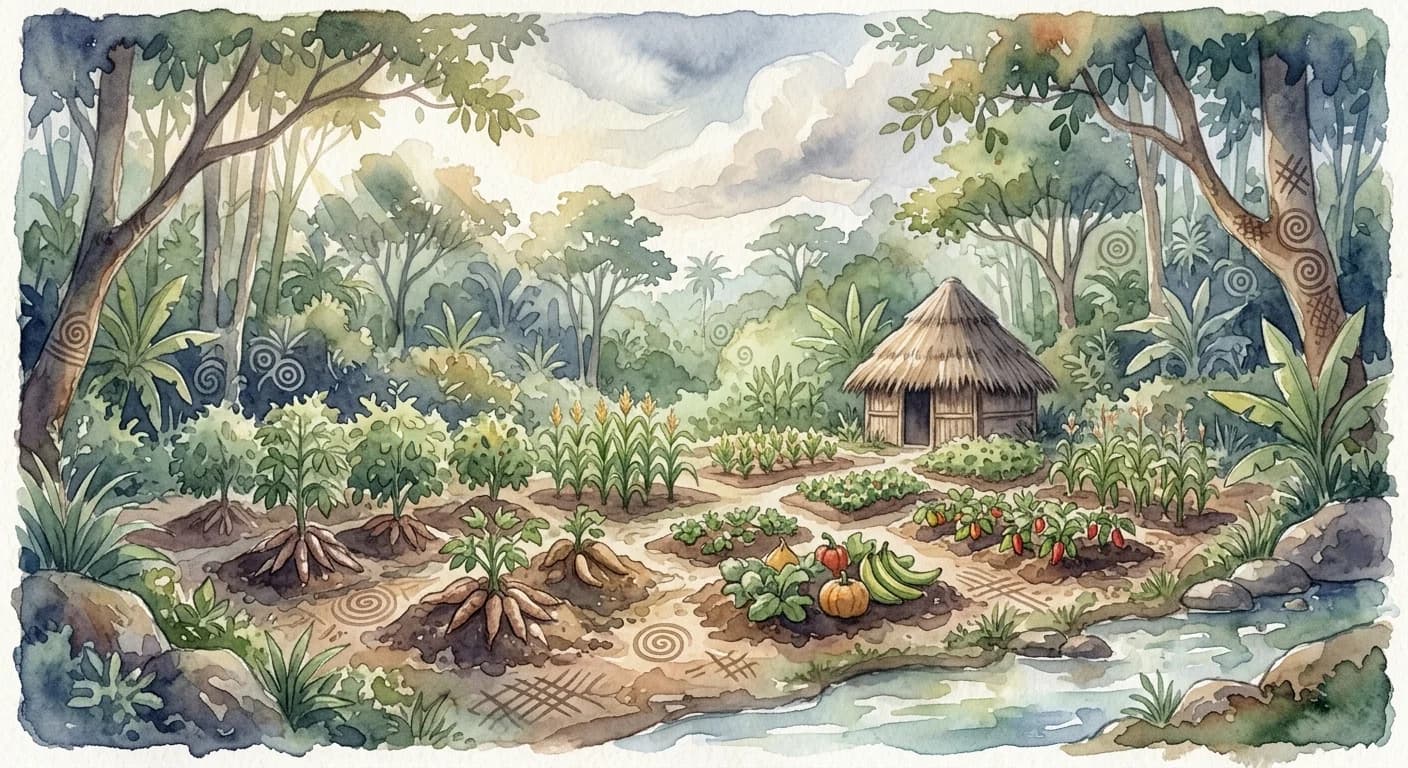
    Artistic representation of Conuco
    Taíno•
    🇨🇺Cuba🇩🇴Dominican Republic🇵🇷Puerto Rico🇻🇪Venezuela

    Conuco

    /koh-NOO-koh/

    Meaning

    A "conuco" is more than just a farm plot; it's a living canvas of ancestral wisdom, a small, independently cultivated clearing often carved from the forest, where subsistence crops flourish. It embodies a profound connection to the earth, representing a self-sufficient way of life deeply rooted in traditional Taíno agricultural practices. This intimate space is a testament to resilience, passed down through generations, symbolizing a sustainable partnership with nature far removed from industrial agriculture's footprint, providing both sustenance and a spiritual link to heritage.

    Literal Translation

    cleared land for cultivation

    The Story Behind the Word

    The conuco is a direct inheritance from the Taíno, the indigenous people of the Caribbean. For them, the conuco was not merely a means of survival but the very heart of their social and spiritual existence. It reflects a worldview where humanity is an integral part of the ecosystem, not its master. This system of cultivation, often involving 'slash-and-mulch' techniques to enrich the soil without permanent depletion, speaks to a deep, practical understanding of ecological balance. The conuco embodies the Taíno concept of 'Buen Vivir' (Good Living), where well-being is intrinsically linked to community, land, and sustainable practices. It reveals a culture that sees wealth not in accumulation, but in the ability to provide for one's family and community directly from the earth, fostering independence and a profound respect for natural cycles.

    Experience It

    Harvesting the Conuco

    María’s hands, calloused from years of tilling, carefully unearthed a plump yuca from her conuco. The morning sun warmed her back as she surveyed the thriving plantains and robust beans, a silent prayer of gratitude escaping her lips for the sustenance her small plot provided.

    Passing Down Knowledge

    Grandfather Pedro led his young grandson, Miguel, through the dense foliage, pointing out the subtle signs of fertile soil. 'This, mijo,' he explained, gesturing to their family's conuco, 'is where our history grows, where we learn patience and respect for the earth, just as our ancestors did.'

    The Deeper Meaning

    The conuco embodies a philosophy of reciprocal stewardship, where humans don't just take from the land but actively nurture it. It highlights a worldview that values self-reliance, community interdependence, and a profound, spiritual connection to the earth as the ultimate provider. This philosophy stands in stark contrast to modern consumerism, advocating for a simpler, more harmonious existence grounded in sustainable practices and ancestral wisdom.

    Did You Know?

    The Taíno used a sophisticated system called 'conucos' (raised mounds) to prevent soil erosion and improve drainage, a testament to their advanced agricultural engineering.

    How It's Used

    Used to describe a small plot of land for subsistence farming, particularly in rural areas of the Caribbean and parts of South America.

    Emotions
    belonging,gratitude,peace
    Contexts
    family,nature,seasons,work
    🇨🇺Cuba🇩🇴Dominican Republic🇵🇷Puerto Rico🇻🇪Venezuela

    by Dr. Kenji Tanaka·Written Mar 14, 2026·Updated Apr 3, 2026

    Related Words

    Explore more
    Dolce far nienteItalian

    Dolce far niente captures the profound joy and effortless pleasure derived from simply existing without obligation or purpose. It's the art of savoring moments of pure, unadulterated idleness – lying in the sun, watching the clouds drift, or enjoying a leisurely coffee – not as a break from work, but as a valuable state in itself. This 'sweetness of doing nothing' is a conscious embrace of stillness and contentment, allowing the soul to breathe and the senses to fully engage with the present.

    SobremesaSpanish

    Sobremesa is the cherished, often extended period immediately following a meal, particularly lunch or dinner, where diners remain seated at the table to enjoy conversation, coffee, and digest not just the food, but the company itself. It’s a dedicated time for unhurried social bonding, storytelling, and shared laughter, transforming a simple meal into a profound communal experience. Far from just clearing the dishes, sobremesa is an integral part of Spanish social life, often lasting for hours.

    Pura vidaSpanish

    More than just 'pure life,' "Pura vida" encapsulates a profound philosophy of embracing the present moment with unwavering optimism and gratitude. It's a daily commitment to finding joy in simple pleasures, accepting life's challenges with a positive spirit, and prioritizing well-being over material possessions. This ubiquitous phrase reflects a national identity built on resilience, community, and an deep appreciation for nature's bounty.

    MamihlapinatapaiYaghan

    Mamihlapinatapai encapsulates that profound, unspoken moment when two individuals lock eyes, each silently acknowledging a mutual desire or intention, yet both hesitate to be the first to act upon it. It's a delicate dance of anticipation, a shared gaze brimming with common understanding and a quiet longing for the other to break the ice. This intricate look carries the weight of a shared, uninitiated potential, a silent conversation where both parties are perfectly aware of what could happen, but neither makes the first move.