U.
HomeRegionsLanguagesEmotionsCollections
Find Your Word

“The limits of my language mean the limits of my world.”

— Ludwig Wittgenstein, Philosopher

Untranslatable

A curated collection of the world's most beautiful expressions—words that remind us language is humanity's greatest invention.

  • Home
  • Collections
  • Regions
  • Countries
  • Emotions
  • Tags
  • Contexts
  • Finder
  • Europe
  • Asia
  • Americas
  • Africa
  • Middle East
  • About
  • Contact
  • Privacy Policy
  • Terms of Service

2026 © Untranslatable. All rights reserved.

    /
    /
    1. Home
    2. /
    3. Asia
    4. /
    5. Dandiya raas
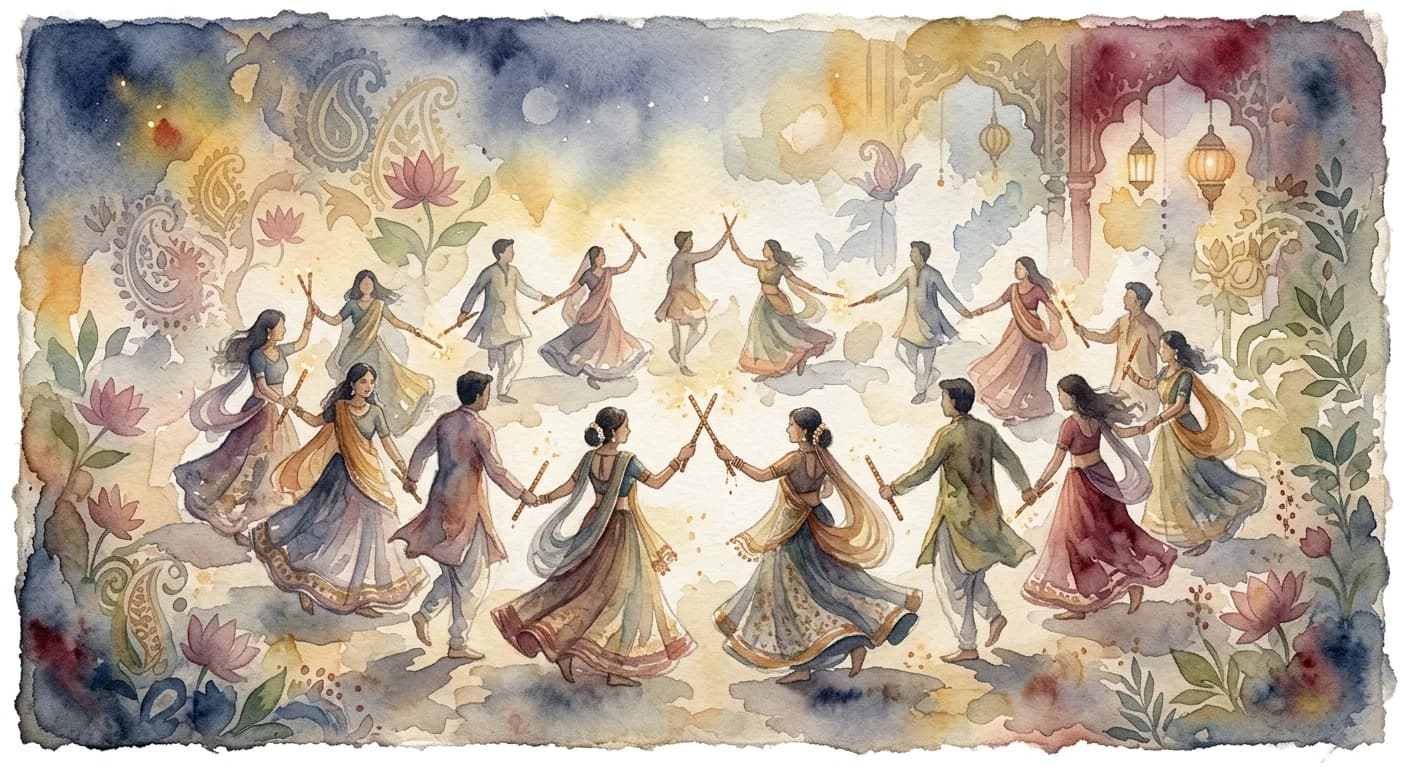
    Artistic representation of Dandiya raas
    Gujarati•
    🇮🇳India

    Dandiya raas

    /DUHN-dee-uh RAH-uhs/

    Meaning

    Dandiya Raas is a jubilant and spiritually charged folk dance from Gujarat, India, integral to the Navaratri festival. Dancers, adorned in vibrant traditional attire, move in rhythmic circles, striking intricately decorated wooden sticks (dandiyas) together. This synchronized percussive interplay, set to energetic folk music, creates a mesmerizing spectacle of communal joy and devotion, embodying a collective offering of praise to the goddess Durga. It's a profound celebration of life, community, and ancient traditions, fostering an exhilarating sense of belonging.

    Literal Translation

    Dandiya means 'sticks' and Raas means 'dance' or 'to dance'.

    The Story Behind the Word

    Dandiya Raas is deeply rooted in the Hindu mythology surrounding the goddess Durga and her victory over the demon Mahishasura. The dandiyas symbolize the swords of Durga, and the dance is a playful, yet powerful, reenactment of this cosmic battle, celebrating the triumph of good over evil. Its circular movements represent the cyclical nature of time and existence, while the communal participation reflects the strong emphasis on collective identity and shared spiritual experience in Gujarati culture. It's not just entertainment; it's a living puja (worship), a physical manifestation of devotion that unites generations and reinforces cultural heritage, particularly during Navaratri, a period of introspection, fasting, and joyous celebration of the divine feminine.

    Experience It

    Navaratri Night Ecstasy

    Under the twinkling fairy lights of the community ground, Maya laughed as she twirled, her ghagra-choli a blur of color. The rhythmic clack of a hundred dandiyas filled the air, a pulsating beat that drew everyone into the swirling circles of Dandiya Raas, a joyful prayer to Maa Durga.

    Wedding Sangeet Bash

    The wedding sangeet hall erupted as the DJ played a lively folk tune. The bride and groom, along with their families, grabbed dandiyas, their initial shyness melting away as they joined the energetic Dandiya Raas, celebrating their union with traditional zest and shared laughter.

    The Deeper Meaning

    Dandiya Raas embodies the philosophy of 'lila' – divine play. It suggests that even spiritual devotion can be expressed through joyous, energetic, and communal activity, blurring the lines between worship and celebration. The collective, synchronized movement symbolizes unity, the interconnectedness of individuals within a community, and a shared journey towards spiritual harmony, reflecting a worldview where joy and devotion are inseparable.

    Did You Know?

    The dandiyas themselves are often beautifully decorated with intricate patterns, bells, and ribbons, making them not just instruments of rhythm but also vibrant visual elements of the dance.

    How It's Used

    Performed during Navaratri, a Hindu festival celebrating the goddess Durga, especially in Gujarat and by Gujarati communities worldwide. It is also performed at weddings and other celebratory occasions.

    Emotions
    belonging,gratitude,joy
    Contexts
    celebration,family,friendship,seasons
    🇮🇳India

    by Dr. Kenji Tanaka·Written Mar 14, 2026·Updated Apr 3, 2026

    Related Words

    Explore more
    SobremesaSpanish

    Sobremesa is the cherished, often extended period immediately following a meal, particularly lunch or dinner, where diners remain seated at the table to enjoy conversation, coffee, and digest not just the food, but the company itself. It’s a dedicated time for unhurried social bonding, storytelling, and shared laughter, transforming a simple meal into a profound communal experience. Far from just clearing the dishes, sobremesa is an integral part of Spanish social life, often lasting for hours.

    Wabi-sabiJapanese

    Wabi-sabi is the profound appreciation for the ephemeral, the imperfect, and the incomplete aspects of existence. It is about discovering beauty in the subtle textures of age, the unique character of flaws, and the gentle decay that marks the passage of time. This philosophy encourages a quiet acceptance of impermanence and a mindful connection to the natural world, finding elegance in simplicity and authenticity.

    IkigaiJapanese

    Ikigai is more than just a reason to get out of bed; it's a deeply personal and evolving sense of purpose that brings genuine fulfillment and joy to one's life. It represents the sweet spot where your passions, talents, needs of the world, and what you can be paid for beautifully converge. Discovering your ikigai often leads to a life lived with intentionality, resilience, and a profound connection to one's contributions. It's the intrinsic motivation that fuels a meaningful existence, regardless of external circumstances.

    NunchiKorean

    Nunchi is the sophisticated, almost telepathic, ability to instantly grasp the unspoken dynamics of any social situation, anticipating others' thoughts and feelings, and then responding with impeccable grace and timing. It's an acute form of social intuition, allowing one to navigate complex interpersonal landscapes by reading subtle cues like body language, tone, and context. Possessing good nunchi means effortlessly understanding the underlying emotional currents and adjusting one's behavior to maintain harmony and effectiveness, often without a single word exchanged.