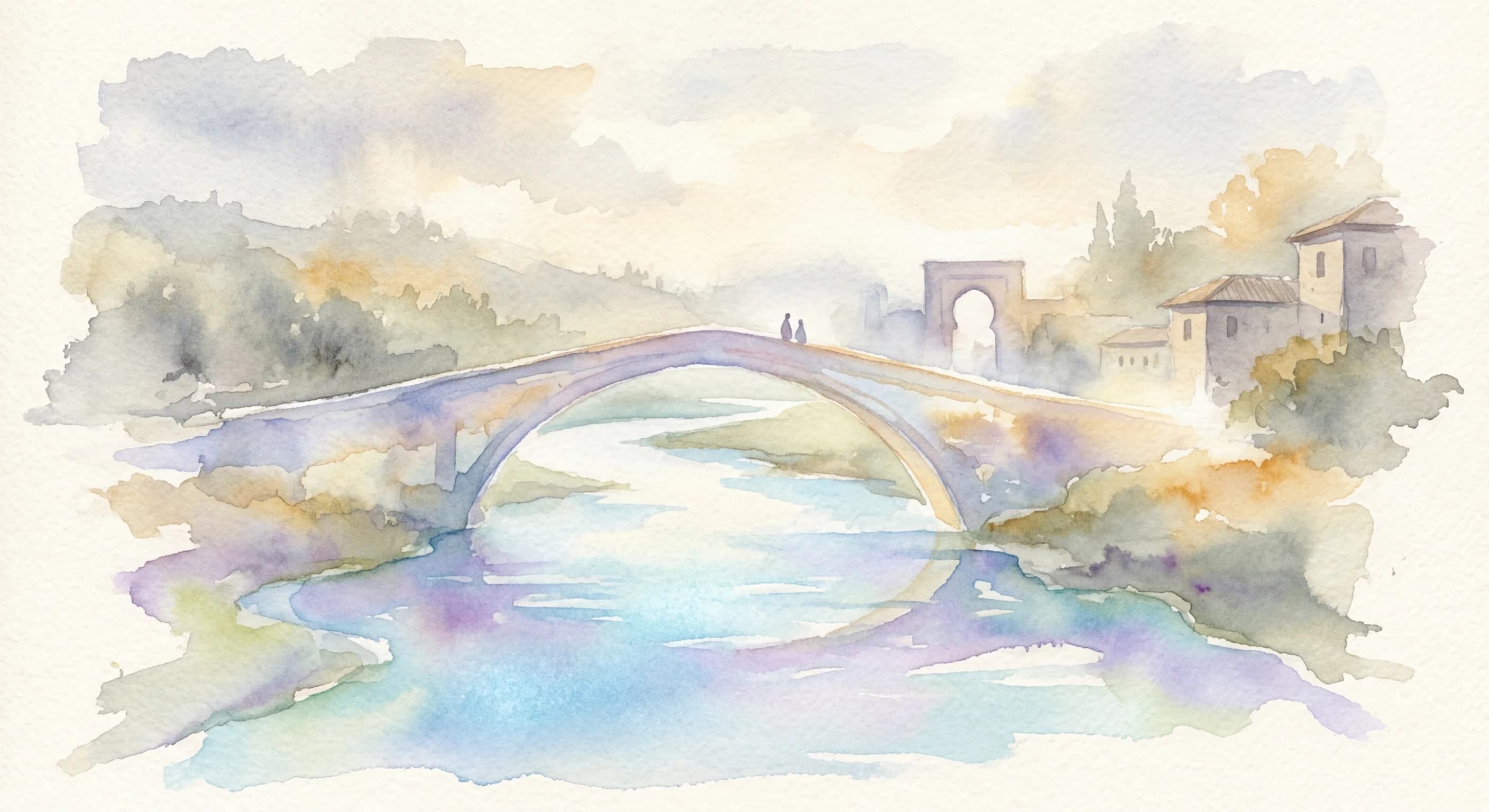
Puente
/PWEN-teh/
Meaning
While 'puente' literally translates to 'bridge,' in Spanish culture, it transcends its architectural meaning to embody connection, transition, and the strategic bridging of gaps. It signifies not just a physical span over an obstacle, but also the clever creation of an extended respite, linking two holidays with a weekend to forge a longer period of rest. This word encapsulates the ingenuity of finding a path forward, whether in engineering a physical crossing or in orchestrating a well-deserved break, always implying a passage to something desirable.
Literal Translation
Bridge
The Story Behind the Word
The deep cultural resonance of 'puente' in Spain stems from a pragmatic yet joyous approach to life and work balance. Spain has numerous national and regional holidays, and the concept of 'hacer puente' (making a bridge) allows individuals to maximize these breaks by strategically taking a day or two off between a holiday and a weekend. This practice is so ingrained that it reflects a collective understanding and prioritization of leisure, family time, and community over an uninterrupted work schedule. It reveals a society that values the 'art' of living well, finding clever ways to optimize rest and connection, rather than adhering strictly to rigid schedules. The 'puente' is a testament to Spanish ingenuity in crafting moments of collective enjoyment and recuperation.
Experience It
Extended Holiday Break
It's Thursday, a national holiday. María's office announced they would 'hacer puente,' meaning everyone gets Friday off too. She's thrilled, already planning a short trip to the coast with her family, grateful for the unexpected four-day weekend.
Building a Bridge of Understanding
During a heated neighborhood meeting, two factions were at odds. The community leader, a wise elder, proposed a 'puente' – a series of smaller, informal gatherings over coffee – to bridge their differences, allowing them to find common ground before the next formal session.
The Deeper Meaning
The 'puente' embodies a philosophical approach to time and social connection, suggesting that life's rhythm isn't solely dictated by rigid structures. It highlights the human capacity for creative adaptation, finding ways to enhance well-being and social cohesion by strategically connecting disparate elements—be it days off or differing viewpoints. It's about optimizing life's flow, ensuring passage and continuity where there might otherwise be a break or a gap.
Did You Know?
The term 'hacer puente' (to make a bridge) is so common in Spain that it's an expected part of the holiday calendar, often leading to significant internal tourism as people travel to enjoy their extended breaks.
How It's Used
Used literally to refer to a physical bridge, and metaphorically to describe any connection, link, or transition.