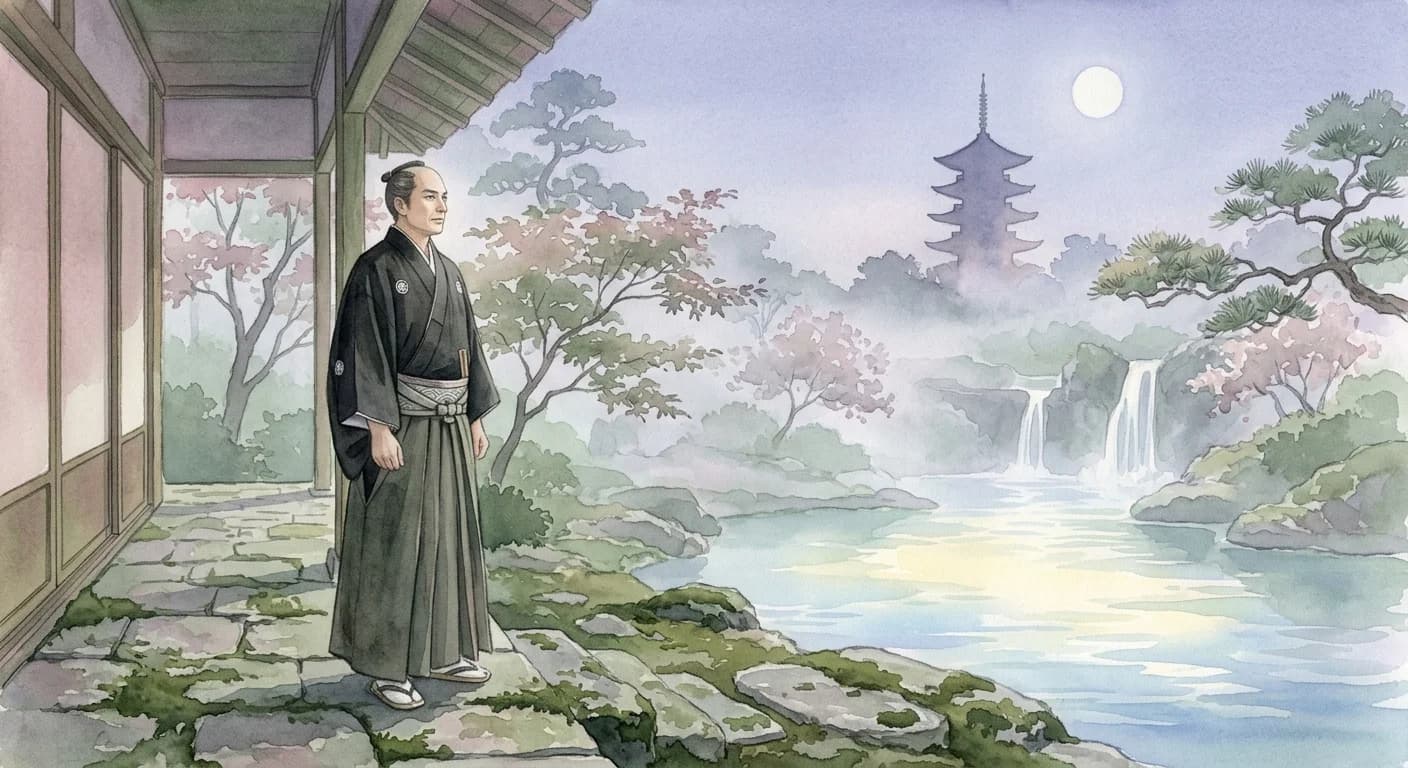
Daimyo
/DAH-ee-myoh/
Meaning
Daimyo were the formidable feudal lords who commanded vast domains across Japan from the 12th to the 19th centuries, acting as the bedrock of the shogunate's authority. These powerful figures were not merely landowners but sovereign rulers within their territories, maintaining private armies of samurai, administering justice, and fostering economic growth. Their lives were a constant negotiation of loyalty, power, and survival, shaping the intricate tapestry of Japan's martial and political landscape for centuries.
Literal Translation
large name
The Story Behind the Word
The existence of the Daimyo is profoundly tied to Japan's long feudal period, a time characterized by decentralized power, constant warfare, and the intricate bushi (warrior) culture. The term itself, literally 'great name,' signifies not just wealth or lineage, but immense personal power and regional autonomy. Their rise and fall reflect the dynamic struggle for control between the Imperial Court, the Shogunate, and individual domains, embodying a society where honor, strategic alliances, and military might determined one's fate. The Daimyo's influence extended beyond warfare; they were patrons of arts, religion, and infrastructure, leaving an indelible mark on Japan's cultural identity and regional distinctiveness, from castle architecture to local festivals. This system reveals a worldview where hierarchical order, duty, and the balance of power were paramount.
Experience It
A Daimyo's Decree
Lord Tokugawa Ieyasu, a formidable Daimyo, sits in his castle's audience chamber, listening intently to reports from his retainers. He ponders the strategic implications of a rival clan's movements before issuing a decree that will determine the fate of thousands of his samurai and the prosperity of his domain.
Cultural Patronage
The Daimyo of the Kaga Domain, known for his wealth, hosts a lavish tea ceremony, inviting esteemed artists and scholars. He commissions a new set of exquisitely lacquered tea utensils, enhancing his reputation not only as a powerful ruler but also as a refined patron of the arts.
The Deeper Meaning
The role of the Daimyo encapsulates a philosophy of 'might makes right' tempered by a deep sense of loyalty and obligation. Their existence underscores the Japanese concept of 'giri' (duty) and 'on' (benevolence/indebtedness), where power was maintained through a complex web of reciprocal relationships. It reveals a worldview where individual ambition was often channeled into collective clan strength, and where the constant threat of conflict necessitated a strong, centralized, yet regionally diverse, leadership structure.
Did You Know?
Many Daimyo were forced to participate in 'sankin kōtai' (alternate attendance), where they had to spend every other year in Edo (modern Tokyo) and leave their families there as hostages, a brilliant shogunate strategy to drain their resources and prevent rebellion.
How It's Used
The term 'Daimyo' is primarily used in historical contexts when discussing feudal Japan, its political structure, and the samurai era. It is also used in popular culture, such as in movies, anime, and video games set in historical Japan.