Dandiya
/DUN-dee-yah/
Meaning
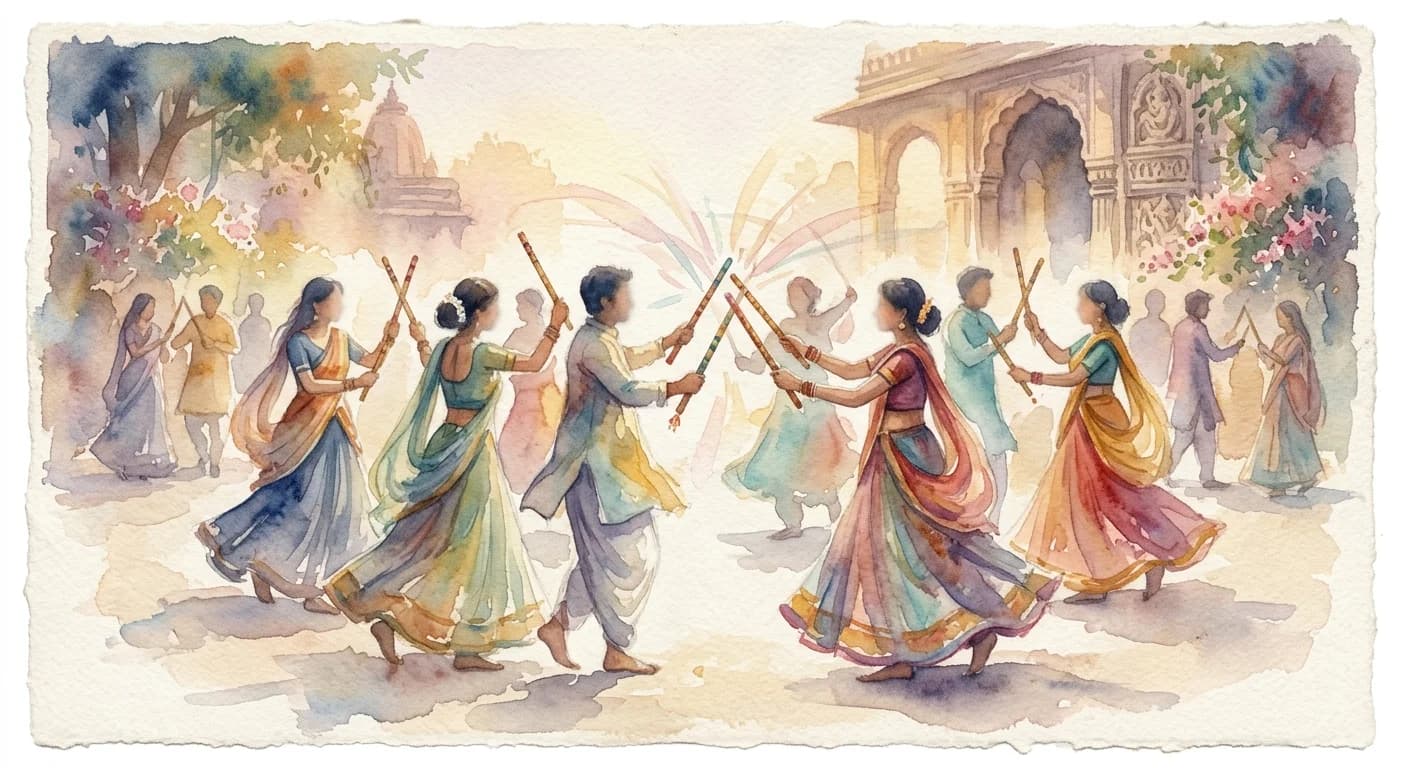
Dandiya is far more than a mere 'stick dance'; it is the vibrant, rhythmic heart of Navratri, particularly in Gujarat. This energetic folk dance involves participants, often dressed in colorful traditional attire, moving in synchronized circles, striking decorated bamboo sticks (dandiyas) in intricate patterns. The clattering symphony of the sticks, combined with devotional songs and exuberant movements, embodies a collective celebration of devotion to Goddess Durga, symbolizing the triumph of divine feminine power over evil and fostering profound communal joy and solidarity.
Literal Translation
Stick Dance
The Story Behind the Word
Dandiya's roots are deeply intertwined with the Hindu festival of Navratri, a nine-night celebration dedicated to the Mother Goddess Durga. Philosophically, the dance represents a mock-fight between the Goddess and the demon Mahishasura, with the dandiyas symbolizing her sword. The circular movement signifies the cyclical nature of time and creation, while the collective participation reflects the community's unified devotion and shared cultural heritage. It's a powerful expression of bhakti (devotion) through movement, sound, and color, reinforcing cultural identity and spiritual connection across generations. The very act of dancing together strengthens social bonds and provides an outlet for spiritual expression and communal ecstasy, making it an indispensable part of Gujarati identity during Navratri.
Experience It
Navratri Night Fervor
The community ground buzzed with anticipation. As the music swelled, Maya and her friends joined the concentric circles, their dandiyas poised. With each beat, they spun and clapped, the rhythmic thud of sticks echoing the devotion in their hearts, a vibrant tapestry of color and sound under the moonlit sky.
Joyful Family Gathering
At the family Navratri celebration, even the elders tapped their feet as the younger cousins eagerly grabbed their dandiyas. Laughter filled the air as they stumbled through steps, guided by their aunts, experiencing the simple, unadulterated joy of shared tradition and the infectious energy of the dance.
What Gets Lost in Translation
English speakers might view Dandiya merely as a fun folk dance, missing its profound spiritual underpinnings. It's not just entertainment; it's a form of active worship and devotion, a physical manifestation of gratitude and reverence for the Goddess Durga, with each strike of the stick carrying symbolic weight.
Across Cultures
While unique in its form, Dandiya shares a spirit of communal celebratory dance with stick dances found in other cultures, such as some martial arts-inspired folk dances in the Philippines (like sayaw sa bangko or tinikling, though less devotional) or even sword dances in various European traditions, which often symbolize victory or warding off evil.
The Deeper Meaning
Dandiya embodies a worldview where spirituality is not confined to quiet contemplation but is a vibrant, communal, and embodied experience. It reveals a philosophy where joy, rhythm, and collective movement are sacred expressions, reinforcing the idea that devotion can be an exuberant celebration of life, unity, and the triumph of good.
Did You Know?
Did you know that the dandiya sticks are not just props? They are traditionally considered symbolic weapons of Goddess Durga, used in her mythological battle against the demon Mahishasura, making the dance a ritualistic reenactment of her victory.
How It's Used
Dandiya is primarily performed during the Hindu festival of Navratri, which spans nine nights. It is a popular group dance activity, often seen in public gatherings, community events, and private celebrations throughout Gujarat and other parts of India.