Debke
/DEB-keh/
Meaning
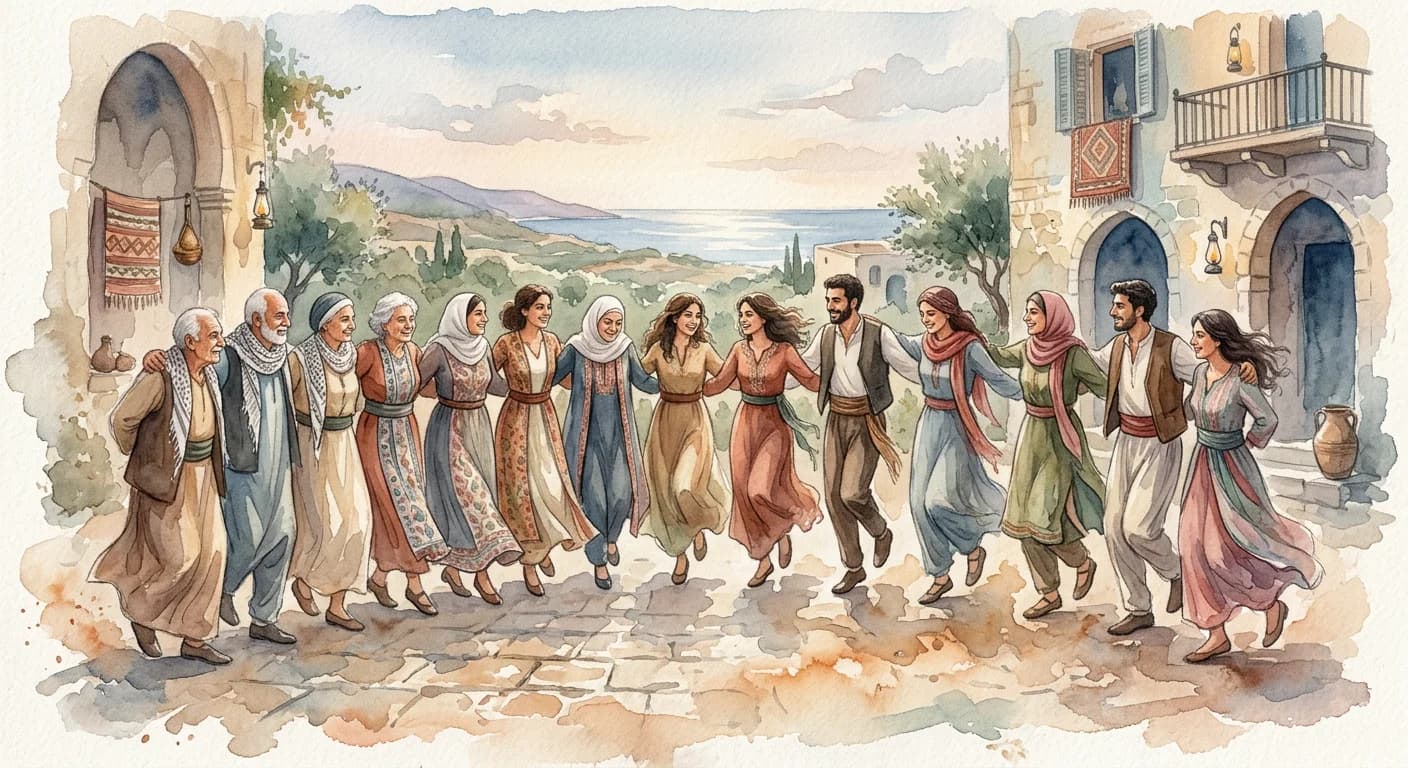
Debke is a captivating and powerful Levantine folk dance, a cultural cornerstone performed at celebrations that electrifies the atmosphere. It features a line of dancers, often intergenerational, moving in rhythmic unison with distinctive, earth-shaking stomps and intricate footwork. More than mere steps, Debke embodies a profound communal spirit, transforming individual joy into a collective celebration of identity, heritage, and belonging.
Literal Translation
stomp
The Story Behind the Word
The Debke's roots trace back to ancient agricultural rites, where villagers would stomp the earth to pack it down for building or to ward off evil spirits, evolving into a dance that celebrates life and community. Its persistence through centuries of Ottoman rule, colonial periods, and civil strife speaks to its enduring power as a symbol of resilience and cultural continuity. For Lebanese people, Debke is an affirmation of shared identity and a refusal to let go of joy, even in the face of adversity. It embodies the concept of 'sumud' (steadfastness), where collective movement and shared rhythm become a defiant celebration of life and heritage, reinforcing social bonds and communal solidarity in a world that often seeks to fragment them.
Experience It
Wedding Celebration Debke
At a vibrant Lebanese wedding, the DJ signals the start of the Debke. The groom, flanked by his closest friends and relatives, leads the line, his shoulders swaying as the drumbeat intensifies. Guests eagerly join in, their synchronized stomps echoing through the hall, a joyous roar of collective celebration filling the air.
Village Festival Unity
During the annual village festival, generations of families gather for the evening Debke. Children watch, mesmerized, as their elders expertly execute the steps. Soon, the younger ones cautiously join the line, learning the intricate rhythm from their parents and grandparents, ensuring the tradition's vibrant continuation.
The Deeper Meaning
Debke embodies a philosophy of collective strength and the power of unity. The synchronized stomping, the interlocking arms, and the shared rhythm reflect a worldview where individual expression is harmonized within a larger communal body. It teaches that true joy and resilience are found not in isolation, but in the shared experience and mutual support of a connected community.
Did You Know?
There are over a dozen regional variations of Debke across the Levant, each with unique steps, rhythms, and even attire, reflecting the rich diversity within the broader culture.
How It's Used
Performed at weddings, festivals, parties, and other joyous social occasions throughout the Levant region.