U.
HomeRegionsLanguagesEmotionsCollections
Find Your Word

“The limits of my language mean the limits of my world.”

— Ludwig Wittgenstein, Philosopher

Untranslatable

A curated collection of the world's most beautiful expressions—words that remind us language is humanity's greatest invention.

  • Home
  • Collections
  • Regions
  • Countries
  • Emotions
  • Tags
  • Contexts
  • Finder
  • Europe
  • Asia
  • Americas
  • Africa
  • Middle East
  • About
  • Contact
  • Privacy Policy
  • Terms of Service

2026 © Untranslatable. All rights reserved.

    /
    /
    1. Home
    2. /
    3. Americas
    4. /
    5. Cipactli
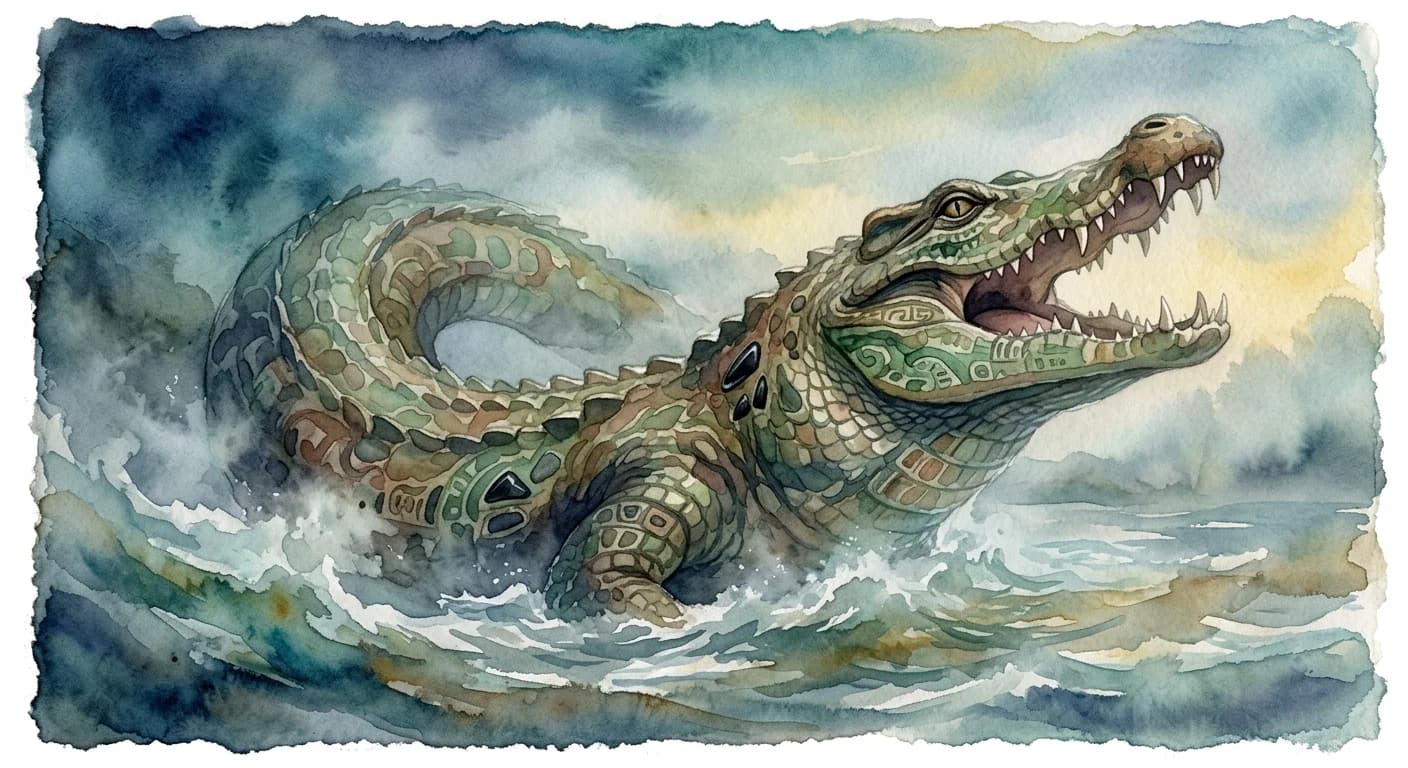
    Artistic representation of Cipactli
    Nahuatl•
    🇲🇽Mexico

    Cipactli

    /see-PAHK-tlee/

    Meaning

    Cipactli, in Aztec cosmology, represents the primordial earth monster, a colossal, fanged aquatic creature whose very body formed the foundations of the world. This monstrous being embodies the raw, untamed, and often terrifying forces of nature from which all existence springs. It is both the source of life and a constant, potential wellspring of chaos, a powerful and ancient entity central to the Mesoamerican understanding of creation and the cyclical nature of the cosmos. Its essence is one of foundational, untamed power, a blend of creation and destruction.

    Literal Translation

    earth-monster, crocodile, or sea-monster

    The Story Behind the Word

    The concept of Cipactli is fundamental to understanding the Aztec worldview, which emphasized a universe born from conflict and sacrifice. Cipactli was not merely a 'monster' to be slain, but a necessary, primal force. The gods Quetzalcoatl and Tezcatlipoca, in their creative act, had to tear Cipactli apart to form the earth, sky, and underworld. This act of dismemberment and subsequent creation out of a chaotic, powerful entity highlights the Aztec belief that creation often entails destruction, and that the cosmos is a dynamic, sometimes violent, interplay of opposing forces. The very landscape, with its mountains and valleys, was seen as Cipactli's body. This word reveals a culture that saw the world not as a static divine creation, but as a living, breathing, and inherently powerful being that continually demanded respect and appeasement.

    Experience It

    Creation Myth Recital

    The elder shaman, eyes closed, chanted of the primordial waters where Cipactli, the great scaly beast, swam unchallenged. From its vast, spiny body, he recounted, the gods carved the earth, a testament to the world's violent, yet fertile, origins.

    Temple Relief Carving

    On the temple's base, a master artisan diligently chipped away, bringing forth the fearsome visage of Cipactli. Its gaping maw and sharp teeth symbolized not just destruction, but the very ground beneath their feet, a constant reminder of the earth's powerful, living essence.

    The Deeper Meaning

    Cipactli encapsulates a profound philosophical understanding of creation as an act of both immense power and necessary sacrifice. It suggests that order emerges from chaos, and that the world we inhabit is not a serene, static entity, but the living, breathing, and potentially volatile body of a primordial being. This worldview emphasizes interconnectedness and the cyclical nature of existence, where creation and destruction are two sides of the same cosmic coin.

    Did You Know?

    Cipactli is often depicted with a crocodile-like body, but also features elements of fish and toads, emphasizing its composite, primordial nature and its dominion over all aquatic realms.

    How It's Used

    Used in mythological and cosmological contexts to refer to the primordial earth monster in Aztec belief.

    Emotions
    melancholy,peace,wonder
    Contexts
    nature,seasons
    🇲🇽Mexico

    by Kwame Nkrumah·Written Mar 14, 2026·Updated Apr 3, 2026

    Related Words

    Explore more
    SaudadePortuguese

    Saudade encapsulates a profound, melancholic longing for something or someone cherished that is absent, often with the bittersweet knowledge that it may never return. It's a deep emotional state tinged with nostalgia, evoking a sense of loss for past experiences, places, or people, yet also holding a tender appreciation for the beauty of what once was. This yearning is not merely sadness, but a complex tapestry of desire, memory, and a poignant acceptance of absence, holding the beloved in a warm, persistent embrace within the heart.

    Dolce far nienteItalian

    Dolce far niente captures the profound joy and effortless pleasure derived from simply existing without obligation or purpose. It's the art of savoring moments of pure, unadulterated idleness – lying in the sun, watching the clouds drift, or enjoying a leisurely coffee – not as a break from work, but as a valuable state in itself. This 'sweetness of doing nothing' is a conscious embrace of stillness and contentment, allowing the soul to breathe and the senses to fully engage with the present.

    Pura vidaSpanish

    More than just 'pure life,' "Pura vida" encapsulates a profound philosophy of embracing the present moment with unwavering optimism and gratitude. It's a daily commitment to finding joy in simple pleasures, accepting life's challenges with a positive spirit, and prioritizing well-being over material possessions. This ubiquitous phrase reflects a national identity built on resilience, community, and an deep appreciation for nature's bounty.

    MamihlapinatapaiYaghan

    Mamihlapinatapai encapsulates that profound, unspoken moment when two individuals lock eyes, each silently acknowledging a mutual desire or intention, yet both hesitate to be the first to act upon it. It's a delicate dance of anticipation, a shared gaze brimming with common understanding and a quiet longing for the other to break the ice. This intricate look carries the weight of a shared, uninitiated potential, a silent conversation where both parties are perfectly aware of what could happen, but neither makes the first move.