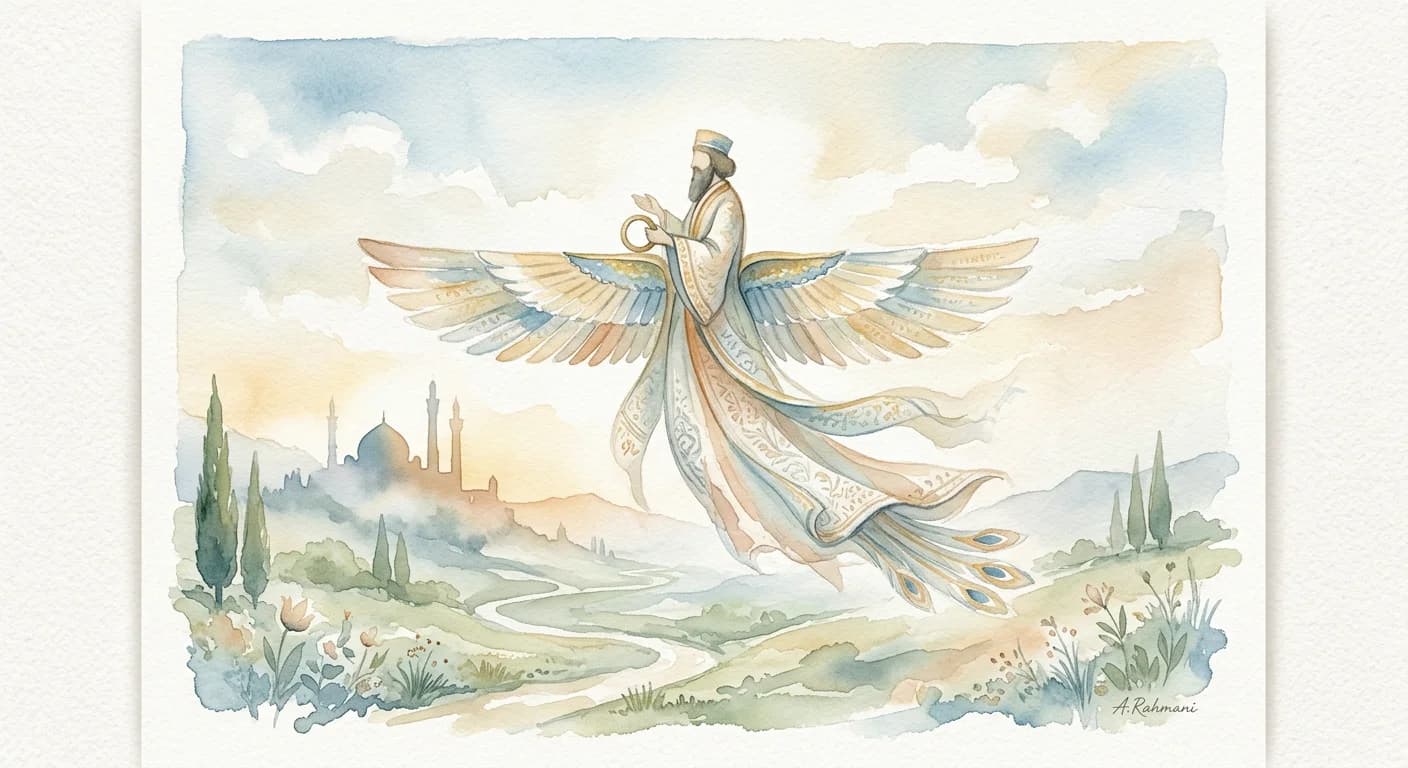
Faravahar
/FAH-rah-vah-HAHR/
Meaning
The Faravahar is an ancient Persian emblem, not a word, that powerfully encapsulates the core tenets of Zoroastrianism and Persian identity. It visually articulates the human soul's journey towards spiritual enlightenment and the eternal battle between benevolent and malevolent forces. Its intricate design, featuring a winged disc and a human figure, symbolizes divine guidance, free will, and the individual's ethical responsibility to choose the path of 'good thoughts, good words, good deeds' in their pursuit of righteousness and a connection to the divine Ahura Mazda.
Literal Translation
Winged symbol (often interpreted as 'good fortune' or 'guardian spirit')
The Story Behind the Word
The Faravahar emerged from the heart of ancient Persian civilization, intrinsically linked to Zoroastrianism, one of the world's oldest monotheistic religions. It embodies the faith's central philosophy: a profound dualism between Asha (truth, order) and Druj (falsehood, disorder), where humanity is given free will to choose between them. This symbol isn't merely decorative; it's a moral compass, constantly reminding individuals of their duty to align with goodness and contribute to the cosmic struggle for righteousness. Its enduring presence, even after the Arab conquest and the decline of Zoroastrianism, testifies to its deep resonance with Iranian national identity, symbolizing a glorious past and a timeless ethical framework that continues to inspire cultural pride and a sense of continuity with their ancient heritage. It reveals a worldview where human agency and ethical choices are paramount in shaping both individual destiny and the world.
Experience It
A Young Zoroastrian's Gift
At his coming-of-age ceremony, young Kian receives a silver pendant bearing the Faravahar from his grandfather. 'Wear this always,' his grandfather advises, 'and let its meaning guide your thoughts, words, and deeds, just as our ancestors believed it guides our Fravashi towards Ahura Mazda.'
Iranian Diaspora Identity
In a bustling international city, a young Iranian woman, separated from her homeland, proudly displays a small Faravahar sticker on her laptop. It's a subtle but powerful statement of her cultural heritage, connecting her to the ancient wisdom and enduring spirit of Persia, a silent nod to her roots.
What Gets Lost in Translation
Many outside of Persian culture mistakenly believe the Faravahar is a direct representation of the Zoroastrian deity, Ahura Mazda. However, it is primarily understood as a depiction of the 'Fravashi,' or guardian spirit, and the human soul's progress towards perfection. Another common error is to view it merely as an ancient relic, rather than a living symbol that continues to inspire ethical conduct and national pride among Iranians, both Zoroastrian and otherwise.
Across Cultures
While unique in its specific iconography, the concept of a guiding spirit or a journey of the soul finds parallels in many cultures. Ancient Egyptian 'Ba' and 'Ka' spirits, the guardian angels of Abrahamic faiths, or the 'Atman' in Hinduism representing the individual soul's connection to the universal self, all touch upon similar themes of spiritual essence and ultimate destiny. Daoist and Buddhist concepts of enlightenment also reflect the Faravahar's emphasis on moral progress and self-realization.
The Deeper Meaning
The Faravahar articulates a profoundly optimistic and empowering philosophy: that each individual possesses the free will and moral responsibility to actively participate in the triumph of good over evil. It posits that human life is a spiritual journey, guided by an inherent 'Fravashi' or divine spark, towards self-perfection and alignment with cosmic order. This worldview places humanity at the center of a moral universe, where every ethical choice contributes to the overall balance and progress of existence.
Did You Know?
The modern depiction of the Faravahar, as commonly recognized today, is actually a relatively recent artistic interpretation, solidified in the early 20th century, rather than a single, unchanging design directly from antiquity.
How It's Used
The Faravahar is primarily used as a cultural and religious symbol, appearing on monuments, art, jewelry, and as a general emblem representing ancient Persian heritage and Zoroastrianism.