Fasika
/FAH-see-kah/
Meaning
Fasika refers to the Ethiopian Orthodox Easter, a profoundly sacred and jubilant celebration marking the triumphant end of the 55-day Great Fast. It's a period of intense spiritual cleansing culminating in vibrant nocturnal church services, traditional hymns, and a grand communal feast that bursts forth at dawn. This holiday embodies resurrection, redemption, and the ultimate victory of light over darkness, fostering deep family reunions and heartfelt gratitude for spiritual rebirth.
Literal Translation
Easter
The Story Behind the Word
Fasika is more than just a religious holiday; it is the cornerstone of the Ethiopian Orthodox Tewahedo Church's liturgical year and deeply interwoven with the nation's identity. Its existence reveals a culture that venerates ancient traditions, endures collective asceticism, and finds profound meaning in shared spiritual journeys. The rigorous 55-day fast preceding Fasika, known as Abiy Tsom, signifies a communal commitment to purification and sacrifice, mirroring the trials of Christ. The subsequent explosion of joy and feasting on Fasika morning reflects a worldview where suffering and patience are ultimately rewarded with divine grace and communal restoration. It's a testament to a resilient faith that has shaped art, music, social customs, and the very rhythm of life in Ethiopia for centuries, emphasizing spiritual fortitude and collective celebration of life's renewal.
Experience It
Fasika Morning Feast
After the all-night vigil, Mesfin's family gathered, their hunger profound but their spirits soaring. The injera was piled high, and the doro wat, simmered for hours, released an intoxicating aroma. Children, dressed in new traditional clothes, giggled as they eagerly awaited their first taste of meat in nearly two months, a true celebration of breaking the fast together.
Church Vigil
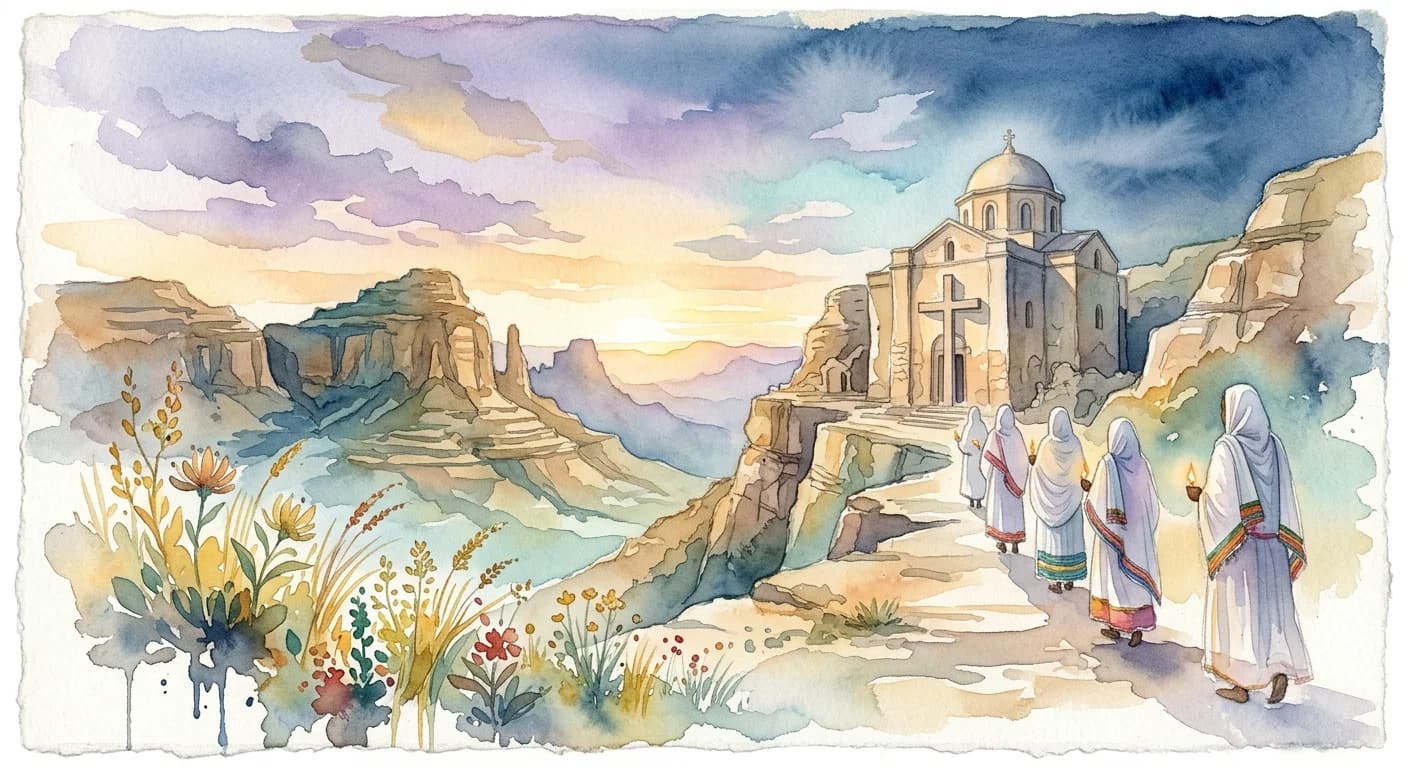
As midnight approached on Fasika Eve, the ancient church of St. George was ablaze with candlelight and resonant with the chants of deacons. Eleni, wrapped in her shamma, stood amongst hundreds, her heart swelling with anticipation for the moment the priest would declare 'Christos Tense'a!' (Christ is Risen!), signifying the end of the fast and the dawn of new hope.
The Deeper Meaning
Fasika embodies a philosophy of profound spiritual discipline followed by exuberant communal release. It reveals a worldview where patience, sacrifice, and collective endurance are seen as pathways to ultimate joy and divine grace. The prolonged fast teaches self-control and spiritual focus, making the subsequent feast not merely a meal, but a sacred act of communal gratitude and celebration of life's triumph over death.
Did You Know?
Unlike Western Easter, Fasika's date is calculated using the Ethiopian Calendar and a different reckoning, often falling weeks after the Gregorian calendar's Easter, further highlighting its unique cultural and religious autonomy.
How It's Used
Used to refer to the Easter holiday in Ethiopia, particularly within the Ethiopian Orthodox Tewahedo Church tradition. It's a central part of the religious and cultural calendar.