U.
HomeRegionsLanguagesEmotionsCollections
Find Your Word

“The limits of my language mean the limits of my world.”

— Ludwig Wittgenstein, Philosopher

Untranslatable

A curated collection of the world's most beautiful expressions—words that remind us language is humanity's greatest invention.

  • Home
  • Collections
  • Regions
  • Countries
  • Emotions
  • Tags
  • Contexts
  • Finder
  • Europe
  • Asia
  • Americas
  • Africa
  • Middle East
  • About
  • Contact
  • Privacy Policy
  • Terms of Service

2026 © Untranslatable. All rights reserved.

    /
    /
    1. Home
    2. /
    3. Americas
    4. /
    5. Fazendeiro
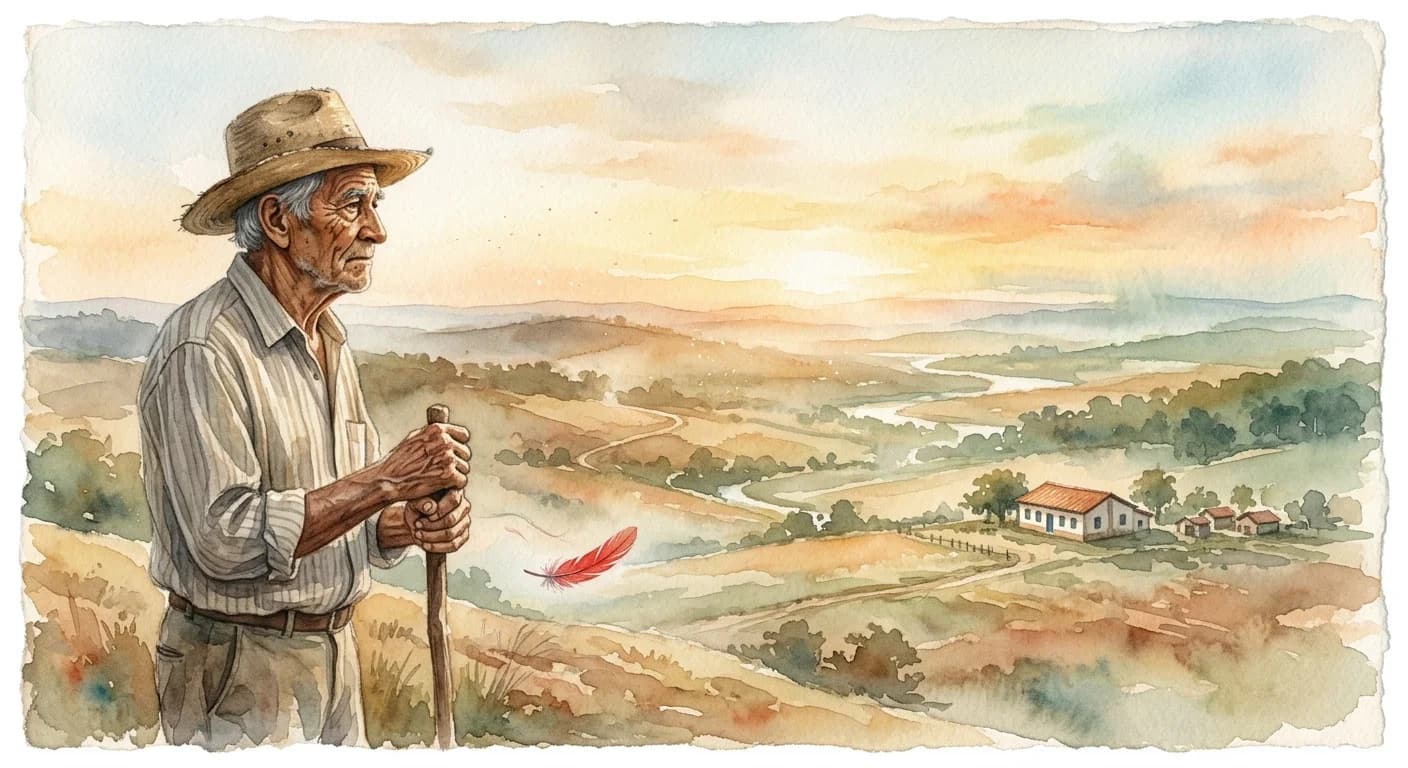
    Artistic representation of Fazendeiro
    Portuguese•
    🇧🇷Brazil🇵🇹Portugal

    Fazendeiro

    /fah-zen-DAY-roo/

    Meaning

    A 'fazendeiro' is far more than a mere farmer; they are the venerable owner and steward of a vast 'fazenda,' a sprawling estate often encompassing agricultural land, livestock, and even small communities. This role is imbued with significant social prestige and economic power, signifying not just land ownership but a deep, inherited connection to the earth and a position of patriarchal authority within the rural landscape. It evokes a traditional way of life, where the fazendeiro's decisions shaped the livelihoods of many and their family legacy was inextricably linked to the land they commanded.

    Literal Translation

    Farmer/Landowner

    The Story Behind the Word

    The concept of the 'fazendeiro' is deeply rooted in Brazil's colonial history, stemming from the Portuguese 'sesmarias' land grants that established large estates worked by enslaved or indentured laborers. This historical context forged a powerful, almost feudal, social structure where the fazendeiro was the undisputed lord of his domain, responsible for production, employing a workforce, and often acting as a political and judicial figure in remote areas. The word encapsulates centuries of economic power, social hierarchy, and the enduring importance of land ownership as a source of wealth and status in Brazilian society. It reflects a worldview where prosperity and influence are intrinsically tied to vast territorial control and agricultural enterprise, shaping the country's economic and political development.

    Experience It

    The Harvest Feast

    At the annual harvest feast, the fazendeiro, Senhor Almeida, stood at the head of the long table, his presence commanding respect. He surveyed the bustling scene, a silent acknowledgment of the year's bounty and the hard work of his countless employees, all dependent on his fazenda's success.

    A Family Legacy

    Young Mariana, fresh from her studies abroad, felt the immense weight of her family's legacy as she walked the vast coffee plantations. Her grandfather, a legendary fazendeiro, had built this empire, and now the responsibility to modernize and sustain it fell squarely on her shoulders.

    The Deeper Meaning

    The 'fazendeiro' embodies a philosophy of rootedness and dominion, where human identity and social standing are profoundly tied to the land. It speaks to a deep-seated belief in the power of stewardship, not just over crops and cattle, but over entire communities and their destinies. This concept highlights a worldview where wealth is tangible, measured in acres and harvests, and authority is derived from the ability to command and cultivate the earth.

    Did You Know?

    Many fazendeiros in Brazil still maintain the tradition of having a private airstrip on their fazendas, not just for convenience but as a symbol of their extensive landholdings and self-sufficiency.

    How It's Used

    Used to describe the owner of a large farm or ranch, particularly in Portuguese-speaking countries like Brazil and Portugal. It denotes a specific social and economic standing related to land ownership and agricultural enterprise.

    Emotions
    belonging,gratitude
    Contexts
    nature,seasons,work
    🇧🇷Brazil🇵🇹Portugal

    by Kwame Nkrumah·Written Mar 14, 2026·Updated Apr 3, 2026

    Related Words

    Explore more
    SobremesaSpanish

    Sobremesa is the cherished, often extended period immediately following a meal, particularly lunch or dinner, where diners remain seated at the table to enjoy conversation, coffee, and digest not just the food, but the company itself. It’s a dedicated time for unhurried social bonding, storytelling, and shared laughter, transforming a simple meal into a profound communal experience. Far from just clearing the dishes, sobremesa is an integral part of Spanish social life, often lasting for hours.

    Pura vidaSpanish

    More than just 'pure life,' "Pura vida" encapsulates a profound philosophy of embracing the present moment with unwavering optimism and gratitude. It's a daily commitment to finding joy in simple pleasures, accepting life's challenges with a positive spirit, and prioritizing well-being over material possessions. This ubiquitous phrase reflects a national identity built on resilience, community, and an deep appreciation for nature's bounty.

    MamihlapinatapaiYaghan

    Mamihlapinatapai encapsulates that profound, unspoken moment when two individuals lock eyes, each silently acknowledging a mutual desire or intention, yet both hesitate to be the first to act upon it. It's a delicate dance of anticipation, a shared gaze brimming with common understanding and a quiet longing for the other to break the ice. This intricate look carries the weight of a shared, uninitiated potential, a silent conversation where both parties are perfectly aware of what could happen, but neither makes the first move.

    UbuntuZulu/Xhosa

    Ubuntu is a profound African philosophy that translates to 'I am because we are,' signifying that an individual's humanity is inextricably linked to the humanity of others. It embodies the belief that our existence and well-being are deeply intertwined with the community. This concept emphasizes compassion, reciprocity, dignity, and the understanding that true fulfillment is found not in isolation, but through collective flourishing and mutual support. It's a call to recognize and affirm the humanity in everyone, fostering a sense of interconnectedness.