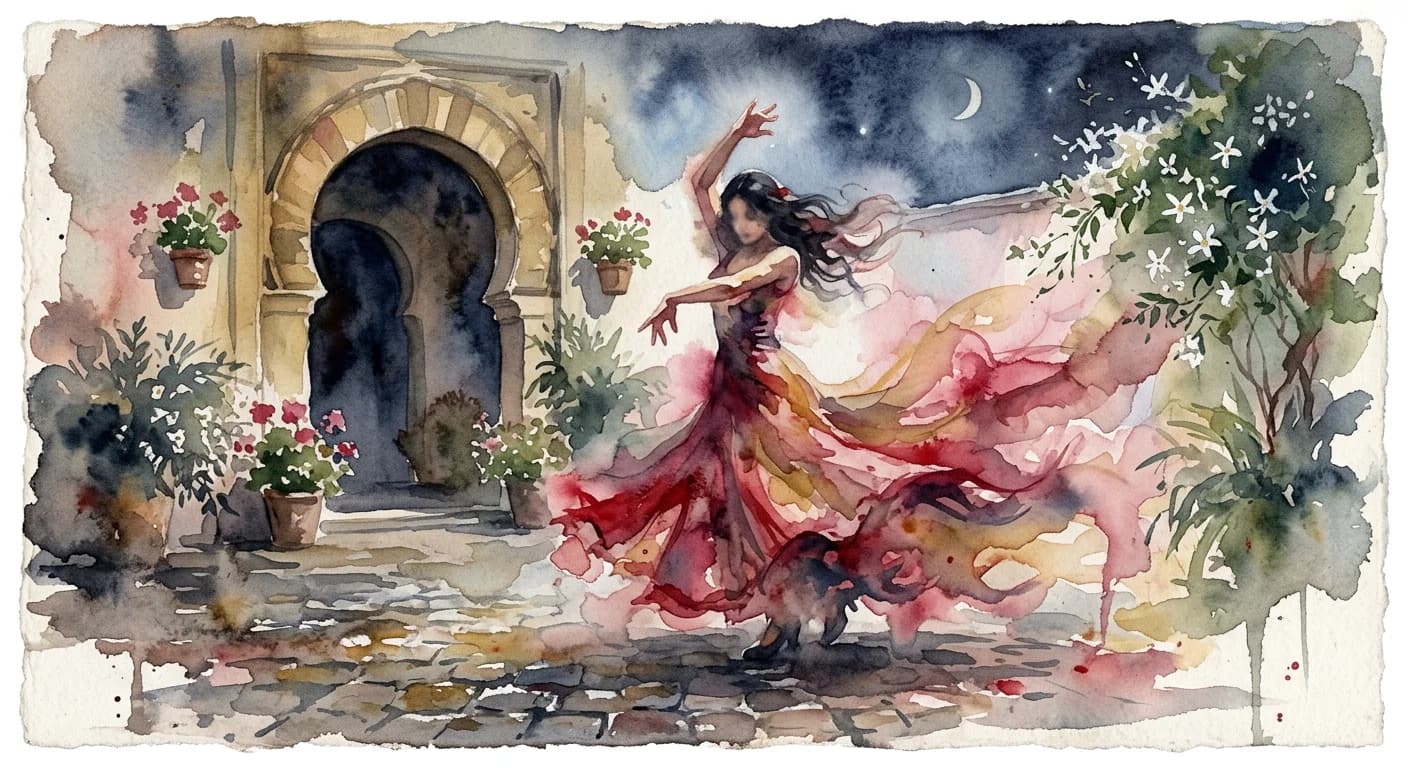
Flamenco
/flah-MEN-koh/
Meaning
Flamenco transcends mere performance; it is the raw, visceral heartbeat of Andalusia, a profound dialogue between soul and expression. Through impassioned cante (singing), intricate toque (guitar), and defiant baile (dance), it channels the full spectrum of human emotion—from the deepest sorrow and longing to explosive joy and unyielding pride. This art form is a cathartic release, a spiritual journey that demands not just observation, but a deep emotional resonance to truly grasp its multifaceted spirit and historical weight.
Literal Translation
The word's etymology is debated, with theories linking it to "Flemish" or even Arabic terms, but its primary modern meaning is tied to the art form.
The Story Behind the Word
Flamenco's origins are deeply rooted in the crucible of Andalusian history, emerging from the cultural melting pot of Romani, Sephardic, and Moorish influences. It became an authentic voice for marginalized communities, a vehicle for expressing their pain, resilience, and identity in the face of hardship and persecution. It embodies the concept of 'duende'—a mysterious, almost magical force of emotional intensity that arises from deep within the performer and resonates with the audience, signifying a profound connection to suffering and joy. Flamenco reveals a worldview where life's struggles are not just endured but transformed into art, where raw emotion is celebrated as a source of strength and truth, and where the past echoes powerfully in every present moment.
Experience It
A Spontaneous 'Juerga'
Late into the night, in a small bar in Triana, a guitar player starts a soulful melody. Soon, a woman rises, her face etched with emotion, and begins to clap and move. This spontaneous 'juerga' of flamenco isn't rehearsed; it's a raw outpouring of shared feeling, the very essence of their Andalusian spirit.
The 'Zapateado' of Defiance
On stage, the dancer's 'zapateado' (footwork) becomes a furious percussive force, her eyes burning with an ancient fire. Each stomp and turn isn't just a step; it's a declaration, a story of resistance and pride echoing generations of struggle and triumph, captivating the entranced audience.
The Deeper Meaning
Flamenco embodies a philosophy of confronting and transforming suffering into beauty. It teaches that profound truth and connection are found not in suppressing pain, but in expressing it fully and authentically. This art form champions resilience, the power of collective memory, and the idea that our deepest emotions, both joyous and sorrowful, are the wellspring of human creativity and spiritual depth.
Did You Know?
The 'cajón' (a box drum) is now ubiquitous in flamenco, but it was only introduced in the 1970s after Paco de Lucía discovered it in Peru and brought it back to Spain, revolutionizing the rhythmic accompaniment.
How It's Used
Used to refer to the traditional Andalusian music, song, and dance form, as well as the cultural tradition and the people associated with it.