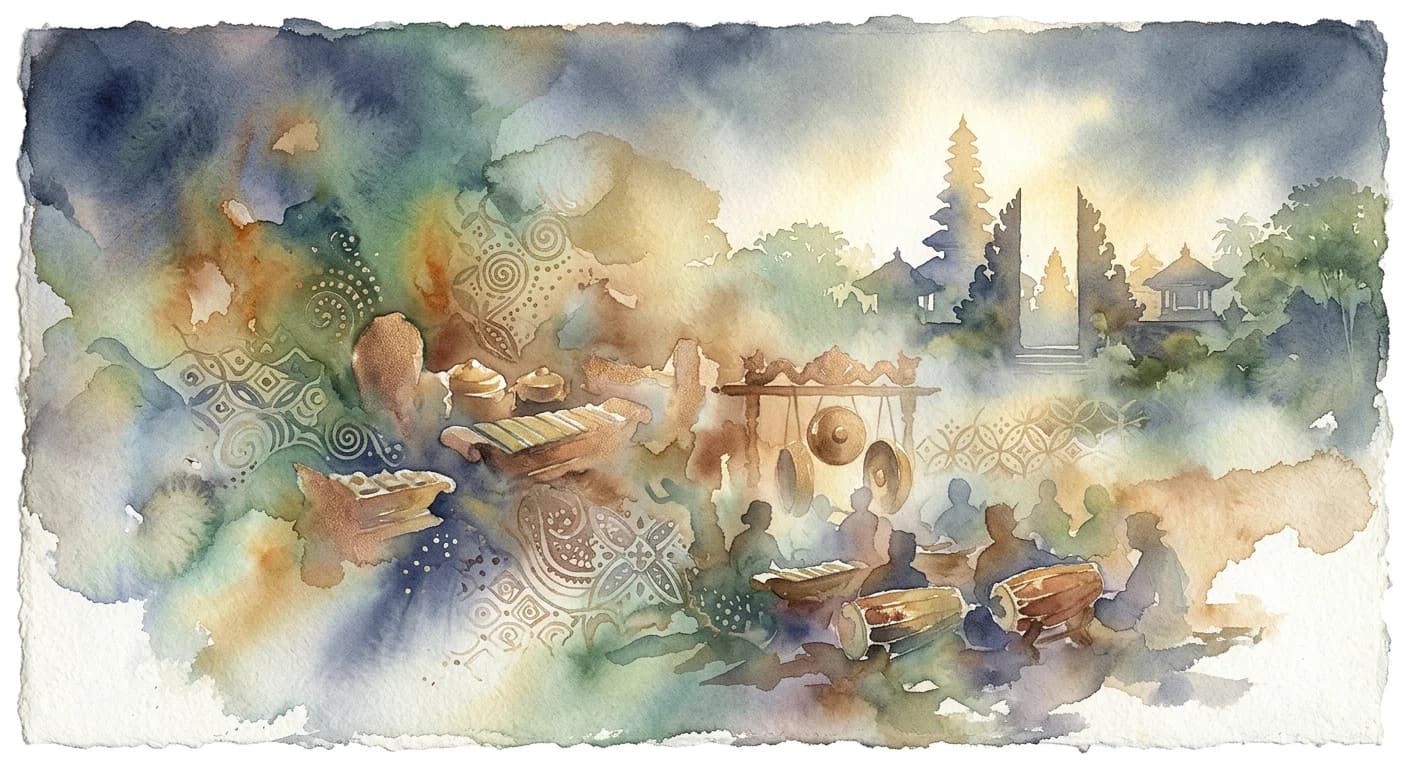
Gamelan
/GAH-meh-lahn/
Meaning
Gamelan transcends mere music; it is a sacred, percussive orchestra predominantly from Java and Bali, a living tapestry woven from metallophones, gongs, drums, and sometimes flutes and bowed strings. Its intricate, layered soundscapes, characterized by interlocking rhythms and shimmering timbres, evoke a profound sense of communal harmony and spiritual connection. This mesmerizing sonic experience is deeply intertwined with cultural life, often accompanying dance, shadow puppet theater (wayang kulit), and religious ceremonies, embodying a worldview where individual elements contribute to a unified, transcendent whole.
Literal Translation
The etymology is uncertain, but it is thought to derive from the Javanese word 'gamel' meaning 'to strike' or 'hammer'.
The Story Behind the Word
Gamelan is not just entertainment but a spiritual conduit, often considered sacred and imbued with supernatural power. Its origins are shrouded in ancient myth, with some legends attributing its creation to Sang Hyang Guru, a deity who used it to summon gods. The instruments themselves are often given names and treated with reverence, reflecting a animistic worldview where objects can possess spirits. The music's structure mirrors the Javanese and Balinese cosmological order, emphasizing balance, cyclical time, and the integration of diverse elements into a harmonious whole. It reveals a culture that values community over individuality, subtlety over overt display, and a deep connection to ancestral wisdom and the divine. The collective effort required to play gamelan fosters social cohesion and a shared understanding of aesthetic and spiritual principles.
Experience It
Village Temple Ceremony
As dawn breaks over the Balinese village, the air fills with the resonant, shimmering tones of the local gamelan ensemble. The villagers, dressed in traditional attire, move toward the temple, guided by the music's ancient rhythm, which marks the sacred procession and invites the deities to partake in the offerings.
Wayang Kulit Performance
In the cool evening, the dalang (puppeteer) skillfully manipulates the shadow puppets behind a screen, his voice weaving tales of gods and heroes. The gamelan, ever-present, underscores every dramatic turn, its dynamic shifts and subtle melodies creating an emotional landscape that brings the epic story to life for the captivated audience.
The Deeper Meaning
Gamelan embodies the Javanese concept of 'rukun' (harmony) and 'gotong royong' (mutual cooperation). Each instrument, with its distinct voice, contributes to a larger, intricate sound tapestry, illustrating how individual parts, when played in concert and with mindful awareness, create a profound and harmonious totality. It reflects a worldview that values balance, cyclical patterns, and the integration of diverse elements into a unified, transcendent experience, mirroring the cosmic order itself.
Did You Know?
Some ancient gamelan instruments are believed to possess spirits, and are treated with offerings and respect, never to be stepped over, as it's thought to bring bad luck.
How It's Used
Used to refer to the musical ensemble itself, the music produced by the ensemble, and the specific instruments that comprise it. It is central to Indonesian cultural performances and ceremonies.