U.
HomeRegionsLanguagesEmotionsCollections
Find Your Word

“The limits of my language mean the limits of my world.”

— Ludwig Wittgenstein, Philosopher

Untranslatable

A curated collection of the world's most beautiful expressions—words that remind us language is humanity's greatest invention.

  • Home
  • Collections
  • Regions
  • Countries
  • Emotions
  • Tags
  • Contexts
  • Finder
  • Europe
  • Asia
  • Americas
  • Africa
  • Middle East
  • About
  • Contact
  • Privacy Policy
  • Terms of Service

2026 © Untranslatable. All rights reserved.

    /
    /
    1. Home
    2. /
    3. Asia
    4. /
    5. Geisha
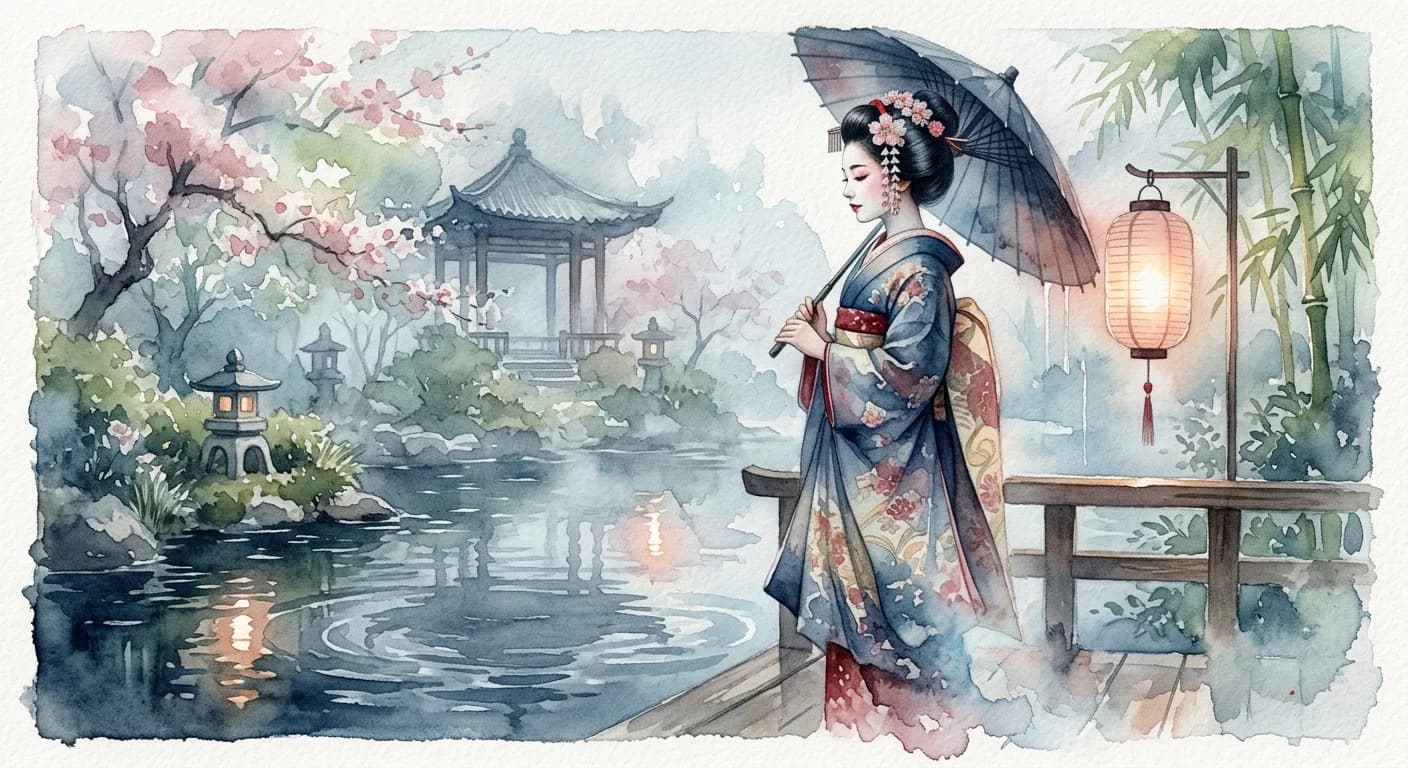
    Artistic representation of Geisha
    Japanese•
    🇯🇵Japan

    Geisha

    /GAY-shah/

    Meaning

    A "geisha" is a highly refined Japanese artist and entertainer, whose mastery extends beyond mere performance into a profound embodiment of traditional aesthetics and hospitality. Through rigorous training in classical music, dance, tea ceremony, and conversation, she cultivates an atmosphere of exquisite beauty and intellectual stimulation. Her presence transforms social interaction into a curated artistic experience, reflecting deep cultural values of harmony, grace, and meticulous attention to detail, making her role far more intricate than a simple entertainer.

    Literal Translation

    person of art

    The Story Behind the Word

    The existence of geisha reflects Japan's profound appreciation for aesthetic perfection, disciplined artistry, and the elevation of hospitality to an art form. Originating in the 18th century, initially including men, geisha became the arbiters of fashion, culture, and refined entertainment, especially in the Edo period. Their meticulous training in classical arts like 'kabuki' dance and 'shamisen' music, coupled with sophisticated conversational skills, provided an exclusive social milieu for the elite. The geisha institution reveals a society that valued beauty, tradition, and the nuanced art of human connection, where pleasure was sought not in overt display but in subtle elegance and intellectual engagement. It underscores a cultural emphasis on 'omotenashi' (wholehearted hospitality) and the pursuit of 'miyabi' (courtly elegance), where the ephemeral moment is crafted into an unforgettable artistic memory.

    Experience It

    Evening of Enchantment

    At a private dinner, a geisha gracefully entered, her 'kimono' a vibrant silk canvas. She performed a delicate 'mai' dance, her movements telling a story without words, then engaged guests in witty conversation, her laughter like wind chimes, ensuring an unforgettable night of refined beauty.

    Art of Conversation

    During a tea ceremony, a geisha didn't just serve tea; she orchestrated the experience. Her precise movements, calm demeanor, and insightful commentary on the seasonal flowers in the 'tokonoma' transformed a simple ritual into a profound moment of shared aesthetic appreciation and intellectual exchange.

    The Deeper Meaning

    The geisha embodies a philosophical approach that elevates life itself to an art form. Through their dedication to 'do' (the way or path), they demonstrate that beauty, grace, and profound human connection are not incidental but are cultivated through rigorous discipline and an unwavering commitment to aesthetic and social harmony. Their existence speaks to a worldview where the ephemeral moment is savored and transformed into a timeless experience of refined pleasure and cultural appreciation.

    Did You Know?

    The iconic white makeup of a geisha, 'oshiroi', was originally made from lead, which caused health issues. Modern 'oshiroi' uses safer ingredients, preserving the traditional aesthetic without the historical danger.

    How It's Used

    Used to refer to a professional female entertainer in Japan skilled in traditional arts.

    Emotions
    love,serenity,wonder
    Contexts
    celebration,daily life,dining
    🇯🇵Japan

    by Annelise Dubois·Written Mar 14, 2026·Updated Apr 3, 2026

    Related Words

    Explore more
    Wabi-sabiJapanese

    Wabi-sabi is the profound appreciation for the ephemeral, the imperfect, and the incomplete aspects of existence. It is about discovering beauty in the subtle textures of age, the unique character of flaws, and the gentle decay that marks the passage of time. This philosophy encourages a quiet acceptance of impermanence and a mindful connection to the natural world, finding elegance in simplicity and authenticity.

    IkigaiJapanese

    Ikigai is more than just a reason to get out of bed; it's a deeply personal and evolving sense of purpose that brings genuine fulfillment and joy to one's life. It represents the sweet spot where your passions, talents, needs of the world, and what you can be paid for beautifully converge. Discovering your ikigai often leads to a life lived with intentionality, resilience, and a profound connection to one's contributions. It's the intrinsic motivation that fuels a meaningful existence, regardless of external circumstances.

    NunchiKorean

    Nunchi is the sophisticated, almost telepathic, ability to instantly grasp the unspoken dynamics of any social situation, anticipating others' thoughts and feelings, and then responding with impeccable grace and timing. It's an acute form of social intuition, allowing one to navigate complex interpersonal landscapes by reading subtle cues like body language, tone, and context. Possessing good nunchi means effortlessly understanding the underlying emotional currents and adjusting one's behavior to maintain harmony and effectiveness, often without a single word exchanged.

    JugaadHindi

    Jugaad is more than just a quick fix; it embodies the spirit of resourceful, ingenious improvisation in the face of scarcity or systemic challenges. It's the art of bending rules, repurposing materials, and thinking outside the box to achieve a desired outcome, often with limited financial or technological resources. This approach celebrates clever workarounds and innovative adaptations, turning constraints into catalysts for creative problem-solving. It's about making do and making something work, brilliantly.