Goma
/GOH-mah/
Meaning
In Swahili, "Goma" transcends the simple act of drumming or dancing; it embodies a pulsating, communal celebration rooted in the Great Lakes region of Africa. It refers to a dynamic style of music and movement characterized by powerful drum rhythms and often acrobatic, synchronized dancing. Goma is a vibrant expression of cultural identity, fostering an atmosphere of exhilarating shared joy and connection, transforming gatherings into spiritual and social events.
Literal Translation
Drum / Dance
The Story Behind the Word
The word "Goma" exists because music and dance are not merely entertainment in many East African cultures, but fundamental pillars of social cohesion, spiritual expression, and historical narration. It reflects a worldview where the individual finds purpose and joy within the collective, and where rhythm is a language understood by all. Goma performances often mark significant life events—weddings, harvests, rites of passage—serving as a living archive of community history and values. The call and response between drums and dancers, and between performers and audience, symbolizes the interconnectedness essential to many African societies, where participation is more valued than passive observation. It reveals a culture that sees life as a rhythmic journey, best navigated in unison.
Experience It
Village Harvest Goma
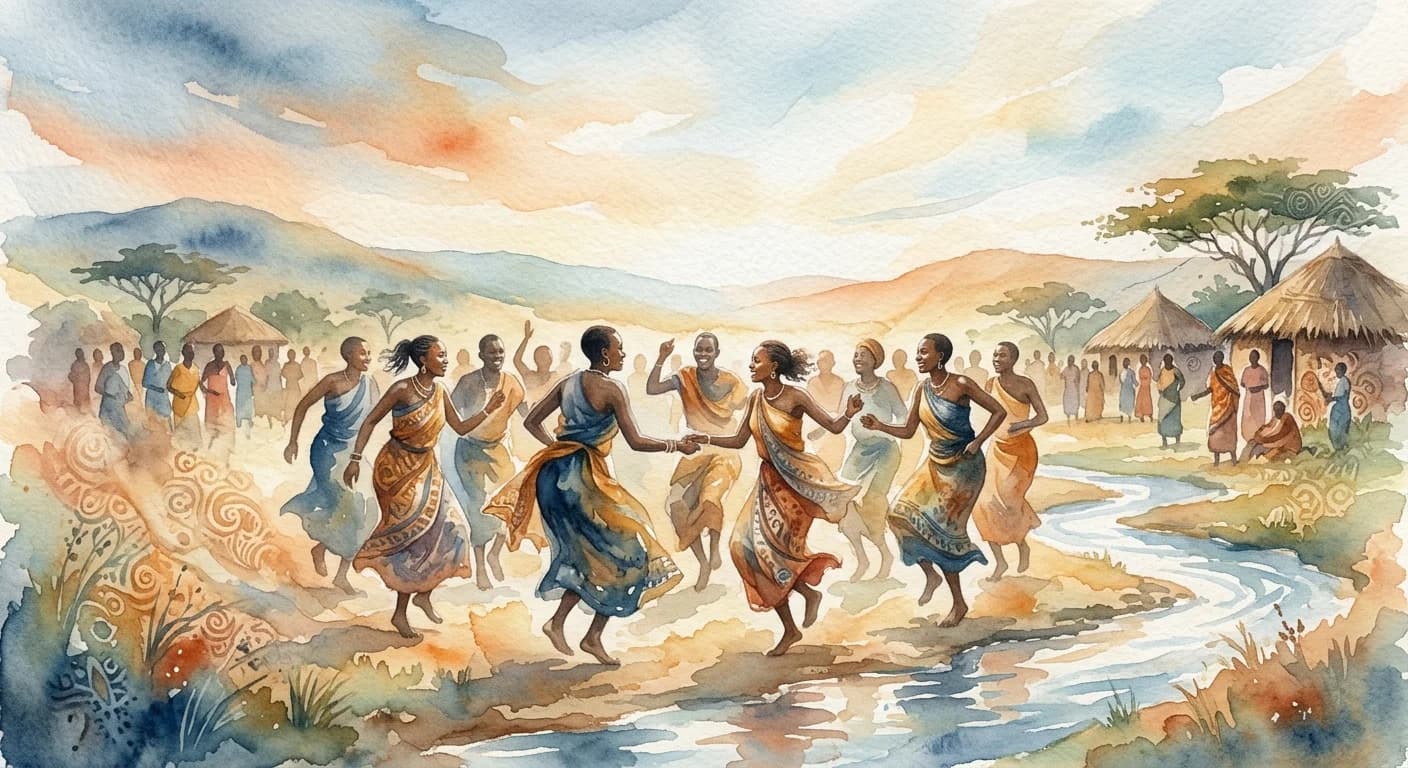
After a bountiful harvest, the entire village gathers. Elders begin the rhythmic clapping, soon joined by the booming drums. Children and adults alike leap into the center, their movements mirroring the joy and gratitude for the earth's bounty, a true Goma of thanksgiving.
Wedding Celebration Goma
The wedding procession winds its way to the celebration grounds, led by energetic drummers whose beats signal the start of the festivities. As the bride and groom arrive, the tempo intensifies, and guests break into spontaneous, joyous Goma, celebrating the union with every step and sway.
The Deeper Meaning
Goma reveals a profound philosophy where life is inherently rhythmic and communal. It suggests that true joy and spiritual connection are found not in isolation, but through shared, embodied experience. The synchronized movements and collective rhythm reflect a worldview that prioritizes harmony, interconnectedness, and the celebration of life's moments as a collective journey, rather than an individual pursuit.
Did You Know?
While often associated with the Congo region, the spirit of Goma, with its emphasis on communal drumming and dance, echoes ancient traditions found across the entire African continent, demonstrating a shared heritage of rhythmic expression.
How It's Used
Used to refer to the music genre, the dance style, and occasions where this music and dance are performed.