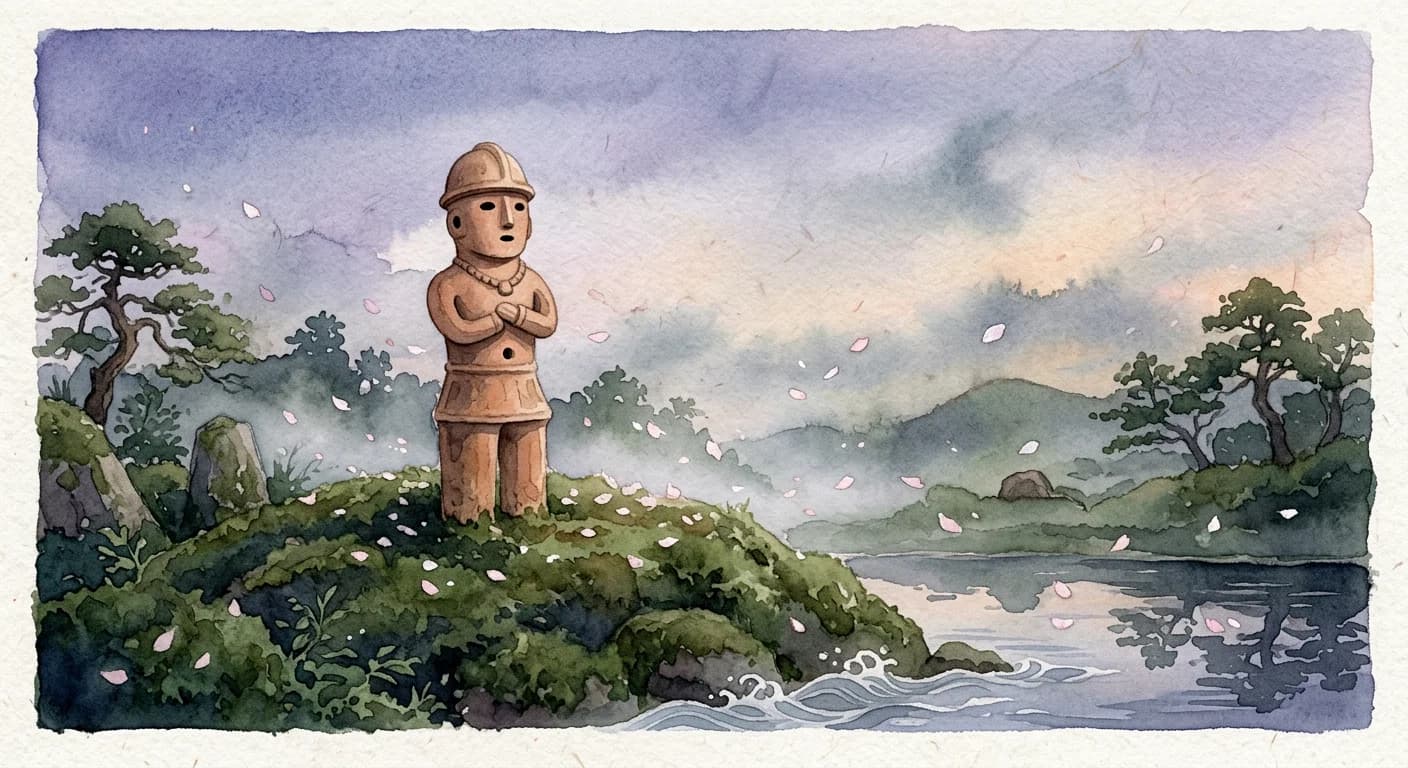
Haniwa
/HAH-nee-wah/
Meaning
Haniwa are ancient Japanese terracotta clay figures, crafted with a profound simplicity yet striking expressiveness, primarily for placement around Kofun period burial mounds. These enigmatic sculptures, ranging from houses and animals to human figures, served as symbolic guardians and substitutes for human sacrifices, bridging the world of the living and the dead. They offer invaluable insights into the spiritual beliefs, social hierarchies, and daily existence of early Japanese society, embodying a deep reverence for ancestors and the enduring mystery of ancient funerary rites.
Literal Translation
Pottery ring
The Story Behind the Word
The existence of Haniwa is deeply rooted in the funerary practices and spiritual beliefs of the Kofun period (c. 3rd to 7th century CE) in Japan. Before their advent, it's believed that actual human sacrifices or the burial of retainers alongside their lords might have occurred, a practice evident in some earlier East Asian cultures. Haniwa emerged as a humane, symbolic alternative, reflecting an evolving sensibility towards death and the afterlife. Their placement around the perimeter of monumental burial mounds (kofun) served not just as markers, but as a protective spiritual barrier for the deceased, ensuring their safe passage and continued influence in the spirit world. The varied forms—from warriors and shamans to agricultural tools and dwellings—reveal a society preoccupied with status, ritual, and the continuation of life's essence beyond death. They show a practical yet deeply spiritual worldview, where the material world was intimately connected with the unseen realm of ancestors and deities, and where even clay could embody profound spiritual purpose.
Experience It
Unearthing Ancient Guardians
During an archaeological dig, a team carefully uncovers a row of clay figures surrounding a large mound. 'Look, more Haniwa!' exclaims the lead archaeologist, recognizing the distinctive, simple faces and cylindrical bases, knowing they are about to learn more about the Kofun-era rituals.
Museum Contemplation
A visitor stands before a display of Haniwa in a museum, captivated by the serene, almost melancholic expression of a warrior figure. They ponder the lives of the people who created these guardians, feeling a profound connection to Japan's ancient past and its enduring spiritual legacy.
The Deeper Meaning
Haniwa reveal a pragmatic yet deeply reverent approach to death, where symbolic representation could replace literal sacrifice, reflecting an evolving ethical and spiritual consciousness. They embody the belief that the material world could actively participate in the spiritual realm, providing protection and companionship for the deceased, thereby maintaining cosmic and social order even beyond life. This illustrates a holistic worldview where the past, present, and spiritual dimensions were intricately interwoven.
Did You Know?
While many Haniwa depict people or animals, the earliest forms were often cylindrical or house-shaped, believed to have marked the boundaries of the sacred burial area.
How It's Used
Used to refer to the specific type of terracotta funerary objects from ancient Japan.