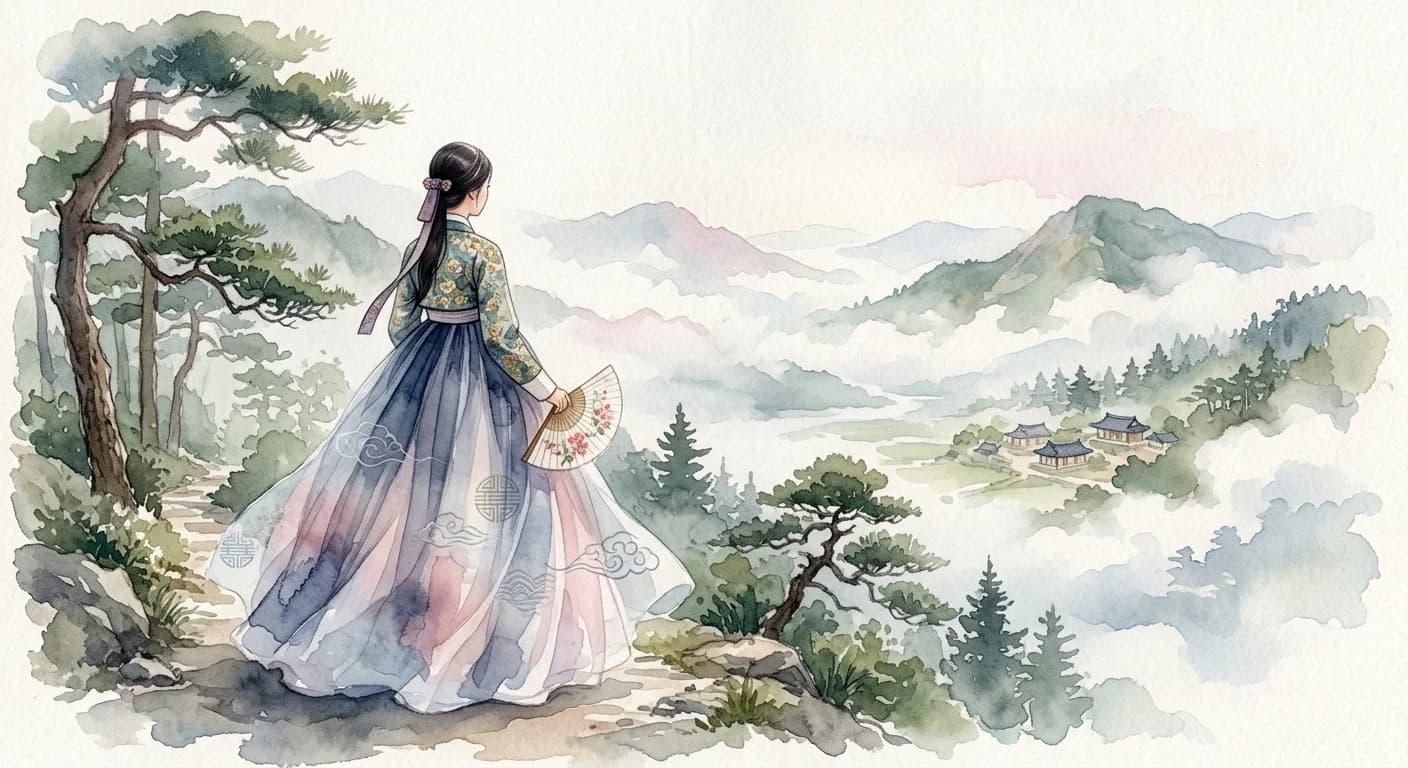
Hanbok
/HAHN-bok/
Meaning
Hanbok, the traditional attire of Korea, transcends mere clothing to embody a vibrant cultural narrative. Characterized by its flowing lines, vivid colors, and unique silhouette—a fitted jeogori (jacket) over a voluminous chima (skirt) for women, or baji (trousers) for men—it reflects centuries of aesthetic evolution. More than just historical dress, Hanbok symbolizes national identity, grace, and an enduring connection to Korea's rich heritage, evoking a timeless elegance that continues to captivate.
Literal Translation
Korean clothing
The Story Behind the Word
Hanbok's existence is deeply intertwined with Korea's long history and the philosophy of its people. Its design, influenced by nomadic traditions and adapted through various dynastic periods, particularly the Joseon era, reflects a reverence for nature and a pursuit of harmony. The loose, flowing silhouette allows for freedom of movement, aligning with traditional Korean values of humility and comfort over ostentation. The use of vibrant, natural dyes often corresponds to the 'Obangsaek' (five-color theory), representing the five elements and directions, symbolizing balance and cosmic order. Wearing Hanbok for special occasions reinforces a collective memory and national pride, connecting individuals to their ancestors and a shared cultural narrative. It reveals a society that values tradition, community, and the preservation of its unique aesthetic identity.
Experience It
Wedding Day Elegance
At a traditional Korean wedding, the bride, resplendent in an elaborate Hanbok of crimson and gold, embodies centuries of marital customs. Her vibrant attire, chosen for its beauty and symbolic meaning, announces the joyous union and honors her family's heritage.
Seollal Family Gathering
During Seollal, the Lunar New Year, children bow to their elders in their freshly pressed Hanbok, performing 'sebae' to receive blessings. The sight of families dressed in their finest traditional wear, from toddlers to grandparents, paints a vivid picture of respect, continuity, and cultural reaffirmation.
The Deeper Meaning
Hanbok embodies the Korean philosophical concept of 'line and space' (선과 여백, seon-gwa yeobaek), emphasizing the beauty of natural curves and the elegant void. Its design, with minimal ornamentation and flowing silhouettes, reflects a deep appreciation for understated beauty, harmony with nature, and the importance of inner grace over outward extravagance. It suggests a worldview where simplicity and balance are paramount.
Did You Know?
Did you know that the voluminous chima (skirt) of the women's Hanbok was historically designed not only for beauty but also to allow for easy kneeling and sitting on the floor, central to traditional Korean life?
How It's Used
Hanbok is traditionally worn during holidays, festivals, weddings, and other special occasions. While not typically worn daily anymore, it is often donned for ceremonial events, cultural experiences, and as a symbol of Korean identity.