Harmattan
/HAHR-muh-tan/
Meaning
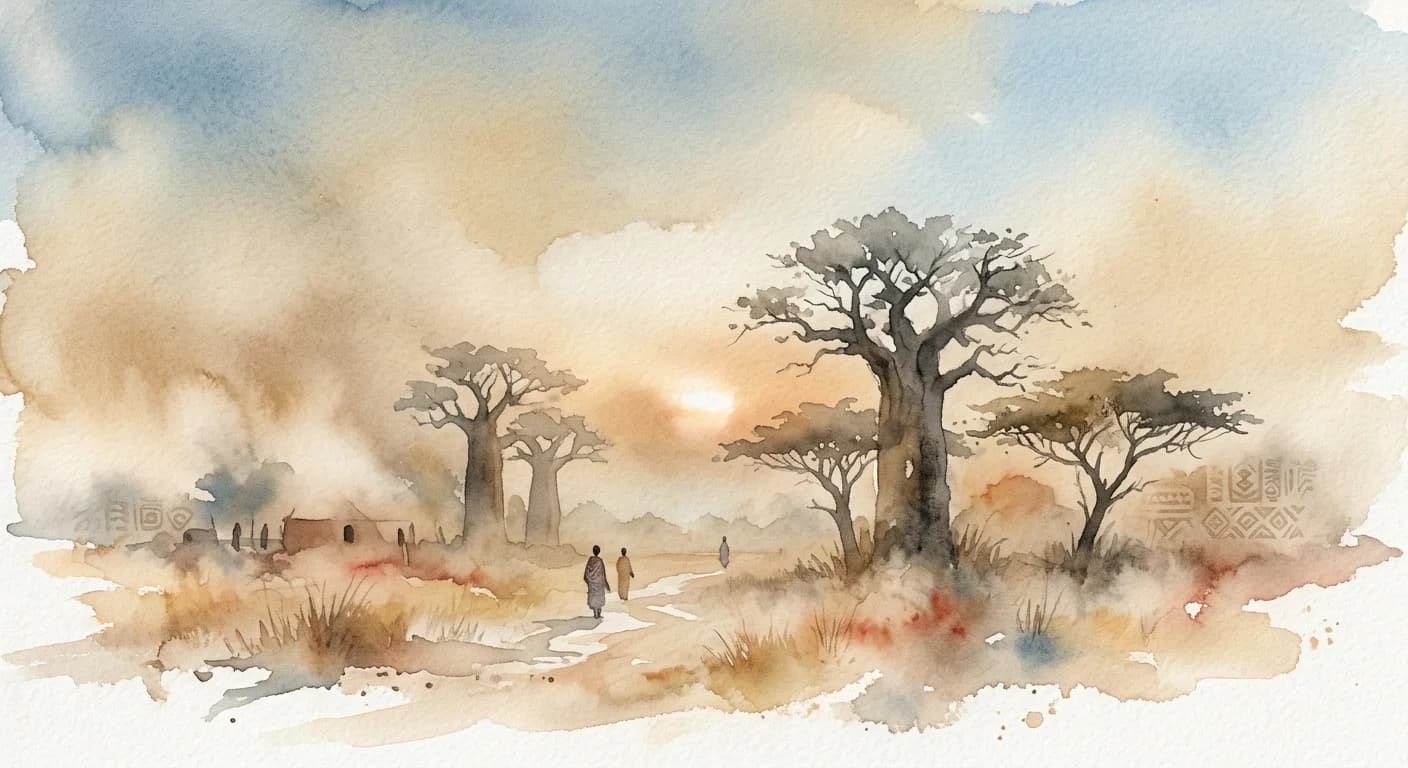
The Harmattan is more than just a wind; it's a transformative seasonal force in West Africa, sweeping in from the Sahara. Characterized by its dry, hazy embrace and cooler temperatures, it drapes the landscape in a veil of fine dust, often reducing visibility dramatically. While offering a welcome reprieve from oppressive humidity, it also ushers in a period of chapped lips, dry skin, and respiratory challenges, marking a distinct shift in daily life and the rhythm of the environment.
Literal Translation
The word 'Harmattan' is believed to have originated from a word in the Akan language, possibly related to 'hot' or 'wind'.
The Story Behind the Word
The Harmattan holds deep cultural resonance, signaling a distinct period in the annual cycle. For many Akan communities, its arrival marks a time of preparation and adaptation, subtly influencing social gatherings, agricultural practices, and even traditional attire. The dust-laden air, while challenging, is often associated with a certain clarity and sharpness, both literally in the cooler temperatures and metaphorically in the human spirit. It represents nature's powerful, unyielding presence, reminding people of their reliance on the elements and the cyclical nature of life. Its consistent return year after year imbues it with a sense of inevitability and a rhythm that structures collective memory and anticipation.
Experience It
Morning Market Haze
Mama Akua pulled her scarf tighter, the fine dust already coating the vibrant fabrics on her stall. The sun, a dull orange orb in the hazy sky, struggled to pierce the Harmattan's veil, making the usual bustling market feel strangely muted and ethereal.
Children's Dusty Play
Little Kofi and Ama, their faces streaked with dust, giggled as they chased a rolling leaf across the parched earth. Despite the dry air making their throats tickle, the cooler temperatures of the Harmattan meant they could play outside for longer than during the humid season.
The Deeper Meaning
The Harmattan embodies the philosophy of adaptation and resilience. Its annual arrival, though challenging, is accepted as an integral part of life's rhythm. It teaches humility before nature's power and fosters a collective understanding of cyclical change, demonstrating that even harsh conditions bring their own unique beauty and a necessary shift in perspective.
Did You Know?
The Harmattan can carry dust thousands of miles across the Atlantic Ocean, influencing weather patterns and even contributing to soil fertility in the Amazon rainforest!
How It's Used
Used to describe the specific dry, dusty wind that blows across West Africa during the dry season, typically from November to March. It's a common term in meteorology and everyday conversation in affected regions.