Holi
/HO-lee/
Meaning
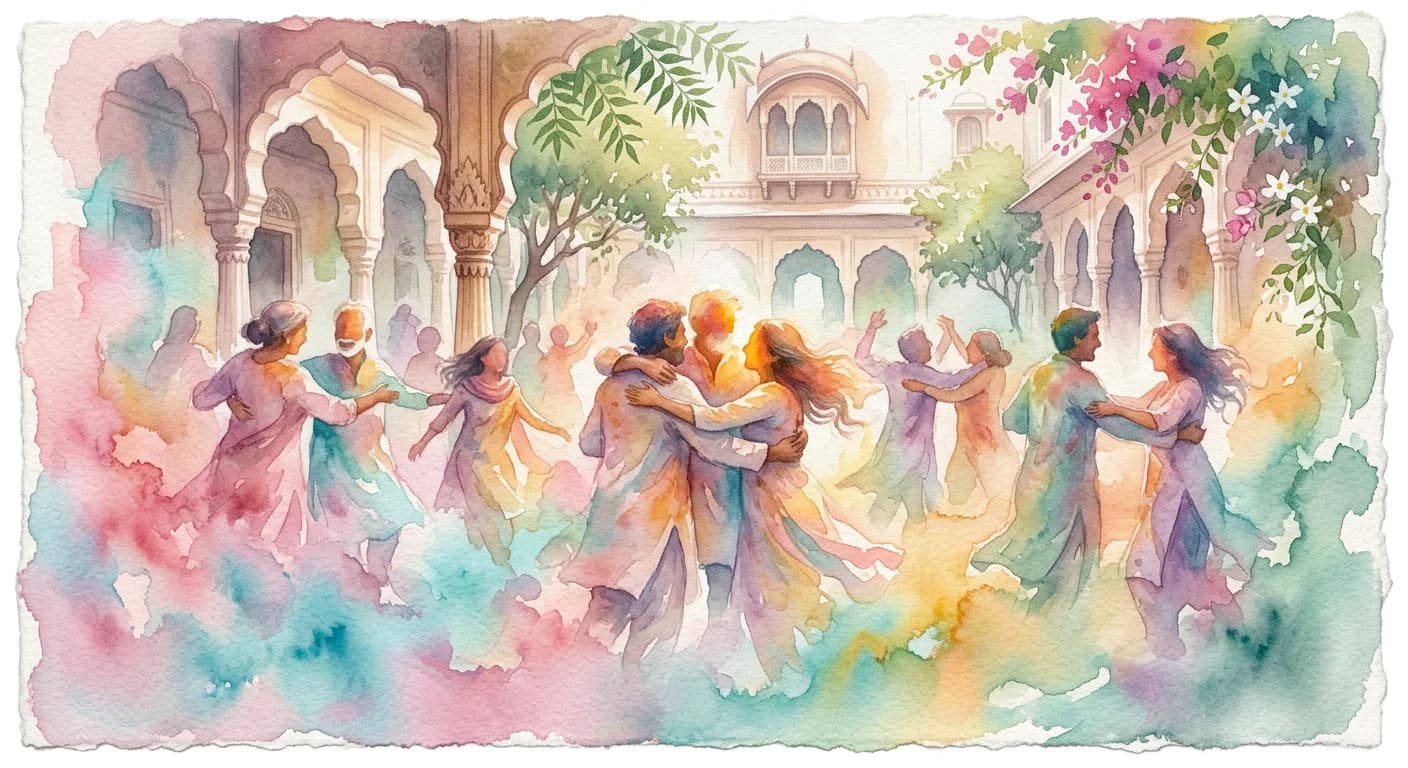
Holi transcends its literal translation of 'color' to embody a profound celebration of life, community, and renewal. It's a vibrant Hindu festival marking the arrival of spring and the triumph of good over evil. During Holi, inhibitions melt away as people joyously drench each other in colored powders and water, symbolizing the breakdown of social hierarchies and a collective fresh start. The air vibrates with laughter, music, and the aroma of festive treats, fostering a spirit of unity, forgiveness, and boundless merriment across all ages and backgrounds.
Literal Translation
color
The Story Behind the Word
Holi's roots are deeply embedded in Hindu mythology, primarily linked to the legend of Prahlada and Holika, symbolizing the victory of devotion and good over arrogance and evil. The burning of Holika Dahan on the eve of Holi represents the destruction of negativity and the cleansing of the past. This festival reveals a fundamental Indian worldview that embraces cyclical time, renewal, and the importance of community harmony. It's a sanctioned period of playful anarchy where social norms are temporarily suspended, allowing for a release of tension and a reaffirmation of human connection beyond caste, creed, or status. The act of sharing colors signifies universal brotherhood and the blurring of artificial divisions, reflecting a society that values collective joy and spiritual rejuvenation.
Experience It
Family Holi Bash
The courtyard erupted in a riot of fuchsia and emerald as children, grandparents, and neighbors chased each other, laughing uncontrollably. Auntie Ritu, usually so reserved, shrieked with delight as her nephew smeared her face with bright yellow gulal, her worries momentarily forgotten in the kaleidoscope of joy.
Holi in the Diaspora
Miles away in London, the Indian diaspora gathered in a local park, recreating the magic of Holi. Strangers became friends as powdered hues flew through the air, their shared heritage and the vibrant spirit of the festival bridging the distance from their homeland and fostering a sense of belonging.
The Deeper Meaning
Holi embodies the philosophical tenet of 'Maya' (illusion) and 'Leela' (divine play). The temporary suspension of social rules and the vibrant, ephemeral colors highlight the transient nature of worldly distinctions and the underlying unity of all beings. It encourages a playful approach to life, reminding participants that joy and connection are paramount, and that even the most rigid structures can be dissolved, if only for a day, in a wave of collective exuberance.
Did You Know?
The town of Barsana, Uttar Pradesh, celebrates 'Lathmar Holi,' where women playfully beat men with sticks (lathis) as part of the festivities, a unique and lively tradition that dates back centuries.
How It's Used
Holi is celebrated annually on the day after the full moon in the Hindu month of Phalguna, typically falling in March. It is observed with great enthusiasm across India and by the Indian diaspora worldwide. The festival involves two main days: Holika Dahan (the bonfire ritual) and Rangwali Holi (the day of colors).