Hora
/HO-rah/
Meaning
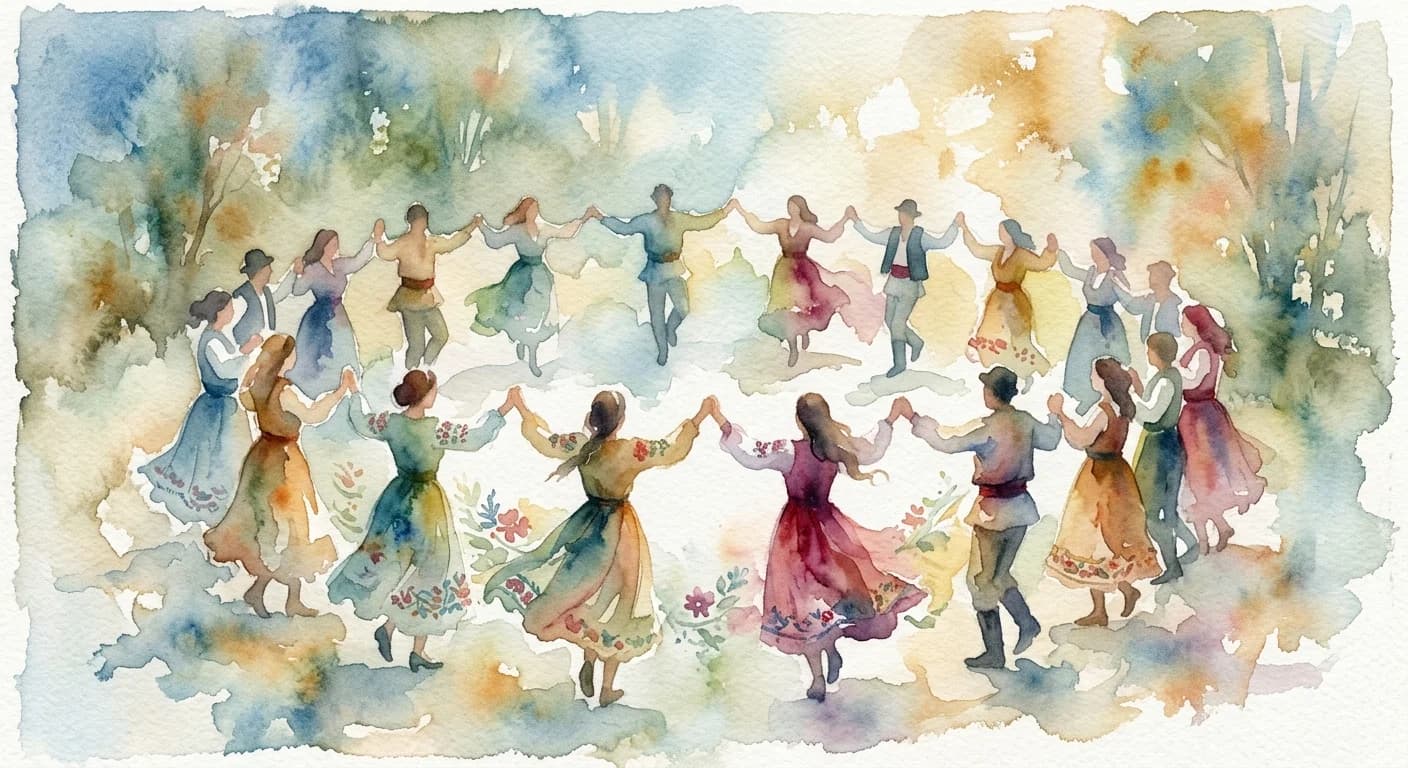
The Hora is a captivating, communal circle dance, a cornerstone of Romanian and Jewish cultural celebrations. Far more than mere steps, it embodies unity, shared joy, and the unbreakable bonds of community. Dancers link arms, moving rhythmically, often with increasing tempo, symbolizing life's cyclical nature and the collective spirit that transcends individual differences. Its infectious energy creates an atmosphere of pure elation and belonging, transforming gatherings into vibrant, unforgettable experiences.
Literal Translation
Dance (Romanian); Hour (Hebrew, though used for the dance in cultural context)
The Story Behind the Word
The Hora's roots delve deep into ancient folk traditions, predating modern national identities. For Romanians, it represents the heart of village life, a social glue that binds communities through generations, echoing agricultural cycles and rites of passage. For Jewish communities, particularly Ashkenazi Jews, it signifies joyous celebration, often performed at weddings and Bar/Bat Mitzvahs, connecting participants to a shared heritage and an enduring spirit of resilience. Its circular form is universally symbolic of eternity, community, and equality, where no one is at the head or the end, fostering a powerful sense of belonging and collective identity. The dance is not just performed; it is experienced as a living embodiment of cultural continuity and shared human experience.
Experience It
Wedding Hora
At a Romanian wedding, after the vows, the music swells, and aunts, uncles, cousins, and friends all rush to form a giant Hora. The bride and groom are swept into the center, beaming, as the circle pulsates with laughter and stomping feet, celebrating their new life together.
Bar Mitzvah Joy
During a Bar Mitzvah reception, the DJ plays 'Hava Nagila,' and immediately, everyone, from young children to grandparents, links hands. The Hora swirls faster and faster, lifting the Bar Mitzvah boy high on a chair, a moment of pure, unadulterated communal joy and pride.
The Deeper Meaning
The Hora embodies a philosophy of collective effervescence, suggesting that true joy and meaning are often found in shared experience rather than individual pursuits. It highlights the human need for belonging, rhythm, and ritual, reinforcing the idea that community is a living, breathing entity sustained by active participation and mutual support, mirroring life's continuous, interconnected flow.
Did You Know?
While 'Hora' means 'dance' in Romanian, its use for this specific circle dance in Jewish culture often stems from the Hebrew word 'hora' (שעה), meaning 'hour' or 'time,' perhaps referencing the opportune moment for celebration.
How It's Used
Typically performed at celebrations such as weddings, Bar/Bat Mitzvahs, holidays, and festivals. It involves participants holding hands or linking arms and dancing in a circle, with the tempo often increasing throughout.