U.
HomeRegionsLanguagesEmotionsCollections
Find Your Word

“The limits of my language mean the limits of my world.”

— Ludwig Wittgenstein, Philosopher

Untranslatable

A curated collection of the world's most beautiful expressions—words that remind us language is humanity's greatest invention.

  • Home
  • Collections
  • Regions
  • Countries
  • Emotions
  • Tags
  • Contexts
  • Finder
  • Europe
  • Asia
  • Americas
  • Africa
  • Middle East
  • About
  • Contact
  • Privacy Policy
  • Terms of Service

2026 © Untranslatable. All rights reserved.

    /
    /
    1. Home
    2. /
    3. Asia
    4. /
    5. Horde
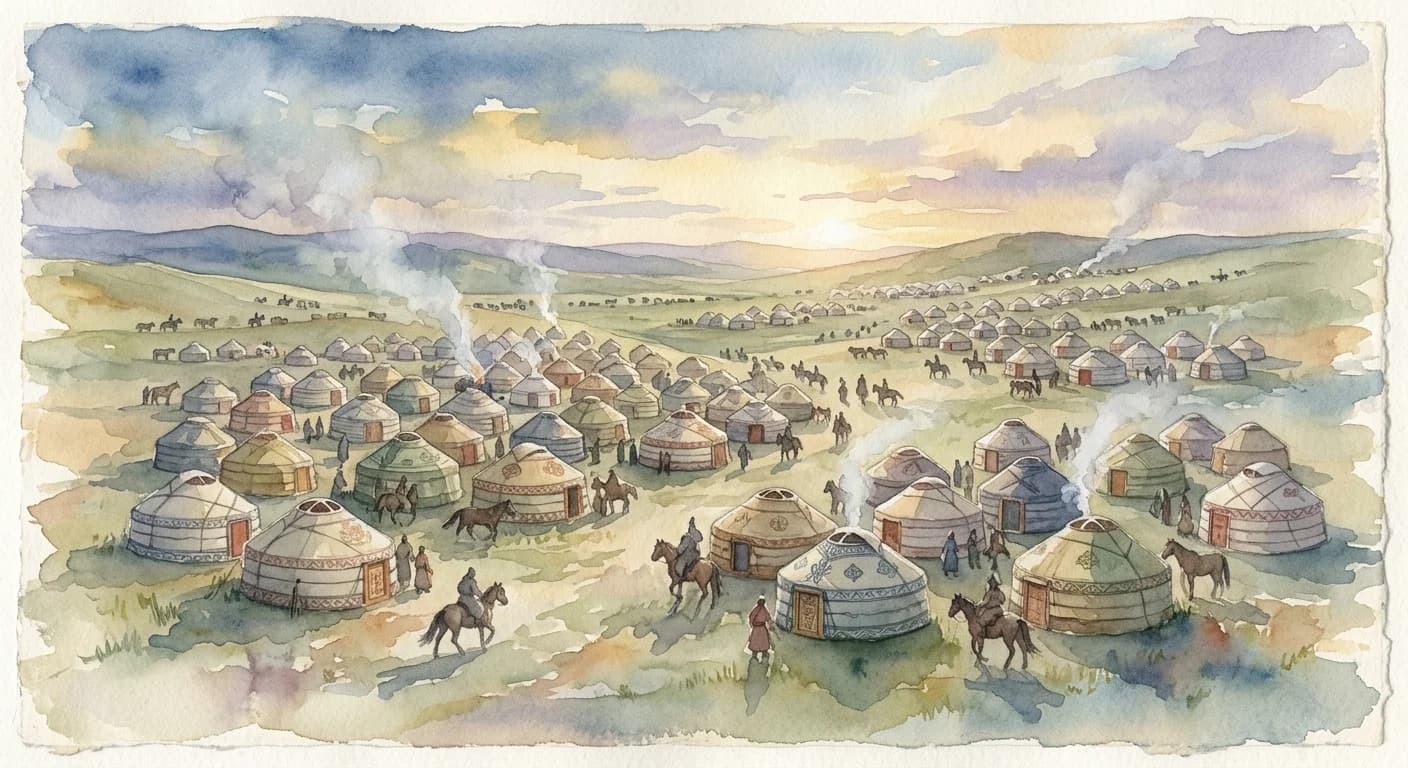
    Artistic representation of Horde
    Turkic•
    🇦🇿Azerbaijan🇰🇿Kazakhstan🇰🇬Kyrgyzstan🇲🇳Mongolia🇹🇷Turkey🇹🇲Turkmenistan🇺🇿Uzbekistan

    Horde

    /HORD/

    Meaning

    The Turkic 'ordu' originally designated a mobile royal court or a chieftain's opulent encampment, a vibrant hub of power, administration, and military strategy. Far from a chaotic mob, it represented a highly organized, self-sufficient, and often formidable collective. This 'ordu' was the beating heart of nomadic empires, a moving city of tents, warriors, and families, embodying a structured collective might and a deep connection to the vast steppe landscape.

    Literal Translation

    Camp, palace, army

    The Story Behind the Word

    The word 'ordu' is deeply rooted in the nomadic lifestyle of Turkic and Mongol peoples, where mobility was not just a means of survival but a strategic advantage. An 'ordu' wasn't merely a collection of tents; it was the political, military, and administrative center of a khanate or empire. Its existence reflects a worldview where community, discipline, and hierarchical organization were paramount, enabling vast groups to traverse immense distances, conquer territories, and establish enduring, albeit mobile, states. The very structure of the 'ordu'—with the khan's tent at its center, surrounded by his closest warriors and advisors—mirrored the social and political order of these societies. It underscores a philosophy of collective strength and adaptive governance, where the 'nation' was literally on the move.

    Experience It

    Imperial Mongol Ordu

    The vast Golden Ordu of Batu Khan stretched across the steppe, a moving city of thousands of yurts, horses, and warriors. From its majestic center, decrees were issued, strategies devised, and the fate of distant lands decided, all while the encampment steadily advanced.

    Chieftain's Council

    Within the chieftain's finely decorated ordu, elders gathered around a crackling fire, their voices low as they discussed the grazing lands for the upcoming season. This was the place where tribal laws were upheld and collective decisions made for the good of the entire nomadic group.

    The Deeper Meaning

    The 'ordu' reveals a philosophy of adaptable power and collective identity. It embodies the idea that strength lies not in static, monumental structures, but in organized, mobile communities capable of swift action and sustained movement. It reflects a worldview where the land is to be traversed and utilized, not necessarily owned and settled, and where social order is maintained through disciplined collective action rather than rigid, fixed institutions.

    Did You Know?

    The word 'ordu' is also the root of the English word 'Urdu,' referring to the language, which developed in the camps and markets of the Delhi Sultanate.

    How It's Used

    The word 'horde' is used to refer to a large group of people, especially an army or a nomadic tribe. It is often used in historical contexts related to the Mongol Empire and other Turkic nomadic groups.

    Emotion
    belonging
    Contexts
    celebration,travel,work
    🇦🇿Azerbaijan🇰🇿Kazakhstan🇰🇬Kyrgyzstan🇲🇳Mongolia🇹🇷Turkey🇹🇲Turkmenistan🇺🇿Uzbekistan

    by Kwame Nkrumah·Written Mar 14, 2026·Updated Apr 3, 2026

    Related Words

    Explore more
    SobremesaSpanish

    Sobremesa is the cherished, often extended period immediately following a meal, particularly lunch or dinner, where diners remain seated at the table to enjoy conversation, coffee, and digest not just the food, but the company itself. It’s a dedicated time for unhurried social bonding, storytelling, and shared laughter, transforming a simple meal into a profound communal experience. Far from just clearing the dishes, sobremesa is an integral part of Spanish social life, often lasting for hours.

    Wabi-sabiJapanese

    Wabi-sabi is the profound appreciation for the ephemeral, the imperfect, and the incomplete aspects of existence. It is about discovering beauty in the subtle textures of age, the unique character of flaws, and the gentle decay that marks the passage of time. This philosophy encourages a quiet acceptance of impermanence and a mindful connection to the natural world, finding elegance in simplicity and authenticity.

    IkigaiJapanese

    Ikigai is more than just a reason to get out of bed; it's a deeply personal and evolving sense of purpose that brings genuine fulfillment and joy to one's life. It represents the sweet spot where your passions, talents, needs of the world, and what you can be paid for beautifully converge. Discovering your ikigai often leads to a life lived with intentionality, resilience, and a profound connection to one's contributions. It's the intrinsic motivation that fuels a meaningful existence, regardless of external circumstances.

    NunchiKorean

    Nunchi is the sophisticated, almost telepathic, ability to instantly grasp the unspoken dynamics of any social situation, anticipating others' thoughts and feelings, and then responding with impeccable grace and timing. It's an acute form of social intuition, allowing one to navigate complex interpersonal landscapes by reading subtle cues like body language, tone, and context. Possessing good nunchi means effortlessly understanding the underlying emotional currents and adjusting one's behavior to maintain harmony and effectiveness, often without a single word exchanged.