Hutong
/HOO-tong/
Meaning
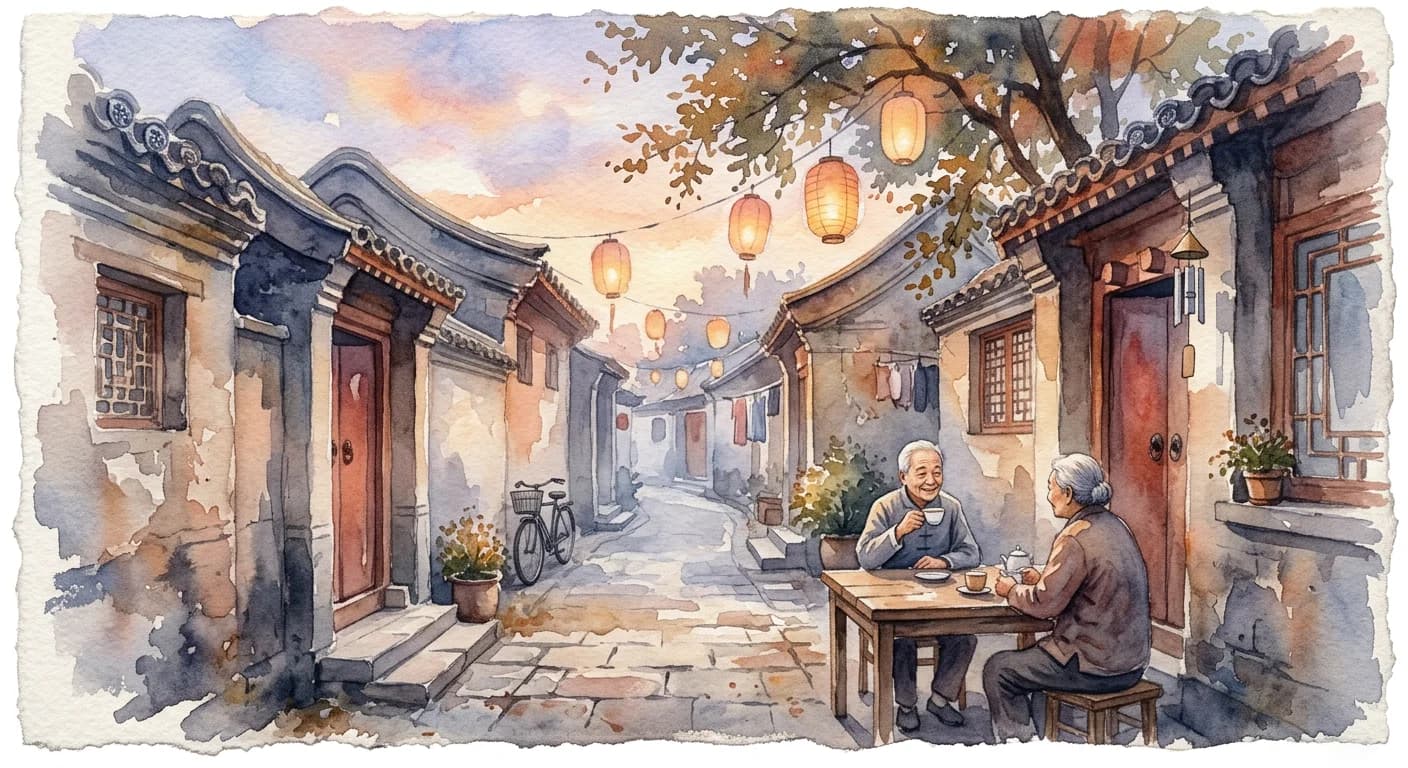
A 'hutong' is far more than just a narrow alleyway in Beijing; it's a living tapestry of traditional Chinese urban life. These labyrinthine lanes, often flanked by historic 'siheyuan' (courtyard homes), embody a vibrant community spirit where neighbors share meals, stories, and the rhythm of daily existence. They are cherished repositories of Beijing's ancient soul, offering a poignant counterpoint to the city's gleaming modernity and preserving a tangible connection to generations past.
Literal Translation
The etymology is debated, but it's believed to originate from Mongolian 'hot' (well) or 'gudam' (street).
The Story Behind the Word
The hutongs emerged during the Yuan Dynasty (13th century) and became the foundational urban planning unit of Beijing, reflecting a hierarchical social structure and a deep-seated value for community. Their design, often following a north-south or east-west axis, was influenced by Feng Shui principles, promoting harmony and prosperity. The enclosed 'siheyuan' within the hutongs fostered privacy yet encouraged inter-courtyard interaction, embodying the Chinese emphasis on family, lineage, and collective well-being. The resilience and adaptability of hutong life, surviving centuries of dynastic changes and modern upheaval, reveal a culture that values continuity, human connection, and a pragmatic approach to living within confined, yet communal, spaces. They are a testament to traditional Chinese urbanism, where the street was an extension of the home and social bonds were paramount.
Experience It
Evening Hutong Stroll
A grandmother sits outside her 'siheyuan' entrance, fanning herself, as children chase each other down the narrow hutong. The aroma of stir-fried dishes wafts from open doorways, mingling with the distant call of a street vendor, creating a symphony of everyday life.
Lost in the Labyrinth
A tourist, smartphone in hand, navigates the intricate turns of a hutong, marveling at the ancient grey brick walls and carved wooden doors. Each turn reveals a new detail – a potted plant, a curious cat, a glimpse into a private courtyard – feeling like a step back in time.
The Deeper Meaning
Hutongs reveal a philosophy of urban living centered on human scale and intimate community. They embody the Chinese concept of 'guanxi' (relationships) by design, where proximity fosters strong social ties and a shared sense of place. This contrasts sharply with modern urban planning's emphasis on efficiency and individual autonomy, highlighting a cultural preference for interconnectedness over isolation.
Did You Know?
Some of Beijing's hutongs are so narrow that two bicycles can barely pass each other, and many are named after the shops, temples, or unique features that once characterized them.
How It's Used
The term 'hutong' is used to describe the narrow streets and the traditional courtyard homes found in northern Chinese cities, especially Beijing. It refers to the physical lanes themselves and the residential communities that developed around them, fostering a distinct social fabric.