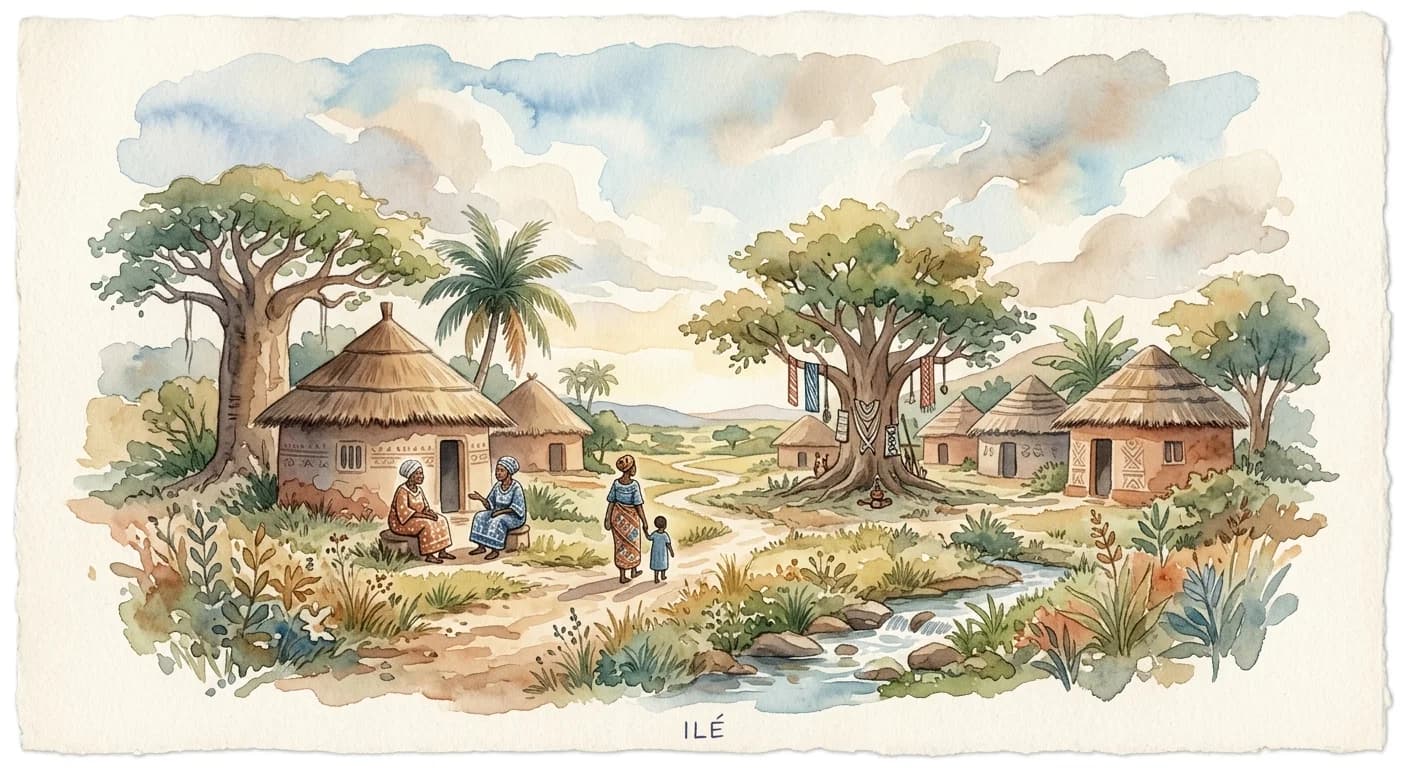
Ilé
/EE-lay/
Meaning
Ilé in Yoruba is far more than a physical dwelling; it embodies the very essence of belonging, identity, and ancestral connection. It signifies one's ancestral land, the spiritual origin, and the enduring link to one's lineage across generations. This sacred concept represents a sanctuary where the past, present, and future converge, providing a deep sense of security, heritage, and an unbreakable bond with the earth and one's forebears.
Literal Translation
Home, House, Land, Earth
The Story Behind the Word
The concept of Ilé is central to Yoruba cosmology and social structure, reflecting a worldview where life is cyclical and deeply interwoven with ancestry and the land. For the Yoruba, identity is not merely individual but collective, rooted in the 'Ilé' – the ancestral home or compound where generations have lived, died, and been buried. This connection to the land is spiritual, as it houses the spirits of ancestors (Òrìṣà) and is the source of communal memory and wisdom. The emphasis on 'Ilé' reveals a profound respect for heritage, community, and the belief that individual well-being is inseparable from the well-being of the collective and the land itself. It underscores the importance of maintaining ties to one's roots and understanding one's place within a continuous lineage.
Experience It
Returning to Ilé
After years abroad, Ade returned to his ancestral village. Stepping onto the red earth, he felt an immediate sense of peace, whispering, 'Mo ti dé Ilé' (I have arrived home). It wasn't just a house he was entering, but the spiritual embrace of his lineage and the land that birthed his ancestors.
Building a New Ilé
When a young couple builds their new home, they perform rituals to consecrate the ground, ensuring it becomes a true 'Ilé'. This act imbues the physical structure with spiritual significance, inviting ancestral blessings and establishing it as a foundation for future generations, not just a place to live.
The Deeper Meaning
Ilé encapsulates a holistic Yoruba philosophy that blurs the lines between the physical and spiritual, the individual and the communal. It teaches that true identity and belonging are found not in isolation, but in a continuous, reciprocal relationship with one's ancestors, one's community, and the very ground beneath one's feet. This concept promotes stewardship of the land and reverence for heritage as fundamental to human existence and well-being.
Did You Know?
The phrase 'Ilé ńlá' literally means 'big house' but can refer to a large, prominent family or lineage, emphasizing the extended family as the core unit of society.
How It's Used
Used to refer to one's home, homeland, or ancestral land, often carrying a deeper spiritual and familial significance than the English word 'home'.