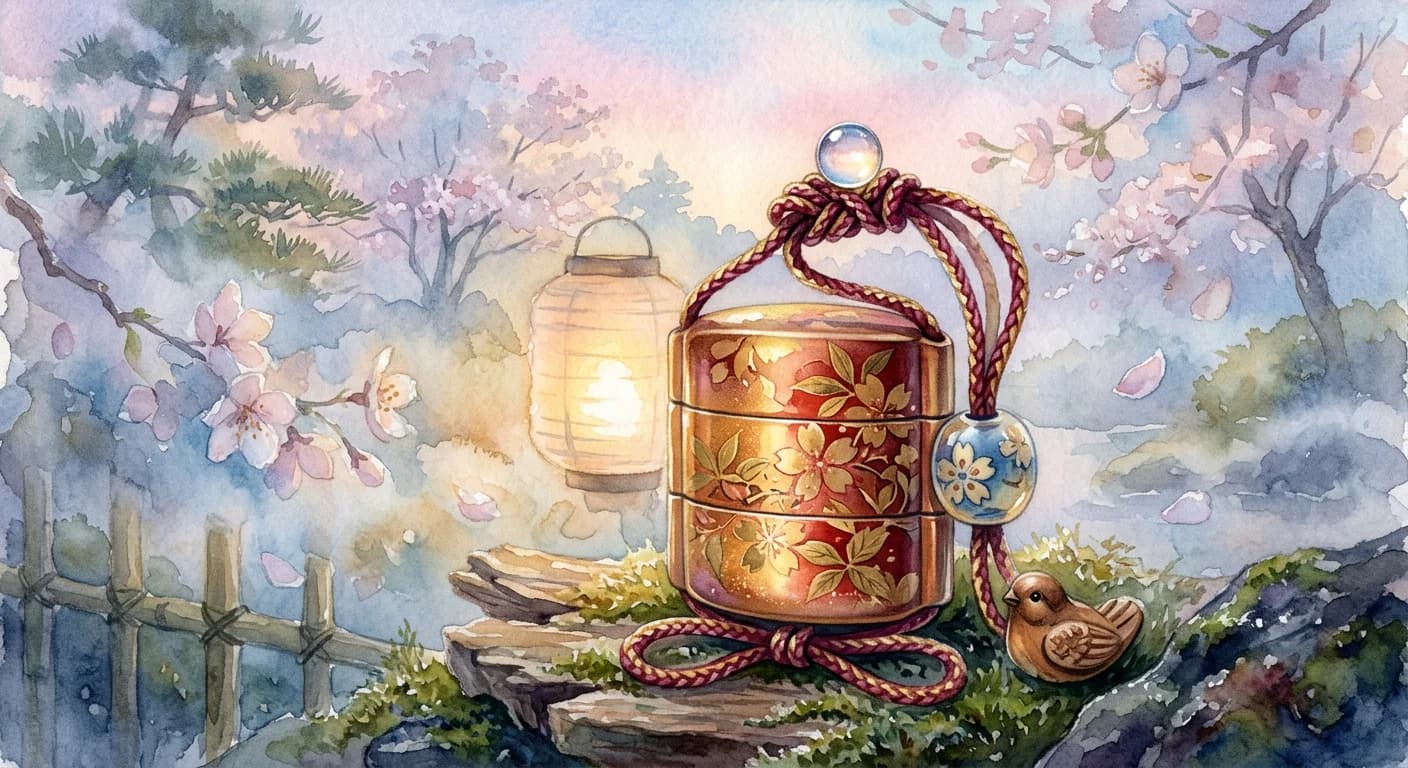
Inro
/IN-roh/
Meaning
An inrō is an exquisite, traditional Japanese container, typically comprising a stack of small, perfectly fitted compartments. Crafted with exceptional artistry, often from lacquered wood or other precious materials, it served as a portable personal effects case, suspended from a gentleman's obi (kimono sash) by a cord and an ojime bead. Far more than a mere utility item, the inrō was a potent symbol of its owner's refined taste, social status, and appreciation for the meticulous beauty of Japanese craftsmanship, transforming a functional object into a wearable miniature masterpiece.
Literal Translation
Seal/casket
The Story Behind the Word
The inrō emerged as a necessity in a society where traditional kimono lacked pockets, making it essential for carrying small personal items like medicines, seals, or aromatic spices. Its evolution from a utilitarian object to a highly coveted art form during the Edo period (1603-1868) reflects a profound Japanese cultural value: the elevation of everyday objects through meticulous craftsmanship and aesthetic refinement. The intricate decorative techniques, such as maki-e (sprinkled gold or silver powder lacquer), often depicted scenes from literature, nature, or mythology, turning each inrō into a narrative miniature. This dedication to beauty in functionality, even for items hidden beneath an outer garment, speaks to a deeply ingrained appreciation for detail, harmony, and the pursuit of perfection that permeates Japanese art and life. Owning a finely crafted inrō was a subtle yet powerful declaration of one's cultural literacy and discernment, embodying the spirit of 'iki' – a sophisticated, understated elegance.
Experience It
A Daimyo's Display
Lord Tokugawa adjusted his silk obi, ensuring his prized inrō, depicting a vibrant phoenix rising from flames in intricate maki-e, was perfectly positioned. The subtle gleam of its lacquer, catching the morning light, was a quiet testament to his wealth and impeccable aesthetic sense, noticed and admired by his retainers during audience.
Merchant's Secret
Beneath his sober merchant's kimono, old Kenji carried a modest, yet exquisitely crafted inrō. Inside, not just his seal, but a tiny, fragrant piece of agarwood, its scent a private comfort during long, arduous negotiations. It was a personal luxury, a hidden gem reflecting his inner world amidst the bustling marketplace.
The Deeper Meaning
The inrō embodies the Japanese aesthetic principle of 'wabi-sabi' in its subtle elegance and 'shibui' in its understated beauty, where profound artistry is often found in functional objects. It reflects a worldview that values meticulous attention to detail, the transformation of necessity into art, and the idea that true beauty can be both publicly displayed and privately appreciated, enriching daily life with intrinsic artistic merit.
Did You Know?
Despite being designed to hold practical items, many inrō were so exquisitely crafted that they became prized collector's items, often displayed rather than worn, a testament to their artistic rather than purely functional value.
How It's Used
Used to refer to the specific type of Japanese lacquered container.