U.
HomeRegionsLanguagesEmotionsCollections
Find Your Word

“The limits of my language mean the limits of my world.”

— Ludwig Wittgenstein, Philosopher

Untranslatable

A curated collection of the world's most beautiful expressions—words that remind us language is humanity's greatest invention.

  • Home
  • Collections
  • Regions
  • Countries
  • Emotions
  • Tags
  • Contexts
  • Finder
  • Europe
  • Asia
  • Americas
  • Africa
  • Middle East
  • About
  • Contact
  • Privacy Policy
  • Terms of Service

2026 © Untranslatable. All rights reserved.

    /
    /
    1. Home
    2. /
    3. Asia
    4. /
    5. Jorogumo
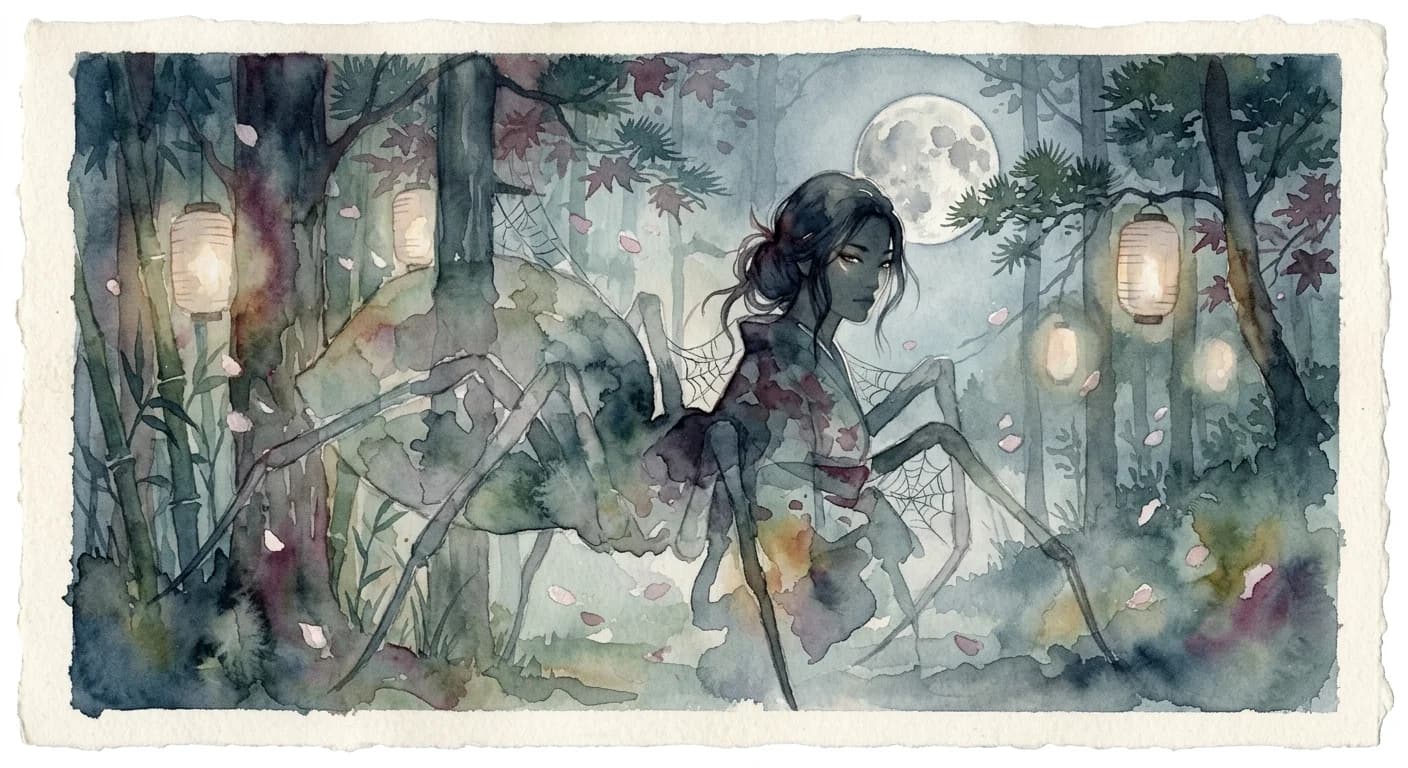
    Artistic representation of Jorogumo
    Japanese•
    🇯🇵Japan

    Jorogumo

    /joh-roh-GOO-moh/

    Meaning

    Jorogumo refers to a captivating mythical creature from Japanese folklore, a 'binding bride' or 'whore spider' that can shapeshift from a colossal spider into an alluring, beautiful woman. This yōkai preys on unsuspecting men, weaving intricate webs not just of silk, but of deceit and seduction, ultimately trapping and devouring her victims. The legend masterfully encapsulates a primal dread of the deceptive nature of beauty and the treacherous allure of the unknown, embodying a potent blend of forbidden desire and mortal danger.

    Literal Translation

    a type of spider

    The Story Behind the Word

    The Jorogumo legend emerged from a historical context where large spiders were a tangible fear in rural Japan, often associated with abandoned homes or dense forests. This primal fear was then woven into a narrative reflecting societal anxieties about women, particularly those outside conventional roles, who might possess a dangerous independence or seductive power. In Japanese culture, where harmony and order are highly valued, figures like the Jorogumo serve as cautionary tales against unchecked desire and the perils of appearances. It speaks to a worldview that acknowledges the thin veil between the mundane and the supernatural, where nature itself can harbor both beauty and monstrous threats, often intertwined. The Jorogumo's existence reveals a cultural understanding that danger can come cloaked in the most appealing forms, challenging perceptions and highlighting the vulnerability of human desire.

    Experience It

    Forest's Fatal Embrace

    A lone traveler, lost deep within a misty forest, spots a stunning woman weaving delicate patterns by a waterfall. Drawn by her beauty, he approaches, unaware that her silken threads are not for adornment, but for his inescapable demise, as the Jorogumo prepares her next meal.

    Seduction in the Teahouse

    In a secluded teahouse, a wealthy merchant is enchanted by a new oiran, her eyes holding a mysterious depth. He falls deeply for her charm, showering her with gifts, oblivious that her affection is a carefully spun trap, gradually ensnaring him within her deadly domain.

    The Deeper Meaning

    The Jorogumo legend offers a profound insight into the duality of perception and the inherent dangers of superficial judgment. It reveals a worldview that cautions against trusting solely in outward beauty, suggesting that true nature can be hidden beneath layers of artifice. This yōkai embodies the philosophical tension between appearance and reality, and the idea that temptation, however alluring, often conceals a destructive core, urging discernment in the face of desire.

    Did You Know?

    The 'Jorogumo' is also the name for a real species of large, brightly colored orb-weaver spider (Trichonephila clavata) native to Japan, whose intricate webs likely inspired the folklore.

    How It's Used

    Used in Japanese folklore, mythology, and sometimes in modern storytelling and media (like anime, manga, and video games) to describe a specific type of yōkai (supernatural entity) or a dangerous, alluring woman.

    Emotions
    fear,wonder
    Contexts
    daily life,storytelling,tradition
    🇯🇵Japan

    by Dr. Kenji Tanaka·Written Mar 14, 2026·Updated Apr 3, 2026

    Related Words

    Explore more
    Wabi-sabiJapanese

    Wabi-sabi is the profound appreciation for the ephemeral, the imperfect, and the incomplete aspects of existence. It is about discovering beauty in the subtle textures of age, the unique character of flaws, and the gentle decay that marks the passage of time. This philosophy encourages a quiet acceptance of impermanence and a mindful connection to the natural world, finding elegance in simplicity and authenticity.

    IkigaiJapanese

    Ikigai is more than just a reason to get out of bed; it's a deeply personal and evolving sense of purpose that brings genuine fulfillment and joy to one's life. It represents the sweet spot where your passions, talents, needs of the world, and what you can be paid for beautifully converge. Discovering your ikigai often leads to a life lived with intentionality, resilience, and a profound connection to one's contributions. It's the intrinsic motivation that fuels a meaningful existence, regardless of external circumstances.

    NunchiKorean

    Nunchi is the sophisticated, almost telepathic, ability to instantly grasp the unspoken dynamics of any social situation, anticipating others' thoughts and feelings, and then responding with impeccable grace and timing. It's an acute form of social intuition, allowing one to navigate complex interpersonal landscapes by reading subtle cues like body language, tone, and context. Possessing good nunchi means effortlessly understanding the underlying emotional currents and adjusting one's behavior to maintain harmony and effectiveness, often without a single word exchanged.

    JugaadHindi

    Jugaad is more than just a quick fix; it embodies the spirit of resourceful, ingenious improvisation in the face of scarcity or systemic challenges. It's the art of bending rules, repurposing materials, and thinking outside the box to achieve a desired outcome, often with limited financial or technological resources. This approach celebrates clever workarounds and innovative adaptations, turning constraints into catalysts for creative problem-solving. It's about making do and making something work, brilliantly.