Jumbie
/JOOM-bee/
Meaning
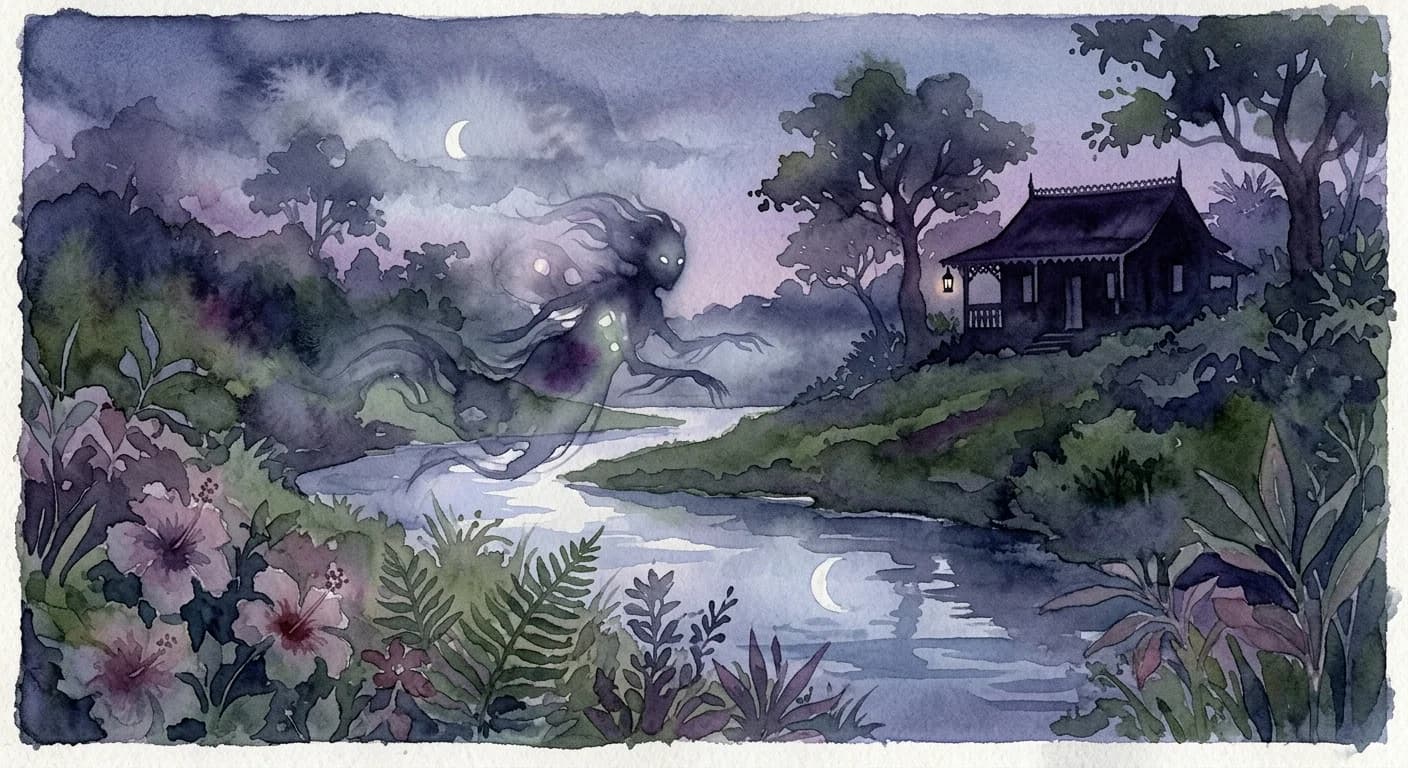
A 'jumbie' in Trinidadian and Tobagonian Creole transcends a simple 'ghost'; it embodies a diverse pantheon of spectral entities, from mischievous imps that play tricks in the night to truly malevolent spirits capable of causing harm or misfortune. These unseen beings are deeply interwoven into the fabric of daily life, influencing everything from cautionary tales told to children to the choice of routes taken after dark. The concept of the jumbie instills a profound respect for the spiritual realm, shaping perceptions of place, fate, and the ever-present boundary between the living and the dead.
Literal Translation
Ghost/spirit
The Story Behind the Word
The concept of the 'jumbie' is a vibrant tapestry woven from African spiritual traditions, particularly those brought by enslaved peoples, blended with indigenous Caribbean beliefs and, to a lesser extent, European folklore. Its existence reflects a worldview where the spiritual and material realms are not distinctly separate but constantly interact, influencing human affairs. Jumbies often serve as cultural custodians, enforcing social norms through fear (e.g., a jumbie might punish a child for disobedience). They also provide a framework for explaining the inexplicable, from sudden illnesses to strange noises in the night, imbuing the environment with a sense of mystery and spiritual potency. This deep-seated belief system underscores a profound connection to ancestry and the enduring power of the unseen world, revealing a culture that acknowledges and respects forces beyond human comprehension.
Experience It
A Midnight Encounter
After the late-night fete, Maria hurried home, the shortcut through the old cane field beckoning. Suddenly, a cold gust of wind swept past, and she swore she heard a faint, disembodied whisper. 'Is a jumbie, for sure,' she muttered, quickening her pace, not daring to look back, her heart pounding against her ribs.
The Haunted House
The old abandoned house at the end of the street was notorious; no one dared venture near it after dusk. 'Dat house full of jumbie,' old Mr. Fitzwilliam would warn, 'dey don' like company.' Locals believed the restless spirits of former inhabitants still roamed its decaying halls, keeping everyone at bay.
The Deeper Meaning
The pervasive belief in jumbies illustrates a worldview where existence is not purely material but profoundly spiritual, with consequences for actions extending beyond the grave. It highlights a cultural understanding that fate, fortune, and even misfortune can be influenced by unseen forces, fostering a sense of humility and interconnectedness between the living, the dead, and the natural world. This perspective encourages a cautious respect for one's surroundings and a recognition of the limits of human control.
Did You Know?
Some specific jumbies, like the Soucouyant (a fire-ball woman), have distinct characteristics and are used to teach moral lessons about greed or curiosity, adding layers to the cautionary tales.
How It's Used
Used in folklore, storytelling, and everyday conversation to refer to ghosts, spirits, or supernatural occurrences, often with a cautionary or fearful undertone.