U.
HomeRegionsLanguagesEmotionsCollections
Find Your Word

“The limits of my language mean the limits of my world.”

— Ludwig Wittgenstein, Philosopher

Untranslatable

A curated collection of the world's most beautiful expressions—words that remind us language is humanity's greatest invention.

  • Home
  • Collections
  • Regions
  • Countries
  • Emotions
  • Tags
  • Contexts
  • Finder
  • Europe
  • Asia
  • Americas
  • Africa
  • Middle East
  • About
  • Contact
  • Privacy Policy
  • Terms of Service

2026 © Untranslatable. All rights reserved.

    /
    /
    1. Home
    2. /
    3. Asia
    4. /
    5. Kalavinka
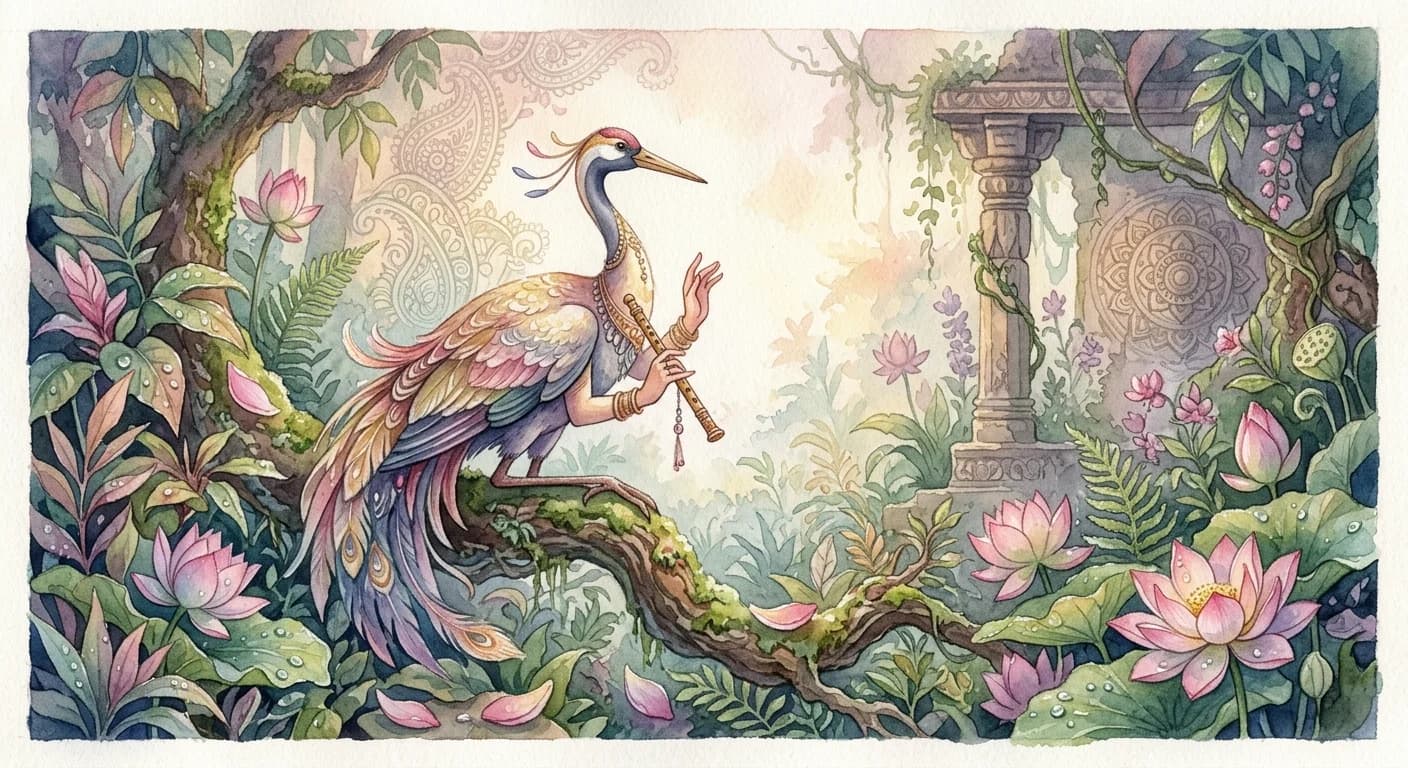
    Artistic representation of Kalavinka
    Sanskrit•
    🇮🇳India

    Kalavinka

    /kah-lah-VIN-kah/

    Meaning

    Kalavinka denotes a mythical bird of unparalleled beauty and an exquisitely melodious song, deeply ingrained in ancient Sanskrit literature. Its enchanting voice is not merely pleasant but possesses the power to evoke profound joy, inspire spiritual awakening, and even imbue life into the dormant. More than just a creature, it symbolizes a transcendental auditory experience, representing the divine harmonies that can awaken the soul and usher in a state of spiritual bliss.

    Literal Translation

    Mythical bird with a beautiful song

    The Story Behind the Word

    The Kalavinka is a profound symbol within Indian mythology and Buddhist cosmology, reflecting a cultural reverence for sound (Nada Brahma) as a path to the divine. In Hinduism, sacred sounds and mantras are believed to have transformative power, and the Kalavinka embodies this ideal in its purest, most beautiful form. In Buddhism, particularly in the Pure Land traditions, the Kalavinka is depicted in Sukhavati (the Western Pure Land), its song teaching the Dharma and guiding beings towards enlightenment. Its existence underscores a worldview where beauty, especially auditory beauty, is intrinsically linked with spiritual truth and liberation, suggesting that the path to awakening can be found in the most sublime sensory experiences.

    Experience It

    Divine Music Incarnate

    The ancient sage, lost in deep meditation, heard a melody unlike any earthly sound. It was as if a Kalavinka had alighted nearby, its ethereal song dissolving all worldly concerns and drawing his consciousness closer to the ultimate truth.

    Awakening the Spirit

    After years of spiritual seeking, the devotee finally experienced a moment of profound clarity. It felt as though the Kalavinka's song had pierced through the veils of illusion, awakening a dormant understanding within her soul.

    The Deeper Meaning

    The Kalavinka reveals a profound philosophical insight that beauty, particularly auditory beauty, is not merely superficial but can serve as a potent conduit for spiritual realization. It posits that divine harmony is inherent in the cosmos, and by attuning oneself to such transcendental sounds, one can awaken higher consciousness and achieve a state of spiritual liberation, blurring the lines between aesthetic pleasure and profound enlightenment.

    Did You Know?

    In Buddhist art, the Kalavinka is often depicted with a human head and a bird's body, symbolizing the fusion of human wisdom and spiritual freedom, capable of delivering profound teachings through its song.

    How It's Used

    The term 'Kalavinka' is primarily found in ancient Sanskrit texts, religious scriptures, and mythological narratives. It's used poetically to describe a celestial being or a sound of divine origin, invoking a sense of sacred beauty and spiritual awakening.

    Emotions
    joy,peace,wonder
    Contexts
    celebration,nature
    🇮🇳India

    by Anya Petrova·Written Mar 14, 2026·Updated Apr 3, 2026

    Related Words

    Explore more
    Dolce far nienteItalian

    Dolce far niente captures the profound joy and effortless pleasure derived from simply existing without obligation or purpose. It's the art of savoring moments of pure, unadulterated idleness – lying in the sun, watching the clouds drift, or enjoying a leisurely coffee – not as a break from work, but as a valuable state in itself. This 'sweetness of doing nothing' is a conscious embrace of stillness and contentment, allowing the soul to breathe and the senses to fully engage with the present.

    Wabi-sabiJapanese

    Wabi-sabi is the profound appreciation for the ephemeral, the imperfect, and the incomplete aspects of existence. It is about discovering beauty in the subtle textures of age, the unique character of flaws, and the gentle decay that marks the passage of time. This philosophy encourages a quiet acceptance of impermanence and a mindful connection to the natural world, finding elegance in simplicity and authenticity.

    IkigaiJapanese

    Ikigai is more than just a reason to get out of bed; it's a deeply personal and evolving sense of purpose that brings genuine fulfillment and joy to one's life. It represents the sweet spot where your passions, talents, needs of the world, and what you can be paid for beautifully converge. Discovering your ikigai often leads to a life lived with intentionality, resilience, and a profound connection to one's contributions. It's the intrinsic motivation that fuels a meaningful existence, regardless of external circumstances.

    NunchiKorean

    Nunchi is the sophisticated, almost telepathic, ability to instantly grasp the unspoken dynamics of any social situation, anticipating others' thoughts and feelings, and then responding with impeccable grace and timing. It's an acute form of social intuition, allowing one to navigate complex interpersonal landscapes by reading subtle cues like body language, tone, and context. Possessing good nunchi means effortlessly understanding the underlying emotional currents and adjusting one's behavior to maintain harmony and effectiveness, often without a single word exchanged.