Korero
/KUH-reh-roh/
Meaning
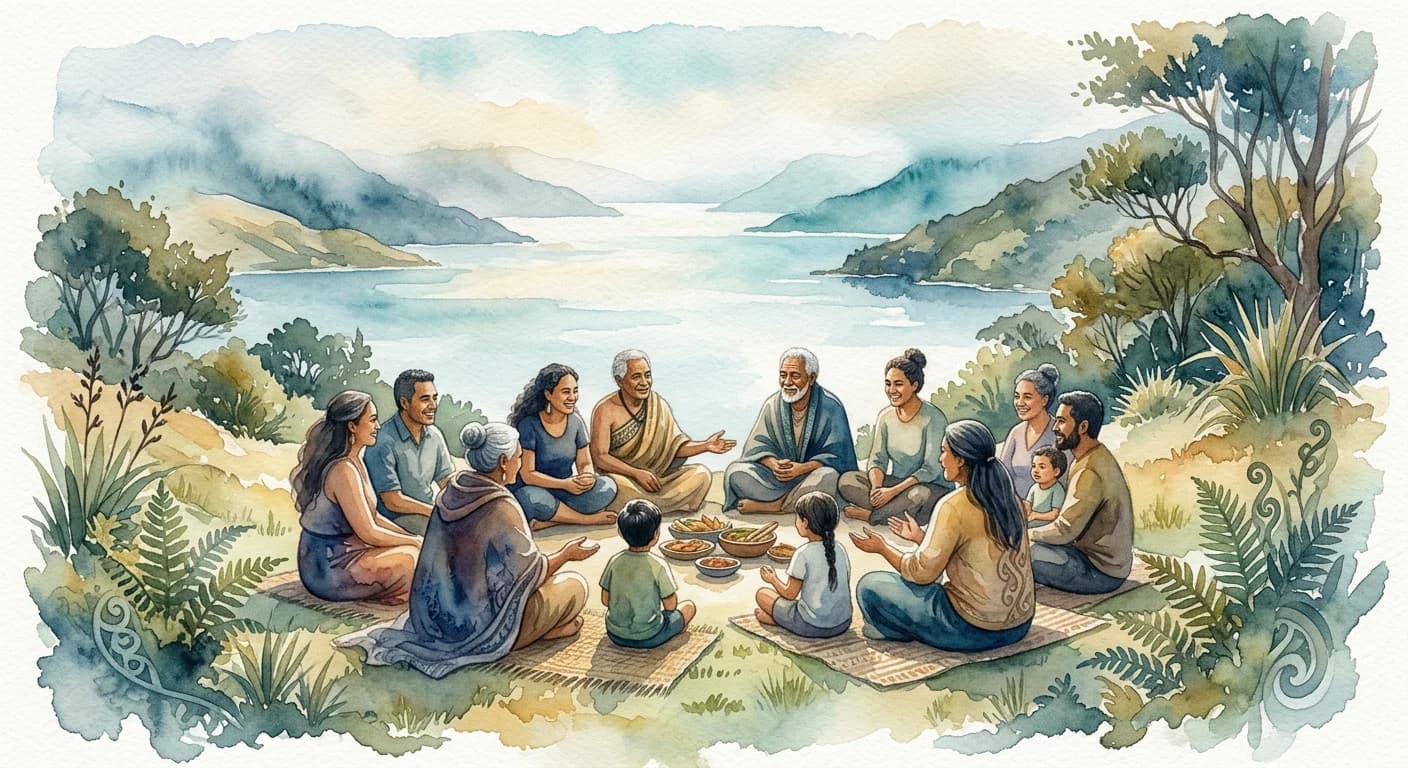
Korero transcends mere verbal exchange; it is the sacred act of weaving together knowledge, ancestral stories, and lived experiences within the embrace of the community. It signifies a profound cultural practice where dialogue is the very loom upon which learning, connection, and the living transmission of history and values are intricately spun. This communal exchange is not just communication, but a vital lifeblood, essential for nurturing cultural identity, deepening relationships, and ensuring the continuity of Māori social fabric. It resonates as a cornerstone, embodying far more than simple speech.
Literal Translation
speak, talk, conversation, speech
The Story Behind the Word
Korero is deeply rooted in Māori philosophy, where knowledge is not individually owned but collectively held and transmitted through generations. Its existence reflects a worldview where community well-being, ancestral connection, and the preservation of cultural heritage are paramount. For Māori, the spoken word (te reo) carries immense mana (prestige, power) and tapu (sacredness); thus, korero is a powerful tool for maintaining social order, resolving disputes, educating the young, and celebrating identity. It is central to the marae (communal meeting grounds) where formal and informal korero strengthens whanaungatanga (kinship) and reinforces collective memory. The practice of korero ensures that the past informs the present and guides the future, embodying a living, dynamic cultural legacy.
Experience It
Marae Welcome
During a pōwhiri (welcome ceremony) on the marae, the kaumatua stands to deliver a powerful korero, recounting the history of the iwi (tribe) and extending a warm welcome to the visitors. His words are not just an address, but a weaving of whakapapa (genealogy) and shared heritage, establishing connection and respect.
Family Gathering
At a family reunion, the whānau gathers, and an auntie begins a korero, sharing anecdotes about their grandparents and the challenges they overcame. The younger generation listens intently, absorbing the family's stories and values, understanding their place within the broader lineage through this shared oral tradition.
What Gets Lost in Translation
English speakers often reduce 'korero' to simply 'talking' or 'conversation,' missing its profound communal and intergenerational dimensions. It's not just about exchanging information, but about the shared creation and validation of knowledge, the reinforcing of social bonds, and the upholding of tikanga (customs). The nuance of respect, active listening, and the inherent value placed on collective wisdom, rather than individual expression, is frequently lost in translation.
Across Cultures
Similar concepts appear in various indigenous cultures. The Hawaiian 'moʻolelo' encompasses stories, history, and traditions, emphasizing oral transmission. The Indigenous Australian concept of 'dadirri' (Ngangikurunggurr language) speaks to deep, contemplative listening and inner reflection, which is crucial for understanding and contributing to community korero. In some African traditions, the 'griot' embodies the living library of communal history, sharing through spoken word, much like the role of a kaumatua (elder) in Māori korero.
The Deeper Meaning
Korero reveals a philosophy where knowledge is communal, dynamic, and intrinsically linked to identity and belonging. It underscores that truth and understanding emerge not from isolated thought, but through collective dialogue, respectful exchange, and the honoring of diverse perspectives, especially those of elders. It embodies a worldview where the past is always present, actively shaping the future through the power of shared narrative and intergenerational wisdom.
Did You Know?
The phrase 'kia kaha te korero' means 'speak strongly' or 'speak with conviction,' highlighting the importance of not just speaking, but speaking with purpose and authority.
How It's Used
Used to refer to any form of talking, discussion, speech, or conversation, especially in a formal or cultural context during gatherings and community events.